Astigmatism is one of the most common vision problems we see in clinics, yet it’s also one of the most misunderstood. Many people are told they “have astigmatism” without ever being properly shown what that means for their eyes or what modern laser eye surgery can realistically achieve.
A question we’re asked every week is simple:
Can LASIK fix astigmatism?
The short answer is yes, in many cases. The real answer depends on how your eye is shaped, not just the prescription printed on your glasses. EuroEyes is here to explain how LASIK treats astigmatism, when it works best, and what alternatives exist if laser surgery isn’t the right option.
What Astigmatism Actually Is (And Why It Matters for Laser Surgery)
Astigmatism occurs when the cornea is not perfectly round. Instead of being shaped like a football, it resembles a rugby ball, steeper in one direction than another. This causes light to focus unevenly on the retina, leading to blurred or distorted vision at all distances.
What matters for surgery isn’t just how strong the astigmatism is.
How Regular or Irregular the Corneal Shape Is
Not all astigmatism is created equal. Two people can have the same prescription on paper, yet very different corneal shapes underneath.
Regular astigmatism means the cornea curves more in one direction but remains smooth and symmetrical. This type responds very well to laser eye surgery because the laser can reshape the surface in a predictable, controlled way.
Irregular astigmatism, on the other hand, involves uneven or distorted corneal curvature. Light scatters rather than focusing cleanly, and standard laser patterns may not fully correct the distortion.
Example:
Two patients both have -2.00 dioptres of astigmatism. One has a smooth, evenly curved cornea and achieves excellent results with LASIK. The other shows subtle irregularities on corneal topography, despite the same prescription and is advised against standard laser correction to protect long-term vision quality.
This is why corneal mapping is more important than prescription strength alone.
Whether the Astigmatism Is Stable
Stability is one of the most overlooked factors when assessing suitability for laser eye surgery.
Astigmatism that has remained unchanged for several years is usually a good sign. It suggests that the cornea has settled into a consistent shape, allowing laser treatment to produce predictable, lasting results. If astigmatism is still changing, surgery may correct the current prescription but not future shifts in the cornea.
Example:
A 24-year-old patient presents with moderate astigmatism that has changed twice in the last 18 months. Despite being technically within laser limits, surgery is delayed to allow the prescription to stabilise. Another patient of the same age with identical numbers but five years of stability proceeds safely with treatment.
Patience at this stage often prevents disappointment later.
How Thick and Biomechanically Strong the Cornea Is
Laser eye surgery works by reshaping the cornea which means some corneal tissue must be removed. For this reason, thickness alone isn’t enough. Strength and structural behaviour matter just as much.
A cornea can appear thick but be biomechanically weak, or thinner yet exceptionally stable. Modern diagnostics assess how the cornea responds to pressure and movement, not just how many microns it measures.
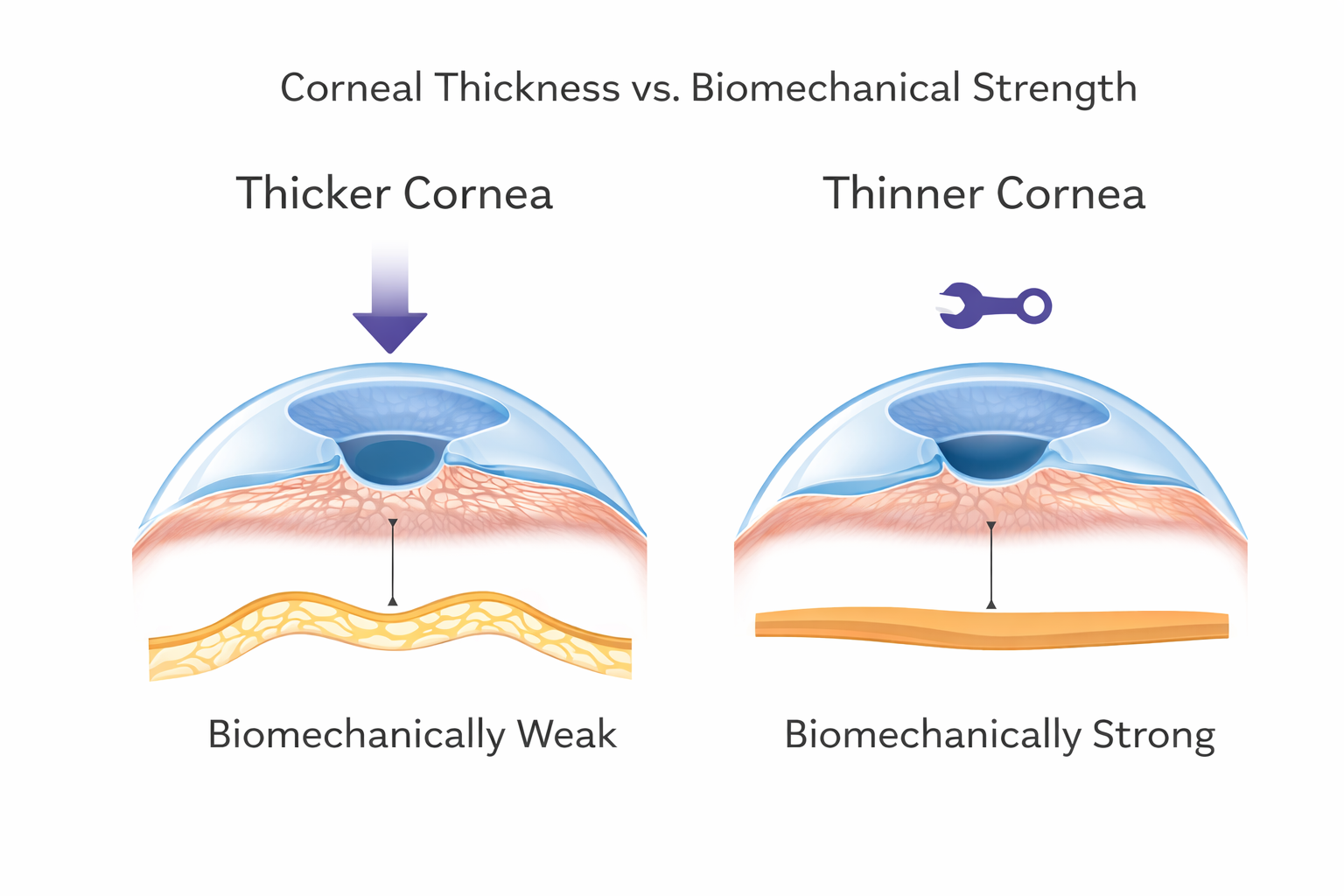
Example:
Two patients are found to have similar corneal thickness. One has strong corneal biomechanics and is suitable for LASIK. The other shows signs of reduced structural resilience and is instead advised to consider surface laser treatment
This layered approach helps protect the cornea not just immediately after surgery, but decades into the future. This is why proper corneal mapping and topography are essential before recommending any laser treatment.
Can LASIK Correct Astigmatism?
Yes, LASIK can correct astigmatism very effectively when the eye is suitable. LASIK works by reshaping the cornea with an excimer laser. In astigmatism, the laser smooths the uneven curvature so light can focus evenly again.
LASIK is particularly effective for:
Mild to Moderate Astigmatism
Laser eye surgery is most predictable and accurate when astigmatism falls within a mild to moderate range. In these cases, the cornea usually responds well to reshaping, allowing the laser to smooth uneven curvature without compromising structural integrity. For many patients in this category, vision can be corrected with high precision and long-term stability, provided the eye is otherwise healthy.
Regular Corneal Shapes
A regular corneal shape allows light to be focused evenly once corrected, which is why it plays such a central role in laser suitability. When the cornea curves smoothly in one dominant direction, laser treatment can be planned with confidence and accuracy. Regularity, rather than prescription strength alone, is often the factor that determines whether laser correction will deliver crisp, high-quality vision.
Patients with Adequate Corneal Thickness
Adequate corneal thickness provides the safety margin needed for laser reshaping. It ensures enough tissue remains after treatment to maintain corneal strength and long-term eye health. While thickness is not the only consideration, it remains a foundational requirement for procedures such as LASIK, helping surgeons balance visual outcomes with structural stability.
For many patients, LASIK can correct astigmatism and short- or long-sightedness at the same time. At EuroEyes, laser planning is customised to the individual cornea rather than relying on standard prescription values alone, a critical factor in long-term visual accuracy.
How Much Astigmatism Can LASIK Fix?
There is no single “safe number” when it comes to astigmatism correction. Surgeons assess ranges as a guide, but the final decision is always based on how the cornea behaves as a whole, rather than the prescription alone.
In broad clinical terms:
Mild astigmatism (up to ~1.00 D):
This level is usually very straightforward to correct with LASIK. The corneal reshaping required is minimal, allowing for high precision and predictable visual outcomes when the eye is otherwise healthy.
Moderate astigmatism (1.25–3.00 D):
This range is commonly treated with excellent results using modern laser techniques. With accurate corneal mapping and personalised treatment planning, many patients achieve sharp, stable vision without the need for glasses.
Higher astigmatism (above ~3.00 D):
Higher levels can often still be treated, but they require more detailed assessment. In some cases, alternative approaches, such as customised laser profiles or ICL-based options, may offer better long-term visual quality and stability.

Just as important as the number is how symmetrical the cornea is and how stable your vision has been over time.
Is SMILE Eye Surgery an Option for Astigmatism?
SMILE eye surgery can correct astigmatism, but only within carefully defined clinical limits. While SMILE is an excellent procedure for many patients, it is not universally the best option for every type of astigmatism.
SMILE works by removing a small lens-shaped piece of tissue from within the cornea through a very small incision. This approach preserves more of the cornea’s surface layers, which can offer advantages such as improved biomechanical stability and a reduced risk of dry eye symptoms for some patients.
However, astigmatism correction relies heavily on directional precision. The more complex or higher the astigmatism, the more exact the reshaping needs to be. LASIK allows surgeons to sculpt the cornea with greater flexibility across different meridians, which can be particularly important when correcting higher cylindrical values or asymmetrical corneal curvature.
Case Study: Choosing the Right Laser Treatment at EuroEyes Westfield London
A London-based professional in their early 30s visited EuroEyes at Westfield London after years of wearing glasses for short-sightedness with astigmatism. Their prescription showed moderate myopia with a relatively low level of astigmatism, and their initial expectation was to proceed with SMILE eye surgery.
Detailed corneal scans revealed a smooth, symmetrical corneal shape with stable measurements over time. In this case, SMILE was considered an excellent option. The small incision approach aligned well with the patient’s lifestyle and visual needs, and the corneal structure supported a predictable, stable outcome.
During the same clinic session, another patient with a similar level of short-sightedness was assessed. While their prescription appeared comparable, further testing showed higher astigmatism with subtle asymmetry in corneal curvature. Although SMILE was technically possible, the surgeon recommended LASIK instead. The additional flexibility of LASIK allowed for more precise, customised reshaping across the cornea, offering better long-term visual accuracy for this specific eye shape.
In both cases, the decision was not about choosing the most popular procedure, but the most appropriate one. When a surgeon recommends LASIK over SMILE, it is not because SMILE is inferior, it is because precision, stability, and visual quality take priority over trends, especially when astigmatism is involved.
LASIK vs SMILE for Astigmatism: Which Is Better?
There is no universal “better” laser eye surgery, only the option that best suits the individual eye. While both LASIK and SMILE can correct astigmatism, they do so in different ways, and the choice depends on how much precision is required, how the cornea behaves, and what will deliver the most stable vision long term. Surgeons focus less on trends and more on how the cornea will respond to treatment, heal over time, and maintain visual quality years after surgery.
LASIK vs SMILE for Astigmatism – Key Differences
A thorough consultation considers far more than the name of the procedure. By analysing corneal shape, thickness, biomechanics, and visual demands, surgeons can recommend the option that delivers the most reliable clarity, not just immediately after surgery, but well into the future.
Can Astigmatism Come Back After Laser Eye Surgery?
This is an important question and the honest answer is nuanced. Laser surgery permanently reshapes the cornea. However:
Natural Ageing Changes Can Still Occur
Laser eye surgery permanently reshapes the cornea, but it does not stop the natural ageing process of the eye. Over time, changes in the lens and focusing ability can affect vision, particularly from the mid-40s onwards.
Example:
A patient achieves excellent distance vision after laser treatment in their 30s. Years later, they begin to notice near vision changes due to presbyopia, a normal age-related process unrelated to the original astigmatism correction.
Mild Regression Can Occur Over Many Years
In some patients, very small changes in vision can occur gradually over time. This is usually mild and slow, rather than a sudden return of astigmatism, and is influenced by healing response and long-term corneal behaviour.
Example:
It is not unusual for someone treated for moderate astigmatism to maintain excellent vision for many years, only to notice a minor change during a routine eye examination later in life. These changes are usually subtle and still leave vision significantly better than before treatment, with further options available if refinement is needed.
Underlying Corneal Conditions Behave Differently
Astigmatism linked to underlying corneal conditions requires a different level of caution. In these cases, the cornea may continue to change regardless of laser treatment, which is why advanced screening is essential.
Example:
A patient presents with astigmatism caused by early corneal irregularity. Rather than proceeding with standard laser surgery, alternative treatments are recommended to protect long-term eye health and visual stability.
This is why long-term outcomes depend as much on screening and planning as on the laser itself.
What If LASIK Isn’t Suitable for My Astigmatism?
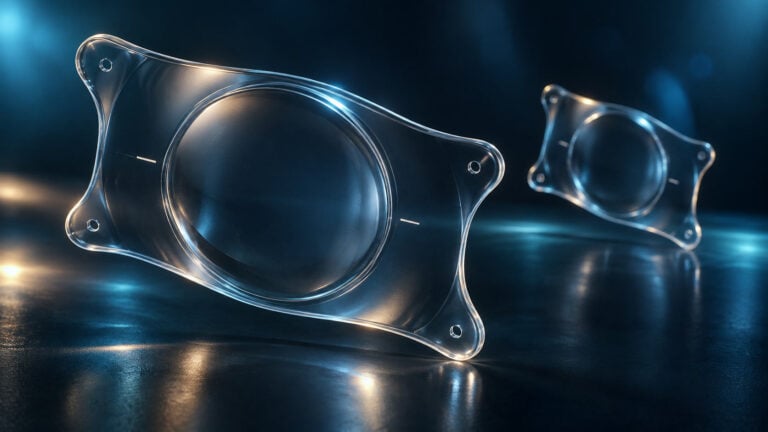
When laser corneal reshaping is not the most appropriate option, Toric Implantable Contact Lenses (ICL) provide an effective alternative for correcting astigmatism, particularly in patients with higher prescriptions or thinner corneas. Toric ICLs are positioned inside the eye, between the natural lens and the iris, allowing refractive correction without altering corneal structure. This approach preserves corneal biomechanics while delivering high-definition vision, making it especially suitable when corneal tissue preservation is a priority.
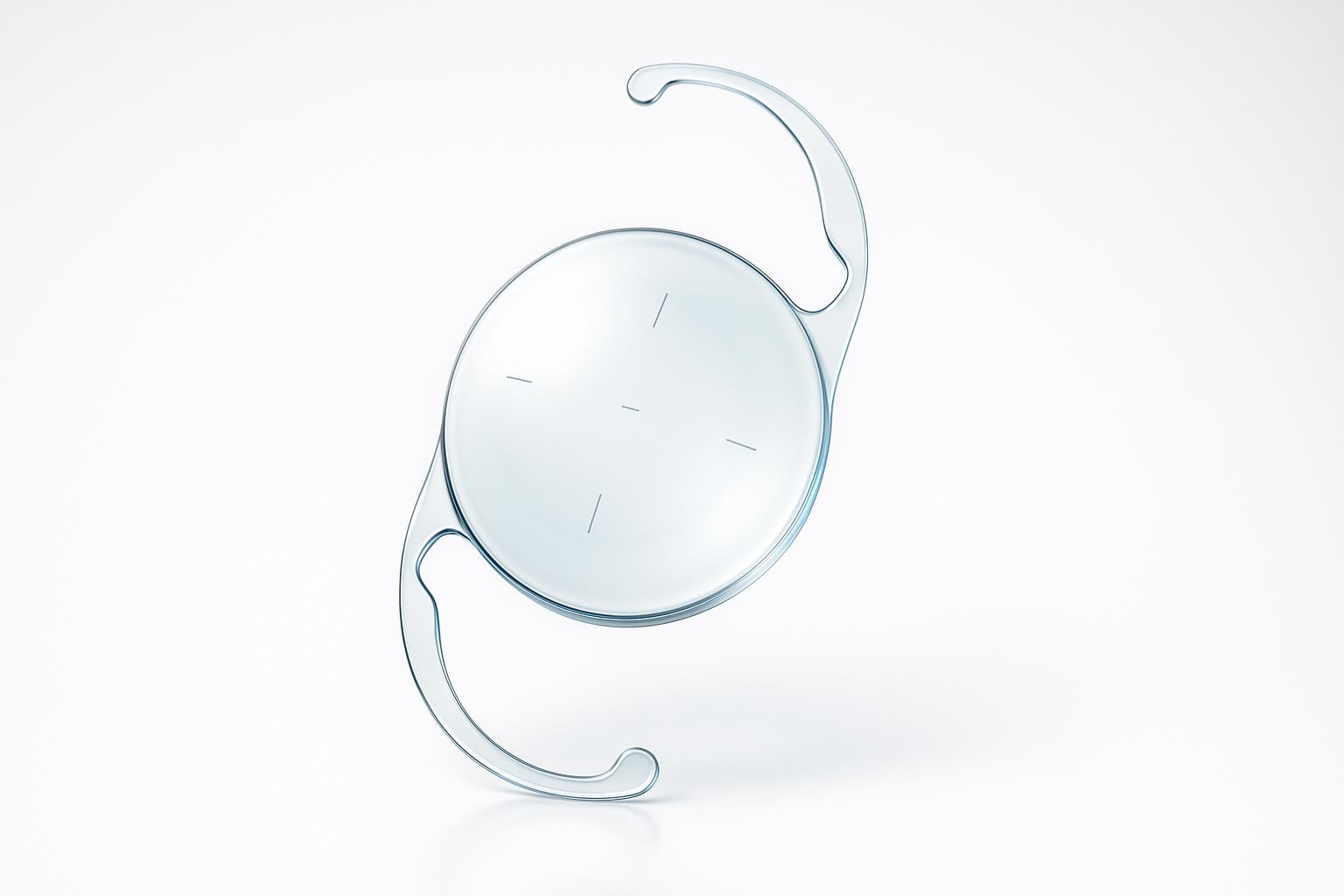
For patients showing early changes in the natural lens, or those experiencing presbyopia, lens-based surgery may offer a more future-proof solution. By replacing the eye’s natural lens with a carefully selected intraocular lens, surgeons can address astigmatism while also improving near, intermediate, and distance vision where appropriate. This approach reduces the likelihood of age-related visual changes impacting results later on.
In specific cases, surface laser procedures such as LASEK or PRK are used to correct astigmatism without creating a corneal flap. Although recovery can be slower compared to LASIK or SMILE, these techniques remain valuable for patients with particular corneal profiles where surface-based reshaping offers a safer long-term outcome.
Being advised against standard laser surgery is not a limitation, it reflects careful assessment and patient-first decision-making, ensuring that the chosen treatment prioritises long-term visual quality and eye health over procedural convenience.
The Most Important Step: Proper Assessment
Astigmatism correction is not about chasing numbers. It’s about understanding:
Corneal structure
The cornea is not a static surface; it is a living, biomechanical structure that responds to pressure, healing, and time. Surgeons assess far more than thickness alone, analysing curvature, symmetry, biomechanical strength, and how the cornea behaves under stress. These factors determine how predictably the cornea can be reshaped and how well it will maintain its shape years after treatment. Understanding corneal structure is fundamental to choosing the safest and most accurate corrective approach.
Visual demands
Every patient uses their vision differently. Someone who works long hours at screens, drives frequently at night, or relies on high-contrast vision for sport or precision work will place different demands on their eyes than someone with more general visual needs. Surgeons take lifestyle, occupation, and visual priorities into account to ensure the chosen treatment delivers clarity where it matters most, whether that is sharp distance vision, reduced glare, or visual endurance throughout the day.
Long-term eye health
The goal of vision correction is not just good eyesight after surgery, but stable, healthy vision for decades to come. Surgeons consider how today’s treatment choice will interact with natural ageing, future lens changes, and the likelihood of additional procedures later in life. By planning with long-term eye health in mind, treatment decisions aim to preserve options rather than limit them, ensuring that visual quality remains adaptable as the eyes change over time.
A detailed assessment ensures that treatment is chosen for clarity, stability, and safety, not just short-term results. If you’re exploring treatment for astigmatism, the right next step isn’t choosing a procedure, it’s choosing a clinic that understands the eye behind the prescription.