
Your 30-minute consultation includes an eye assessment to determine if you’re suitable for refractive surgery.
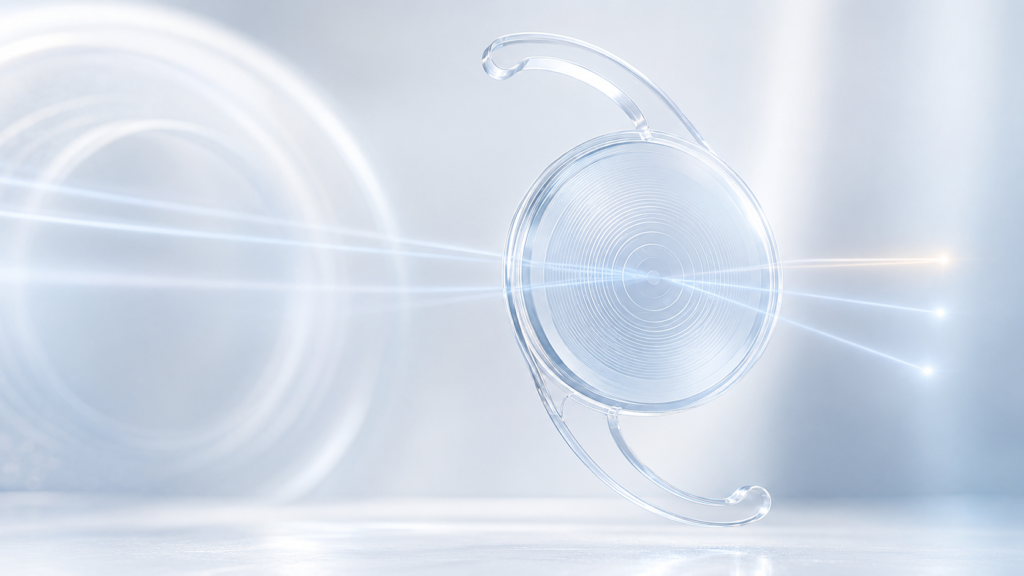
At EuroEyes, we implant the latest generation of premium trifocal intraocular lenses to help you see clearly at near, intermediate and distance ranges, reducing or eliminating your dependence on reading glasses and varifocals. Trifocal lens surgery is one of the most advanced solutions for presbyopia, offering seamless vision for everyday activities such as reading, using digital devices, driving and enjoying an active lifestyle.
You can feel confident choosing EuroEyes. Our surgeons have performed more trifocal lens implant procedures than any other provider worldwide, combining decades of experience with pioneering research and access to the latest premium lens technologies.
| Why Choose EuroEyes? |
EuroEyes London
|
Typical Clinics
|
Budget Providers
|
|---|---|---|---|
| 1 Million+ Vision Correction Procedures | ✓ | Rarely | ✕ |
| 43 Clinics Across Europe & Asia | ✓ | ✕ | ✕ |
| Surgeons Performing 2,000+ Procedures Every Year | ✓ | Varies | Rarely |
| Award-Winning Leadership in Trifocal, ICL & SMILE Pro | ✓ | Rarely | ✕ |
| Full Range of Premium Lens Implants | ✓ | Limited | Limited |
| 30+ Years of Innovation & Research | ✓ | Varies | ✕ |
EuroEyes uses advanced ZEISS trifocal lens technology because exceptional vision depends on both the quality of the implant and the experience of the surgeon placing it. ZEISS trifocal lenses are engineered to provide clear vision across near, intermediate and distance ranges, with the established AT LISA tri supported by more than 170 peer-reviewed publications. EuroEyes combines this proven optical technology with unrivalled clinical experience, having been recognised by ZEISS for implanting more ZEISS trifocal lenses than any other clinic group worldwide. EuroEyes also performed the world’s first commercial implantation of the next-generation ZEISS AT ELANA trifocal lens, demonstrating its close relationship with ZEISS and its position at the forefront of premium lens surgery. For patients, this means world-class German optical engineering delivered by one of the most experienced trifocal lens teams in the world.
During the opening of EuroEyes’ flagship clinic in Hong Kong, Dr. Jørgensen was awarded the Zeiss certificate.
Presbyopia typically develops between the ages of 40 and 50: small print becomes increasingly hard to read, and you become dependent on reading glasses. Even if you have suffered from nearsightedness or farsightedness earlier in your life, you will eventually develop presbyopia, and will need bifocals or several glasses. The implantation of the multifocal lens, also known as multifocal intraocular lens, is a safe, precise, and tested procedure.
The trifocal lenses used by EuroEyes are premium lenses that meet the highest quality standards:
The surgery is performed on an outpatient basis and usually takes 15 minutes per eye. Before the procedure, the eye is anesthetised with drops so that the patient does not feel any pain during refractive lens exchange. The eye is opened with a tiny corneal incision, which heals seamlessly.
The anterior lens envelope is opened in a circular fashion. Then the lens core is removed. The rest of the lens envelope remains and serves as a ‘holding apparatus’ for the new lens.
Each patient receives a trifocal lens that is ideally adapted to his or her individual needs. This well-tolerated artificial lens can remain permanently in the eye and is not visible.
The surgeon inserts the new lens into the eye with an injector. The lens unfolds and is properly placed in the empty lens envelope by the surgeon. The trifocal lens corrects presbyopia in addition to other existing vision disorders (near-, farsightedness and astigmatism).
They have patented high-performance optics and open up the possibility for you to see everyday life clearly without any aid, providing high quality near, intermediate and distance vision.
This means the highest possible precision and optical premium quality for you.
A special process reduces stray light phenomena, which always occur with trifocal lenses, to an absolute minimum. The positive effect: less glare and fewer halos! Aspherical optics provide optimised image quality and improved contrast vision.
This protective function is used in ophthalmology, especially for the prevention of macular degeneration (AMD). No matter whether presbyopia or cataract, whether nearsightedness, farsightedness or astigmatism, clinical studies show that 97% of people operated on no longer need glasses after implantation of trifocal and multifocal lenses.
Join EuroEyes founder and leading refractive surgeon Dr Jørn Slot Jørgensen as he explains why presbyopia develops after the age of 45 and explores the latest treatment options that can help reduce or eliminate your dependence on reading glasses, varifocals and bifocals.
Trifocal lenses are advanced intraocular implants that restore your ability to see clearly at near, intermediate, and far distances. They’re typically used during refractive lens exchange or cataract surgery to eliminate the need for glasses or bifocals.
Trifocal lenses offer an extra intermediate focal point, ideal for tasks like computer use and cooking which multifocal lenses often struggle with. At EuroEyes London, we assess your lifestyle and visual needs to recommend the best lens for you.
Yes! Most patients who receive trifocal lenses enjoy significant independence from glasses for everyday tasks. Some may still use readers in low-light conditions, but overall, they report high satisfaction and freedom from eyewear.
Absolutely. Our Central London clinic specialises in premium lens implants like trifocal and EDOF lenses. We use ZEISS trifocal lenses, known for their precision and excellent contrast sensitivity.
Some patients may experience mild halos or glare in the first few weeks, especially at night. However, these usually reduce as the brain adapts. Our advanced diagnostics and surgical expertise help minimise these effects from the start.
Trifocal lenses are designed to last a lifetime and do not degrade over time. Once implanted, you typically won’t need to worry about replacing them giving you lasting clarity and peace of mind.
