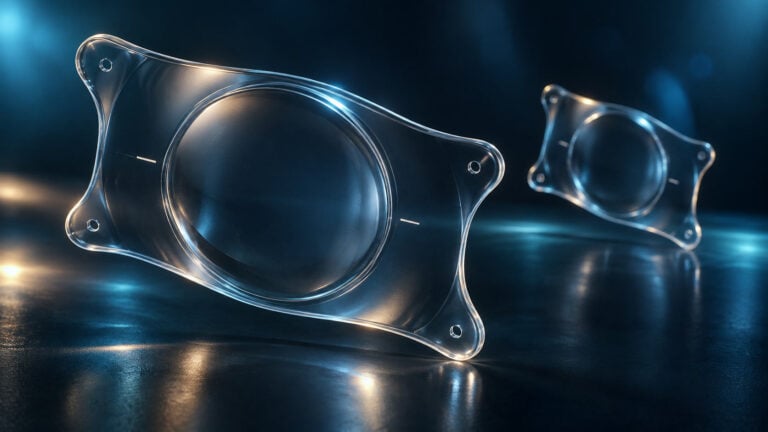
Cataract surgery is unique compared with other eye procedures. Unlike laser surgery, where we reshape the cornea, cataract surgery involves removing the cloudy lens inside your eye and replacing it with a clear artificial implant called an intraocular lens (IOL). That new lens is permanent, it restores the clarity that cataracts take away, and it’s the reason cataracts don’t “come back.”
So, if you’ve already had your natural lens replaced, where do contact lenses fit in? Can you still wear them? And are they even necessary once you’ve had surgery?
Why you need an intraocular lens (IOL) in cataract surgery
Cataracts form because your natural lens becomes cloudy with age. Simply removing that cloudy lens would leave the eye unable to focus light. That’s why surgeons always implant an IOL, it replaces the focusing power of the original lens.
This IOL can be chosen to correct short-sight, long-sight, and even astigmatism (with toric lenses). Advanced designs like multifocal or EDOF IOLs can reduce or eliminate the need for glasses altogether.
In other words: contact lenses cannot replace a cataractous lens. Surgery with an IOL is the only permanent fix.
Can you wear contact lenses after cataract surgery?
Yes! In some situations, patients still choose to wear contact lenses after cataract surgery. The reasons usually fall into three categories:
- Residual refractive error
Even with precise biometry, some patients end up with a small prescription afterwards. A contact lens can sharpen vision if you prefer it to glasses. - Monovision adjustments
If one eye is targeted for distance and the other for near, some patients try a contact lens in the “near” eye for specific tasks. - Cosmetic or specialty lenses
Coloured contact lenses or scleral lenses may still be used for appearance or in cases of corneal irregularities.
When is it safe to start wearing them again?
Most surgeons recommend waiting at least 4-6 weeks before resuming contact lens wear. This allows:
- the incision to heal,
- the IOL to stabilise,
- and any post-op dryness or irritation to settle.
Wearing lenses too soon can irritate the healing surface and increase infection risk.
Pros of wearing contact lenses after cataract surgery
- Flexible option if you don’t want glasses for certain tasks.
- Can fine-tune small prescription differences.
- Useful in special cases (cosmetic lenses, corneal irregularities).
Cons and limitations
- Not a replacement for an IOL: cataracts can’t be treated with contacts alone.
- Dry eye risk: surgery can temporarily worsen dryness, making contacts less comfortable.
- Fit challenges: the corneal shape may change slightly after surgery, sometimes requiring a new fitting.
- Inconvenience: daily wear and care routines remain, compared with simply relying on your IOL correction.
Are contact lenses still needed after modern cataract surgery?
In many cases, no. With today’s advanced lens technology, monofocal toric, multifocal, and EDOF implants, most patients achieve excellent vision without the need for contacts. For patients who want complete freedom from lenses or glasses, these premium IOLs are often a better long-term solution than returning to contact lens wear.
The Different Lens Options After Cataract Surgery
One of the biggest advantages of modern cataract surgery is choice. In the past, patients were offered only a basic monofocal lens, which meant clear distance vision but glasses for everything else. Today, refractive cataract surgery allows us to choose from a range of advanced intraocular lenses (IOLs), tailored to your eyes and your lifestyle. And while contact lenses are still an option in certain cases, they rarely compare to the convenience of modern IOLs.
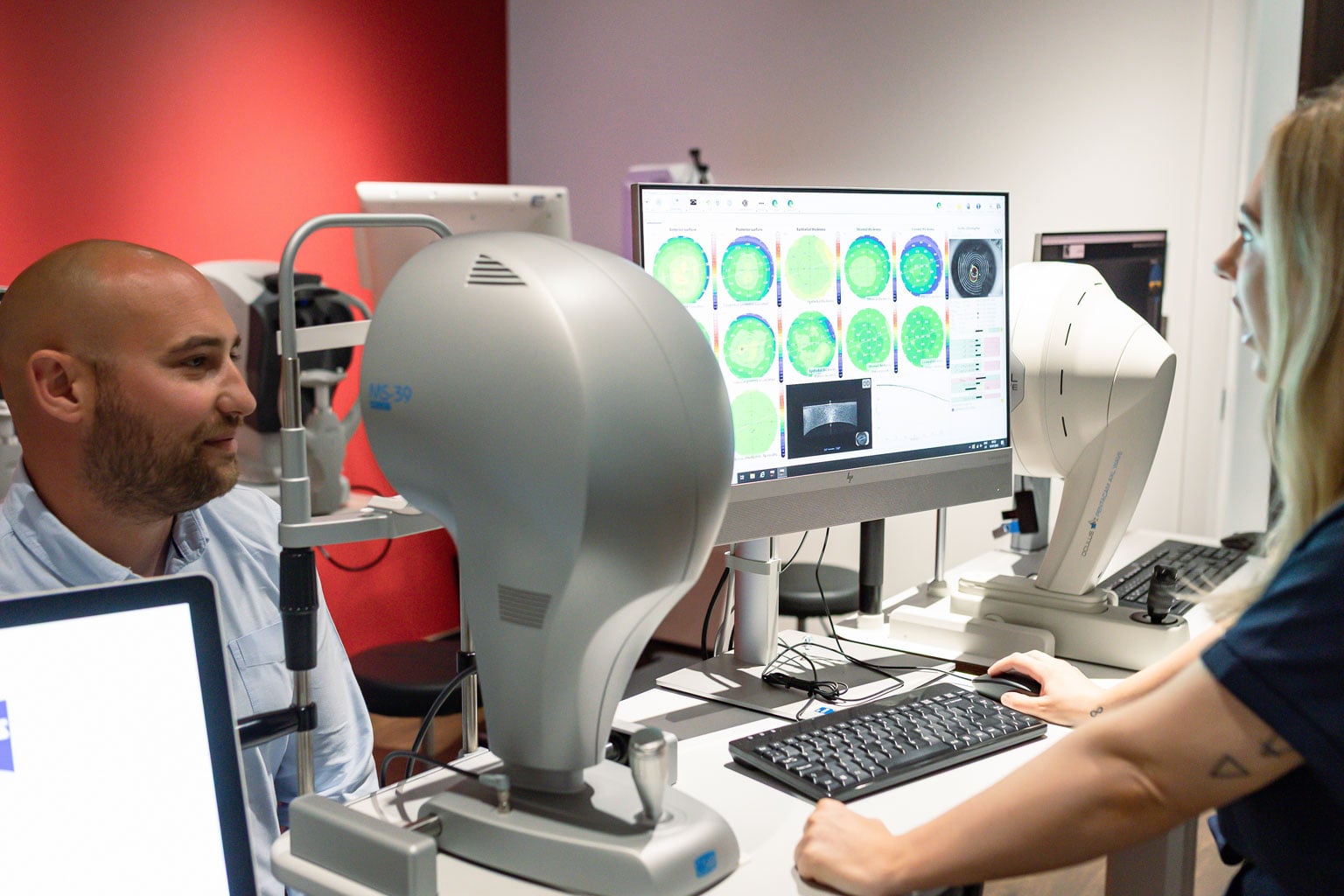
Here’s a comparison of the main options:
Types of Intraocular Lenses (IOLs) Used in Cataract Surgery
| Option | What It Does | Best For | Limitations |
|---|---|---|---|
| Monofocal IOL | Clear vision at one fixed distance (usually distance). | Patients happy to wear glasses for reading or near work. | Still need reading glasses; doesn’t correct presbyopia. |
| Toric Monofocal IOL | Same as monofocal, but also corrects astigmatism. | Patients with ≥1.0 D of astigmatism wanting sharper distance vision. | Still need reading glasses; premium upgrade. |
| Multifocal / Trifocal IOL | Provides focus at near, intermediate, and distance by splitting light. | Patients seeking maximum independence from glasses. | Can cause halos or glare at night; adaptation needed. |
| EDOF (Extended Depth of Focus) IOL | Elongates the focus range, giving distance + intermediate clarity (driving & computer work). | Active patients, drivers, professionals using screens. | Reading glasses often still needed for fine print. |
| Light Adjustable Lens (LAL) | Can be fine-tuned after surgery using UV light adjustments. | Patients wanting the most precise, customised outcome. | Requires several post-op adjustment visits. |
| Accommodating IOL | Flexes slightly with eye movement to mimic natural focus. | Patients seeking a more natural range of vision. | Less predictable results; less widely used than multifocal/EDOF. |
| Contact Lenses (after cataract surgery) | Can fine-tune small prescription errors or adjust monovision. Also available for cosmetic purposes. | Patients with residual refractive error or special visual needs. | Require daily wear and care, less comfortable after surgery due to dryness, not a replacement for an IOL. |
A Surgeon’s Guide to Choosing the Right Lens
At EuroEyes London, we always remind patients: a contact lens can adjust, but only an IOL can replace. Cataract surgery requires an implant to restore vision, contact lenses may still have a role, but they are secondary, not primary.
When we guide patients, we weigh:
- Eye measurements and astigmatism.
- Lifestyle priorities (driving, reading, screens, hobbies).
- Comfort with trade-offs (halos, night vision effects, follow-up visits).
- Long-term convenience, most patients prefer the “fit-and-forget” solution of a premium IOL over ongoing contact lens wear.
The right lens choice means most patients never need to reach for contact lenses again.
Final thoughts from EuroEyes London
After cataract surgery, contact lenses are no longer essential for most patients, your intraocular lens implant does the heavy lifting. That said, contacts can still play a role in fine-tuning vision, cosmetic purposes, or correcting unusual corneal shapes.
The most important point is this: cataracts can only be fixed with surgery and an IOL. Contact lenses alone cannot reverse the cloudiness. Once the cataract is removed and replaced with a clear lens, you may not need contacts at all but they remain an option if you and your surgeon decide they offer extra benefit.
At EuroEyes London, we’ll guide you through your IOL choices, so you can often achieve the vision you want without ever needing to touch a contact lens case again.