Expert Insights from EuroEyes
Welcome to the deeper side of vision correction.
Most ICL pages explain the basics: how the lens is implanted, who it’s for, and what the recovery looks like. But what if you’re already beyond that? What if you want to know how stable toric ICL really is? Or what happens if your eye shape changes over time? These are the questions few clinics answer, and the ones that truly matter if you’re investing in your long-term vision.
This page brings expert-level clarity to the most under-discussed topics in modern ICL surgery, so you can make an informed decision with confidence.
1. What Happens If a Toric ICL Rotates?
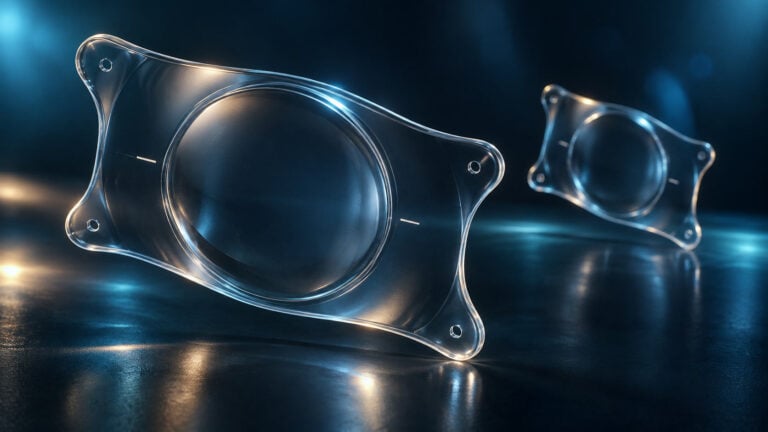
Toric ICLs are designed to correct both nearsightedness and astigmatism by aligning precisely to your corneal axis. But what if the lens shifts even slightly?
A rotation of just 5° can reduce astigmatism correction by around 17%.
Impact of Toric ICL Rotation on Astigmatism Correction
| Rotation (Degrees) | Loss of Astigmatism Correction | Real-World Impact |
|---|---|---|
| 0° | 0% | Perfect correction |
| 5° | ~17% | Slight residual blur possible |
| 10° | ~33% | Noticeable ghosting or shadowing |
| 15° | ~50% | Moderate blur, axis needs checking |
| 20° | ~67% | Likely poor vision, repositioning required |
| 30° | 100% | Complete loss of astigmatism correction |
Even a 10° misalignment can reduce the lens’s effect by a third. That’s why expert measurement, lens sizing, and post-op monitoring matter.
10° of misalignment can lead to a 33% loss in cylinder correction.
Beyond 30°, the lens may cancel out the astigmatism correction entirely.

What This Graph Shows
This chart illustrates how even small rotations of a Toric ICL lens can dramatically reduce its ability to correct astigmatism.
At 0°, the lens is perfectly aligned, providing 100% of the intended correction.
By just 5° off-axis, around 17% of the correction is lost, a change most patients may not notice, but still measurable.
At 10°, the correction drops by about 33%, which can lead to noticeable ghosting or blurred vision, especially in dim light.
If the lens rotates 15–20°, visual quality declines rapidly, often requiring reassessment or repositioning.
At 30°, the corrective effect is completely lost, meaning the ICL essentially cancels out the astigmatism correction.
The steep curve of this graph highlights why precise alignment and post-op monitoring are so crucial. Even experienced surgeons rely on advanced imaging, like OCT and corneal mapping, to ensure the lens stays exactly where it needs to be for long-term clarity.
How Common Is Rotation?
Rotation is rare, especially with EVO lenses, which are designed for stability. Most rotations fall below 5%, but about 2–5% of patients may need lens repositioning.
Signs It May Have Rotated:
- Ghosting or shadowing
- Uneven blur in one eye
- Visual discomfort in low light
Solution: Repositioning surgery is fast and minimally invasive. EuroEyes uses high-resolution imaging like OCT to measure and confirm axis alignment during follow-up visits.
2. How Is the Astigmatic Axis Measured And Can It Be Wrong?
Accurate pre-op mapping is critical for toric ICL success. Clinics use several methods to measure your astigmatic axis:
| Measurement Method | Strengths | Weaknesses |
|---|---|---|
| Manual keratometry | Simple, low-cost | Operator-dependent |
| Corneal topography | Captures anterior curvature | Doesn’t show posterior shape |
| OCT or Scheimpflug | High-res 3D imaging of full eye | More expensive, requires skill |
Sources of Error:
- Misidentifying the correct axis in patients with irregular astigmatism
- Not accounting for posterior corneal curvature
- Eye movement or dry eye affecting measurement accuracy.
Clinics using only surface measurements may be under-correcting astigmatism without realising it. The best approach combines multiple technologies.
3. Can ICL Fix Irregular Astigmatism?
Most ICL systems are designed for regular astigmatism, where the cornea has a symmetrical “football” shape. But some patients have irregular astigmatism, often caused by:
- Keratoconus or pellucid marginal degeneration
- Scarring from contact lenses or infection
- Post-surgical trauma.
ICL may not fully correct irregular astigmatism but can still be used in selected cases if:
- The posterior cornea is stable
- The irregularity is mild or localised
- Vision can be improved with a toric lens based on topography-guided planning.
In more advanced cases, crosslinking or custom scleral lenses may be better alternatives.
4. What’s the Real Astigmatism Limit for EVO Toric ICL?
Officially, EVO ICL toric lenses can correct up to 4.0 dioptres of astigmatism. But real-world results vary depending on:
- Vault size and lens centration
- Axis alignment at implantation
- Natural eye shape asymmetry.
Clinical Reality:
- Correction at 1.0 to 2.5 D usually delivers excellent results.
- 3.0–3.8 D may carry a slightly higher chance of residual blur or halo effects.
- 4.0 D corrections are possible but demand highly skilled pre-op planning and surgical precision.
Some patients may still have a minor prescription after surgery, but often don’t need glasses for everyday life.
5. Can ICL Cause New Astigmatism Over Time?
In rare cases, changes to the vault or tilt of the lens can induce new refractive errors years after surgery.
Why This Happens:
- The ICL can shift slightly if the vault changes with age.
- Eye pressure fluctuations or trauma could affect lens tilt.
- An oversized or undersized lens may sit too close or too far from the iris.
How It’s Managed:
- Annual check-ups with anterior segment OCT imaging
- Monitoring for vault height, tilt, or endothelial cell loss
- If needed, repositioning or lens exchange is possible even years later.
Most patients experience stable vision for 10–20 years or longer with no significant shift.
6. Can ICL Be Used for Mixed Astigmatism?
Mixed astigmatism means one eye meridian is myopic (short-sighted) while the other is hyperopic (long-sighted). This makes surgical correction tricky.
Is It Safe?
Toric ICLs are usually reserved for myopic or compound astigmatism. But in selected patients:
- A modified ICL calculation can correct the myopic component
- Residual hyperopic axis may be managed with glasses or enhancement surgery later.
It’s essential for the clinic to run custom axis simulations and wavefront mapping before approving ICL for these patients.
7. How Does ICL Vision Compare to LASIK for Astigmatism?
| Metric | ICL | LASIK |
|---|---|---|
| Astigmatism correction | Up to 4.0D reliably | Up to 5.0D common |
| Contrast sensitivity | Higher, especially in low light | Slight decrease possible |
| Risk of regression | Very low | Moderate (esp. in high Rx) |
| Night vision quality | Excellent | Can include halos or glare |
| Reversibility | Yes | No |
| Dry eye risk | Very low | High |
In moderate astigmatism cases (1.5–3.0 D), both ICL and LASIK can deliver excellent results. But ICL often wins in clarity, comfort, and long-term stability, especially for patients with dry eyes or borderline corneal thickness.

What This Chart Shows
This radar chart visually compares ICL and LASIK across six key performance areas for astigmatism correction. The wider the shape stretches from the center, the stronger the performance in that category.
You’ll notice that ICL consistently scores higher in areas like contrast sensitivity, night vision, reversibility, and dry eye risk, making it a strong choice for patients with sensitive eyes or demanding visual needs. LASIK, while still effective, shows slightly lower performance in these areas, particularly for those with high prescriptions or dryness concerns.
The chart clearly shows that ICL provides more balanced, long-term clarity, while LASIK may suit patients looking for a quick fix with fewer anatomical constraints. Both options work well for moderate astigmatism (1.5–3.0 D), but ICL often edges ahead in real-world comfort and precision.
Frequently Asked Questions About Living With ICL
Even after understanding the medical side of ICL surgery, most patients have simple, everyday questions about what life is like after the procedure. Here are some of the most common ones we hear in clinic answered clearly and honestly.
Can I go swimming after ICL surgery?
Yes, but not right away. You should wait at least two weeks before swimming, and only after getting the all-clear from your surgeon. Chlorinated pools, hot tubs, and natural bodies of water can carry bacteria that pose a risk during the early healing period.
Tip: Use swim goggles after healing to protect your eyes from irritation just like anyone with healthy vision.
What does vision look like after ICL surgery?
Most people describe it as “HD vision” – sharper and more vibrant than they ever had with glasses or contact lenses. Colours can feel more intense, and small details (like text or facial features) often pop more than expected.
Some people notice halos or light rings at night for the first few weeks, but these usually fade as your brain adapts.

Will I feel the lens in my eye?
No! Once healed, you won’t feel the ICL at all. It sits behind your iris and in front of your natural lens, floating comfortably in a space your eye already accommodates. There are no moving parts, and nothing touches the cornea or eyelid. It’s completely invisible and typically forgotten by patients within days.
How do ICLs compare to glasses or contacts for sports?
ICLs are ideal for active lifestyles. No fogging, no shifting, no dry eyes from wind or sweat. Whether you’re boxing, skiing, swimming (post-healing), or doing high-impact sports, ICLs offer the freedom of uncorrected vision without the fragility of glasses or maintenance of contacts.
Can I wear makeup after ICL surgery?
Yes! just not straight away. Avoid eye makeup, mascara, and cream-based products around the eye for the first 7–10 days after surgery. Once your eyes have healed, makeup routines can return to normal. Always use clean brushes and avoid getting product in your eyes just as you would pre-surgery.
Will I need reading glasses after ICL?
That depends on your age. ICL corrects distance vision, but it doesn’t stop the natural ageing of your lens. If you’re under 45, you likely won’t need reading glasses for many years. Over time, presbyopia may still develop, just like in anyone else, whether they had surgery or not.
Some patients opt for blended vision techniques or multifocal lenses later in life.
Is ICL a good choice if I work on screens all day?
Yes! in fact, many people find it more comfortable than glasses or contacts for long screen use. Because the lens doesn’t touch your cornea or dry out, symptoms like digital eye strain and irritation tend to reduce.
That said, screen breaks, blue light control, and good posture are still key to visual comfort.
Dr. Fadi’s Summary
“Toric ICL surgery is not just about correcting your vision today, it’s about protecting the quality of your sight for the future. What we’ve outlined above covers the nuanced realities I wish every patient had access to before surgery. Rotation, measurement precision, and anatomy-specific planning all matter, especially if you want stable, glasses-free vision for years to come.
If you’ve got questions about axis alignment, mixed astigmatism, or simply want to know whether ICL is right for your eyes, my team and I are here to help. Every set of eyes is unique and that’s exactly how we treat them.”
Dr. Fadi Kherdaji
Consultant Eye Surgeon | Specialist in Implantable Lenses & Refractive Cataract Surgery
Considering ICL?
If you’re considering ICL, especially toric options; choose a clinic that understands not just how to implant a lens, but how to customise the experience to your exact eye anatomy. These decisions impact your results for decades.
Want to speak with a surgeon who understands all this? We’d be happy to help.