I get asked this question more often than you’d think.
Usually halfway through a consultation, just as everything starts to sound a bit too technical.
“Wait… are trifocal and multifocal lenses the same thing?”
Short answer, not quite.
Longer answer, they’re closely related, but the difference actually matters more than it sounds.
Where the Confusion Starts
The word “multifocal” is the problem.
It’s a broad term. In simple terms, it just means a lens that helps you see at more than one distance. That could be near, far, or somewhere in between.
So technically, trifocal lenses are a type of multifocal lens.
But not all multifocal lenses are trifocal.
And that’s where things start to split.
Trifocal vs Multifocal Lenses
Трифокальные линзы
Designed with three clear focal points for structured vision.
Best for: Driving, screens, reading
Feel: Precise and predictable
Ideal if: You want clarity at specific distances without thinking about it – More Advantages
Мультифокальные линзы
A broader category with varied designs and blended focus.
Best for: Natural transitions between distances
Feel: Smooth and adaptive
Ideal if: You prefer a more natural visual flow rather than defined zones
When Should You Start Thinking About These Lenses?
Most people begin considering trifocal or multifocal lenses when near vision starts to fade, typically in their 40s and beyond. Reading becomes harder, screens feel slightly out of focus, and glasses start to become part of everyday life.
You might also be exploring these options if you’ve been told you have a cataract, or you’re looking for a long-term solution to reduce dependence on glasses altogether.
The key point is this, the “right” lens isn’t something you choose from a list. It’s something that’s selected based on detailed measurements, your lifestyle, and how your eyes are likely to respond. That’s where the real decision happens.
What a Trifocal Lens Actually Does
A trifocal lens is very specific in what it’s designed to do.
It gives you three distinct focal points:
- Distance for driving and watching TV
- Intermediate for computer work and dashboard vision
- Near for reading and using your phone
Think of it as dividing your vision into three clear zones.
For a lot of patients, especially those who are tired of juggling reading glasses, that’s a big shift. You’re not constantly switching focus or reaching for something.
It just works.
Well… most of the time.

Where Multifocal Lenses Can Be Different
Multifocal lenses don’t always split vision in the same way.
Some use two focal points, such as distance and near, while others blend vision more gradually. Some prioritise smoother transitions rather than sharp separation.
That means the experience can feel slightly different depending on the lens.
Some patients prefer that softer transition. Others want the sharper clarity that a trifocal design tends to give.
There isn’t a “better” option across the board, just a better fit for the person sitting in front of me.
What Patients Actually Notice
Here’s the part that doesn’t always get explained clearly.
On paper, these lenses sound very similar. In real life, they feel different.
Some patients with trifocal lenses say:
“I can just get on with things, I don’t think about my vision anymore.”
Others, particularly with more blended multifocal designs, say:
“It feels more natural, like my eyes are doing the work.”
Neither is wrong.
It’s just preference, lifestyle, and how your brain adapts to the optics.
So… Are They the Same?
Not exactly.
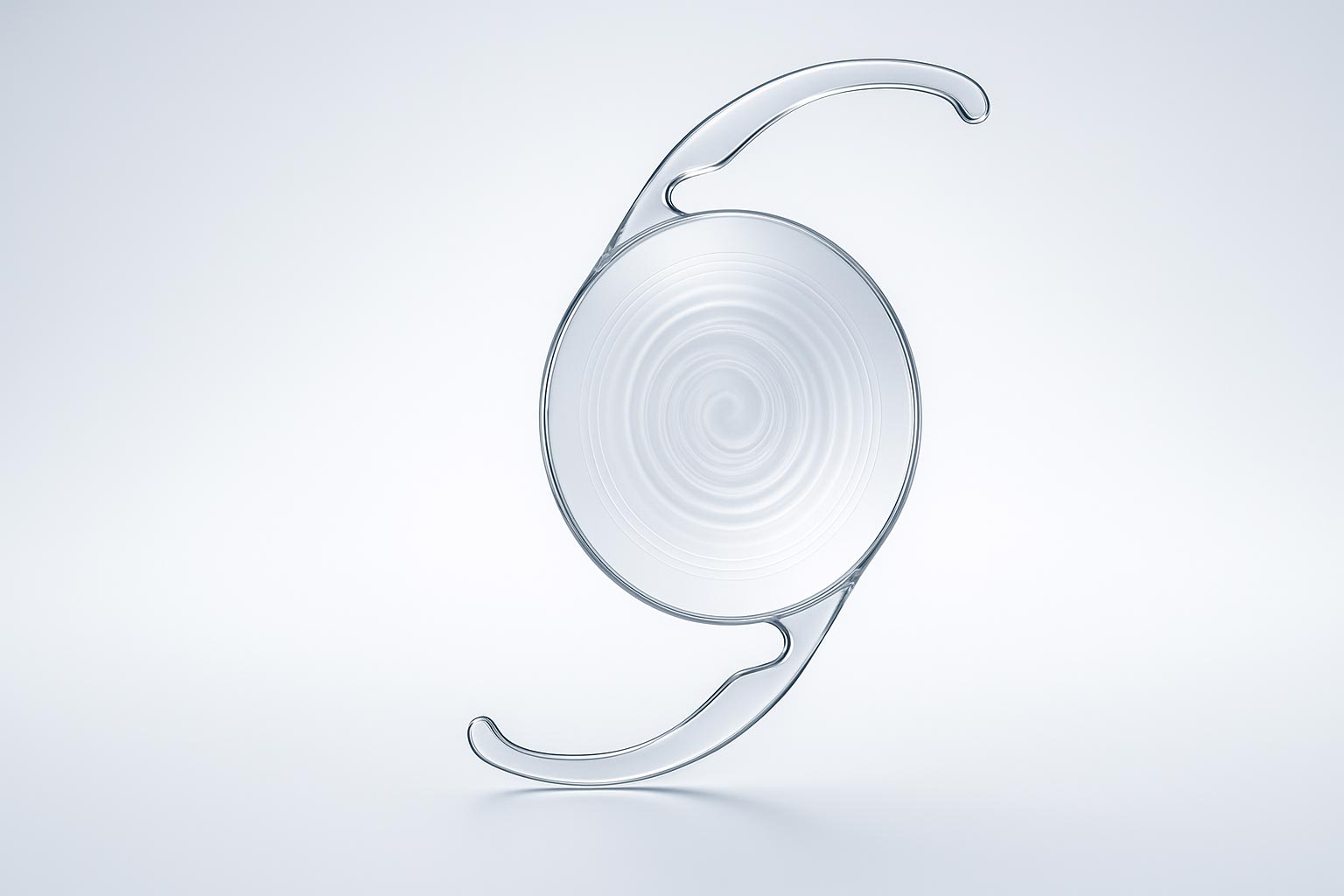
Trifocal lenses are designed with three distinct focal points, typically distance, intermediate, and near. These are created by splitting incoming light into separate focal zones, allowing the eye to access each range with a high degree of predictability. This is why trifocal lenses tend to perform well for structured tasks such as driving, computer work, and reading.
Multifocal lenses, as a broader category, are more variable in design. Some use two focal points, while others rely on a more continuous distribution of light across multiple distances. In these designs, vision is not always divided into clear zones but blended, which can create a smoother transition between distances.
From a clinical perspective, both approaches involve a trade-off in how light is distributed across the retina. Trifocal lenses prioritise clarity at specific distances, while some multifocal designs prioritise continuity and visual comfort.
In practice, the choice comes down to how the brain adapts to these optics. Some patients respond better to defined focal points, while others prefer a more natural, blended visual experience.
How I Explain It in Clinic
I usually say this:
“If you want structured, predictable vision across three key distances, trifocal lenses are often the way to go. If you prefer something that feels more blended and natural, there are other multifocal options worth considering.”
And then we look at the eye.
Because that’s the part that really decides it.
The Bit That Matters Most
Patients often come in thinking they need to choose a lens.
They don’t.
That’s our job.
With the right measurements and a proper understanding of how your eyes work, the choice usually becomes quite obvious. It stops being about terminology and starts being about what will actually work for you day to day.
A Lens To Fit Your Life
The real goal isn’t to understand every lens on the market.
It’s to find the one that fits your life well enough that you forget it’s even there.
That’s when we know we’ve got it right.