Reading should feel relaxing, whether you are opening a novel, checking a menu or catching up on the news. However, changes in your vision can make the words appear blurred, force you to hold the page further away or leave your eyes feeling tired after only a few chapters.
For many adults over 40, the cause is presbyopia: the natural, age-related reduction in the eye’s ability to change focus between different distances. However, not everyone experiences the same pattern. Some people can read without glasses but struggle to recognise a face across the room. Others see clearly while driving but need reading glasses for a book, phone or restaurant menu. Modern vision correction can address many of these problems, but the right solution depends on which distances are blurred, your age, your prescription and the health of your natural lenses. Options available at EuroEyes London include advanced laser eye surgery, PRESBYOND® Laser Blended Vision, implantable contact lenses and lens replacement surgery.
Quick Answer: Can Laser Eye Surgery Help You Read Without Glasses?
Yes, for suitable patients. PRESBYOND® Laser Blended Vision is designed to increase the useful range of focus across near, intermediate and distance vision. Other patients may be better suited to conventional laser correction, an implantable contact lens or lens replacement surgery. A detailed eye assessment is needed because each option solves a different type of focusing problem.
Why Can Some People Read Without Glasses but Not See Clearly Far Away?
Clear vision depends on light focusing accurately on the retina at the back of the eye. The shape of the cornea, the length of the eye and the focusing ability of the natural lens all influence where that light comes to focus.
This creates several different patterns of vision:
A short-sighted person may be able to remove their distance glasses and hold a book close to see it clearly. This does not mean presbyopia has disappeared. Their existing myopia is simply providing a naturally close focal point.
Someone with good distance vision may experience the opposite. Road signs and television remain clear, but their phone, book or laptop becomes increasingly difficult to focus on. This is the classic pattern of presbyopia.
What Is Presbyopia and Why Does It Affect Reading?
When we are young, the natural lens inside the eye is flexible. Tiny muscles alter its shape to bring objects at different distances into focus. This automatic process is known as accommodation.
As the lens gradually becomes less flexible, the eye cannot increase its focusing power as easily. Close print may appear blurred, particularly in low light, and you may find yourself holding reading material further away. Many people first notice these changes from their early to mid-40s.
Presbyopia is not caused by excessive reading, mobile phones or computer use. It is a natural part of ageing. Prolonged close work can, however, make symptoms such as tiredness, dryness, headaches and temporary difficulty refocusing more noticeable.
Take Regular Breaks While Reading or Using a Screen
Reading does not permanently damage healthy eyes, but concentrating at one distance for a long period can cause digital eye strain. People also tend to blink less frequently while reading from a screen, which can contribute to dryness and fluctuating vision.
A useful approach is the 20-20-20 rule: after approximately 20 minutes of close work, look at something around 20 feet away for at least 20 seconds. This relaxes the sustained focusing effort and gives you an opportunity to blink fully.
Important: Breaks can make reading more comfortable, but they cannot reverse presbyopia, myopia, hyperopia or astigmatism. If words remain blurred, an eye examination can identify whether you need a new prescription or could benefit from vision correction treatment.
Which Vision Correction Treatment Is Best for Readers?
There is no single procedure that is best for everyone who enjoys reading. Treatment should be selected according to the underlying cause of the blurred vision rather than the activity itself.
1. PRESBYOND® Laser Blended Vision
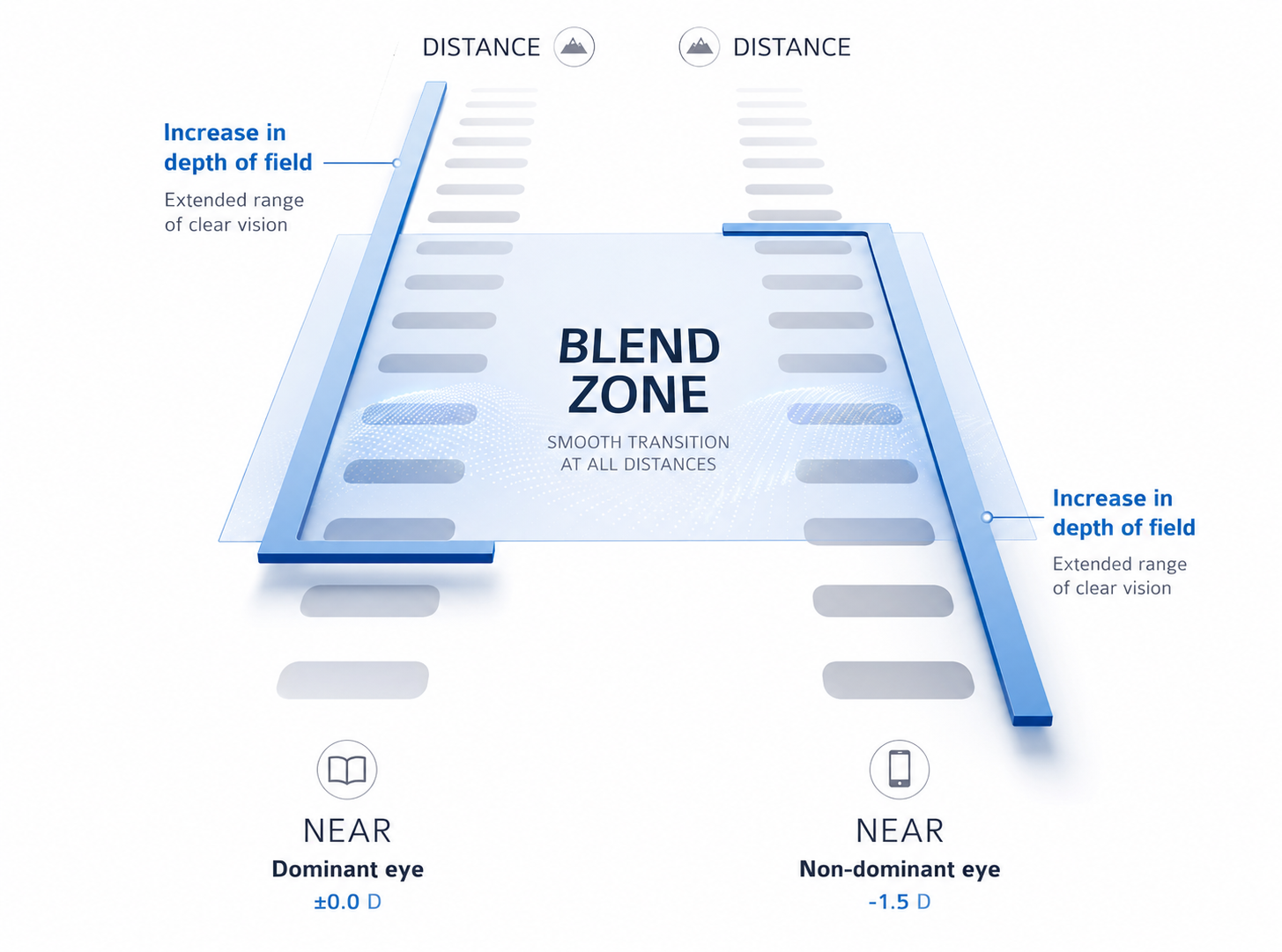
PRESBYOND® is an advanced form of laser vision correction developed for people experiencing presbyopia. It is usually considered for adults over 40 who want to reduce their dependence on reading glasses, bifocals or varifocals.
The dominant eye is normally optimised primarily for distance, while the non-dominant eye is given more support for near vision. A personalised Blend Zone increases the useful depth of focus and helps both eyes contribute across intermediate distances.
The brain then combines the visual information from both eyes. This differs from traditional monovision, where the separation between the distance eye and reading eye may be more pronounced. Suitability testing is important because the surgeon must assess your prescription, corneal measurements, eye dominance, binocular vision and ability to adapt to blended vision.
2. Conventional Laser Eye Surgery
Procedures such as LASIK, SMILE Pro and surface laser treatments can correct short-sightedness, long-sightedness and astigmatism in suitable patients.
For example, a younger reader who sees a book clearly but cannot see at distance because of myopia may benefit from conventional laser correction. However, standard distance correction does not prevent the natural development of presbyopia later in life. A short-sighted patient approaching their 40s should therefore discuss how correcting both eyes fully for distance could affect their unaided reading vision.
3. Implantable Contact Lenses
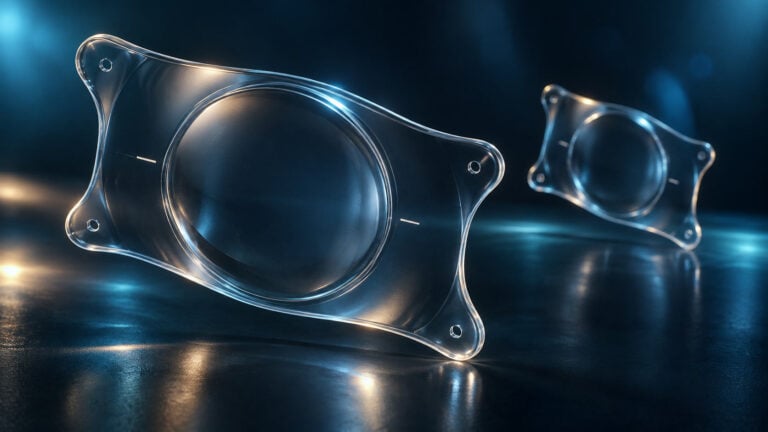
An implantable contact lens, or ICL, is positioned inside the eye while the natural lens remains in place. It may be considered for patients with short-sightedness, long-sightedness or astigmatism, including some people who are unsuitable for corneal laser treatment.
ICL can be particularly valuable for younger adults with high prescriptions or corneas that are not suitable for laser reshaping. It can provide clear distance vision and may improve intermediate visual function by correcting the underlying prescription.
However, a standard ICL does not stop the natural lens ageing and is not usually the primary treatment for presbyopia. Someone who receives an ICL while younger can still require reading support when presbyopia develops later.
4. Refractive Lens Exchange and Trifocal Lenses
During refractive lens exchange, also known as clear lens exchange, the natural lens is removed and replaced by an artificial intraocular lens. The procedure is technically similar to modern cataract surgery, although it can be performed before a visually significant cataract develops.
A trifocal lens is designed to provide useful vision at three important ranges:
- Near: reading a book, menu or phone.
- Intermediate: using a laptop, viewing a dashboard or preparing food.
- Distance: driving, watching television or recognising faces across a room.
Lens replacement may be considered when presbyopia is more advanced, when early lens changes are present or when a patient is less suited to corneal laser surgery. Different lens designs have different optical characteristics, so factors such as night driving, screen use and tolerance of halos must be discussed carefully.
Laser Surgery, ICL or Lens Replacement: A Simple Comparison

What Happens During a Reading-Vision Assessment?
A modern assessment goes beyond asking whether you can read the smallest line on an eye chart. Your surgeon needs to understand how you use your vision throughout an ordinary day.
This may include measuring:
- Your near, intermediate and distance prescription.
- The shape, thickness and optical quality of each cornea.
- Your dominant and non-dominant eye.
- How effectively both eyes work together.
- The condition and clarity of your natural lenses.
- Your pupil size and vision in different lighting conditions.
- Tear-film quality and signs of dry eye.
- The health of the retina and other internal eye structures.
Our surgeons will also ask about the distances that matter most to you. A designer using two large monitors may have different priorities from someone who drives at night, reads fine print or works outdoors.
Who May Be Suitable for Reading-Vision Surgery?
Suitability is determined by eye health and measurements rather than age alone. Potential candidates will generally need a stable prescription, healthy eyes and realistic expectations about the outcome.
These age ranges are only a general guide. A healthy patient in their 50s may remain suitable for laser correction, while lens-based treatment could be more appropriate for a younger person with significant lens changes or an unsuitable cornea.
What Results Can You Realistically Expect?
The objective of presbyopia treatment is usually to provide greater freedom from glasses across the distances used in everyday life. Many suitable patients can read, work on a computer and see clearly at distance with significantly less dependence on spectacles.
Nevertheless, no responsible clinic should promise that glasses will never be needed again. Fine print, dim lighting, extended reading or particularly demanding visual tasks may still require occasional support. Vision also continues to be influenced by tear-film quality, retinal health and other natural changes within the eye.
Patients choosing blended vision may experience an adaptation period while the brain learns to combine the different focal contributions from each eye. Some adapt very quickly, while others need several weeks. Suitability testing and realistic expectations are therefore central to a successful result.
Часто задаваемые вопросы
Can ordinary LASIK remove the need for reading glasses?
Standard LASIK can correct myopia, hyperopia and astigmatism, but it does not stop the natural lens becoming less flexible. PRESBYOND® is a more specialised laser approach intended to provide a broader range of functional vision for suitable presbyopic patients.
Why can I read without glasses when I am short-sighted?
Myopia creates a naturally close focal point. Removing your distance glasses may allow you to read clearly at that particular distance. The stronger the myopia, the closer the clear focal point is likely to be.
Why can I see far away but not read?
If you are over 40, presbyopia is a likely explanation. Your distance prescription may remain good, but the natural lens can no longer change shape sufficiently to focus on close objects.
Can an implantable contact lens correct presbyopia?
A standard ICL primarily corrects refractive errors such as myopia, hyperopia and astigmatism. Because the natural lens remains in the eye, age-related presbyopia can still develop. PRESBYOND® or lens replacement may be more directly suited to someone whose main concern is reading vision.
Does reading too much weaken the eyes?
Reading does not permanently weaken healthy eyes. Long periods of close work can cause temporary eye strain, dryness or difficulty changing focus. Regular breaks, good lighting and an accurate prescription can make reading more comfortable.
Is lens replacement better than laser eye surgery?
Neither treatment is universally better. Laser treatment preserves the natural lens and may suit patients with healthy corneas and clear lenses. Lens replacement may be more appropriate when the natural lens has aged, when cataracts are developing or when an artificial lens offers a better match for the patient’s visual needs.
Find the Right Vision Correction for Your Reading and Lifestyle
The best treatment is determined by how your eyes focus at every distance, not simply by whether you currently wear reading glasses. EuroEyes London can assess your near, intermediate and distance vision before recommending a personalised laser or lens-based solution.
A Note From EuroEyes London
Changes in reading vision can be frustrating, but they are not always caused by the same condition. Some patients need help primarily at near distances, while others have myopia or astigmatism affecting intermediate and distance vision as well.
Modern treatments allow our surgeons to consider the complete visual range. PRESBYOND® can provide blended vision for suitable presbyopic patients, conventional laser surgery and ICL can correct underlying refractive errors, and advanced lens surgery can provide a long-term solution when the natural lens is no longer meeting a patient’s needs.
A comprehensive assessment at EuroEyes London will establish which option is most appropriate for your eyes, your everyday activities and the way you want to use your vision.