Quick Answer
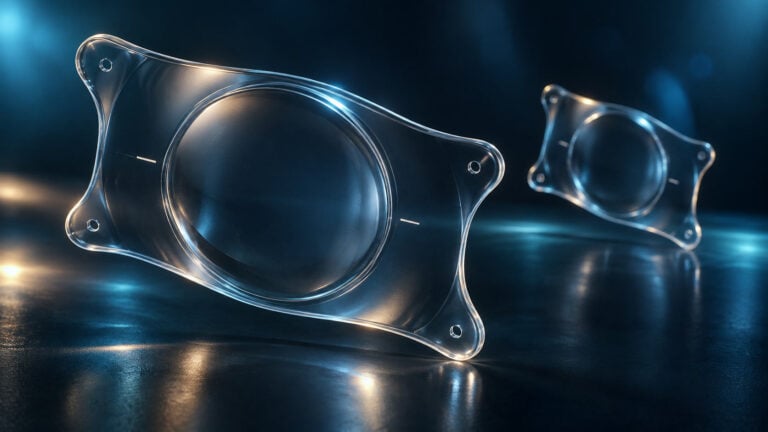
Contact lens implant surgery, also known as ICL surgery, typically costs from around £3,500 per eye in London in 2026. The exact price depends on the type of lens used, the complexity of your prescription, and the level of care provided by the clinic. At premium providers such as EuroEyes, the cost reflects advanced lens technology, experienced surgeons, and structured aftercare designed to support long-term results.
Prescription Complexity and ICL Suitability
The higher or more complex the prescription, the more important lens selection, eye measurements and surgical planning become. This is one reason contact lens implant surgery can vary in cost between patients.
| Prescription Profile | Typical Complexity | Why ICL May Be Considered | Planning Focus |
|---|---|---|---|
| Mild Prescription Lower short or long-sightedness |
Низкий | Laser may also be suitable if the cornea is healthy and thick enough. | Corneal thickness, lifestyle needs, treatment preference |
| Moderate Prescription More noticeable dependence on glasses |
Medium | ICL may be discussed if laser limits are approaching or corneal tissue preservation is important. | Prescription stability, corneal mapping, eye shape |
| High Prescription Higher myopia or complex correction |
Высокий | ICL is often considered because it corrects vision without removing corneal tissue. | Lens power, sizing, vault, anterior chamber depth |
| Astigmatism or Thin Cornea More customised correction required |
Advanced | Toric ICL may be used to correct astigmatism while preserving the natural cornea. | Axis alignment, lens rotation control, detailed diagnostics |
This overview is a guide only. Final suitability depends on detailed diagnostic testing, prescription stability and the internal structure of the eye.
What Patients in London Are Really Asking
When people search for contact lens implant surgery in London, they are rarely just comparing prices. Most are trying to understand whether this is a long-term solution, whether it justifies the investment, and how it compares to laser eye surgery in practical terms.
ICL is often described as a different approach to vision correction. Rather than removing tissue from the eye, a lens is placed inside it, working alongside the eye’s natural structures. For many patients, that distinction matters. It offers a sense of flexibility, particularly for those who have been told they are not suitable for LASIK or who are cautious about permanent structural change.
How Much Does Contact Lens Implant Surgery Cost in London in 2026?
In 2026, most London clinics position ICL surgery within a fairly broad range. Prices typically start from around £3,000 per eye and can exceed £4,500 depending on the clinic, the lens type, and the complexity of the prescription.
At EuroEyes London, pricing generally begins from around £3,500 per eye, placing it within the mid-to-premium segment of the market. What matters more than the headline figure is what is included. The cost usually covers detailed diagnostics, lens customisation, the surgical procedure itself, and structured aftercare.
Clinics operating at a higher level tend to invest heavily in measurement and planning. Modern imaging systems can map the eye down to extremely fine margins, which directly influences how accurately the lens fits and performs once inside the eye. In refractive surgery, small differences in planning often lead to noticeable differences in outcome.

For many patients, the financial equation changes when viewed over time. The ongoing cost of glasses, contact lenses, solutions, and replacements over 10 to 20 years can become significant, which is why a one-time solution begins to make more sense.
Clinical Perspective – Mr Fadi Kherdaji
“Patients often focus on the number first, which is understandable. But what really determines the outcome is the level of precision behind it, how well the lens is matched to the eye, and how carefully that planning is done.”
Why London Patients Are Choosing ICL Over Glasses and Contact Lenses
There has been a noticeable shift in how patients across London think about their vision. Glasses and contact lenses still serve a purpose, but for many, they eventually become something to move beyond rather than rely on long term. The question becomes less about immediate clarity and more about durability, lifestyle, and how well a solution will hold up over time.
This is where the difference between laser eye surgery and ICL becomes more defined. Laser procedures such as LASIK or SMILE are highly effective for patients with lower prescriptions and sufficient corneal thickness. In these cases, reshaping the cornea can deliver excellent and predictable results.
However, that option depends heavily on the eye’s anatomy. If the cornea is thinner, or the prescription is higher, removing tissue may not be the safest or most effective approach. ICL exists for this reason. By placing a lens inside the eye rather than reshaping it, the natural structure is preserved while vision is corrected at a deeper optical level.
From a clinical standpoint, this distinction is important. Studies have shown that implantable lenses can provide highly predictable outcomes, particularly in higher prescriptions, with many patients achieving vision equal to or better than their previous corrected vision with glasses or contact lenses.
Clinical Insight – Dr Jørn Slot Jørgensen
“Laser and lens-based treatments are both highly effective, but they serve different types of eyes. The decision is not about which is better in general, but which is more appropriate for the individual patient.”
What You Are Really Paying For
One of the biggest misconceptions around ICL surgery is that all procedures are essentially the same. In reality, the difference between clinics can be significant, particularly in London.
A large part of the cost is tied to precision. Advanced clinics use detailed imaging to measure the eye with a high degree of accuracy, ensuring the lens is correctly sized and positioned. This is particularly important in cases involving astigmatism or higher prescriptions, where alignment and stability play a critical role in visual clarity.
Surgeon experience also plays a key role. Implanting a lens inside the eye requires careful handling, accurate positioning, and an understanding of how the eye will respond over time.
Then there is aftercare. High-quality clinics continue to monitor patients after surgery, ensuring the eye adapts well and that vision remains stable. This ongoing support is often where the long-term value becomes most apparent.
Is It Worth It Long-Term?
For many patients, the decision makes more sense when viewed over time rather than as an upfront cost. Glasses and contact lenses require continuous spending, regular updates, and daily management. ICL offers a different model, where vision is corrected in a single procedure and maintained over many years.
It is not just about convenience. It is about consistency. Patients often describe the experience as moving from managing their vision to simply having it, without the daily interruptions that come with external correction.
A London Clinic Perspective on the Future of Vision Correction
At EuroEyes London, there is a clear shift towards treatments that are not only effective today but adaptable for the future. Implantable lenses fit naturally into this approach by working with the eye rather than permanently altering it.
As technology evolves, the idea of a single fixed correction is gradually being replaced by more flexible models. Implantable lenses can be removed or exchanged if needed, which allows vision correction to evolve alongside the natural ageing process of the eye.
Most people spend years adjusting to their vision, new prescriptions, stronger lenses, different solutions. It becomes routine. What is often overlooked is that the eye itself is constantly changing.
That is why the decision between laser and ICL is not purely clinical. It is personal. It reflects how someone wants to experience their vision over the next 10, 20, or even 30 years.
A Final Thought – Mr Fadi Kherdaji
“Most patients don’t remember the technical details once it’s done. What they remember is whether they feel confident in their vision day to day. That’s always the goal.”
The Leading Option
Contact lens implant surgery is no longer a niche treatment. In London, it has become a well-established option for patients seeking long-term clarity without committing to permanent structural change.
The more relevant question is not simply what it costs today, but what it delivers over the years that follow.