Most eye clinics describe themselves as advanced. They reference the latest lasers, modern facilities and cutting-edge equipment. While technology is important, it’s only one part of what truly defines an advanced eye clinic.
For patients considering vision correction, the real difference lies not in the machines alone, but in how decisions are made, how outcomes are planned and how care is delivered over time.
Advanced clinics don’t lead with procedures
One of the clearest signs of a high-level clinic is that treatment is not discussed first. Instead of starting with what can be done, advanced clinics begin by understanding the eye in detail; its structure, behaviour and long-term trajectory. Procedures are considered only after the full picture is clear. This approach reduces unnecessary risk and ensures treatment choices are driven by outcomes, not availability.
Experience shapes judgement, not just technique
Technology can be purchased. Experience cannot. Clinics that have treated tens of thousands of patients over many years develop a depth of judgement that cannot be replicated quickly. Surgeons learn to recognise subtle patterns, borderline cases and long-term implications that are invisible in basic assessments.
This experience influences:
Who should be treated, and who should wait
An experienced clinic may see a patient in their mid-20s with a mild but still-changing prescription. While surgery may be technically possible, the safest recommendation could be to wait until stability is confirmed. Treating too early risks regression and unnecessary enhancement later. Knowing when not to operate yet is often just as important as knowing when surgery is appropriate.
Which approach will age best
Two patients with similar prescriptions may receive different recommendations based on age and long-term needs. A younger patient with healthy corneas may be best suited to laser vision correction, while someone in their early 40s with early near-vision changes may benefit more from a lens-based approach that anticipates presbyopia. Choosing what “ages best” means planning for how vision will behave five, ten or twenty years from now, not just how it looks after a few weeks.
When restraint is safer than intervention
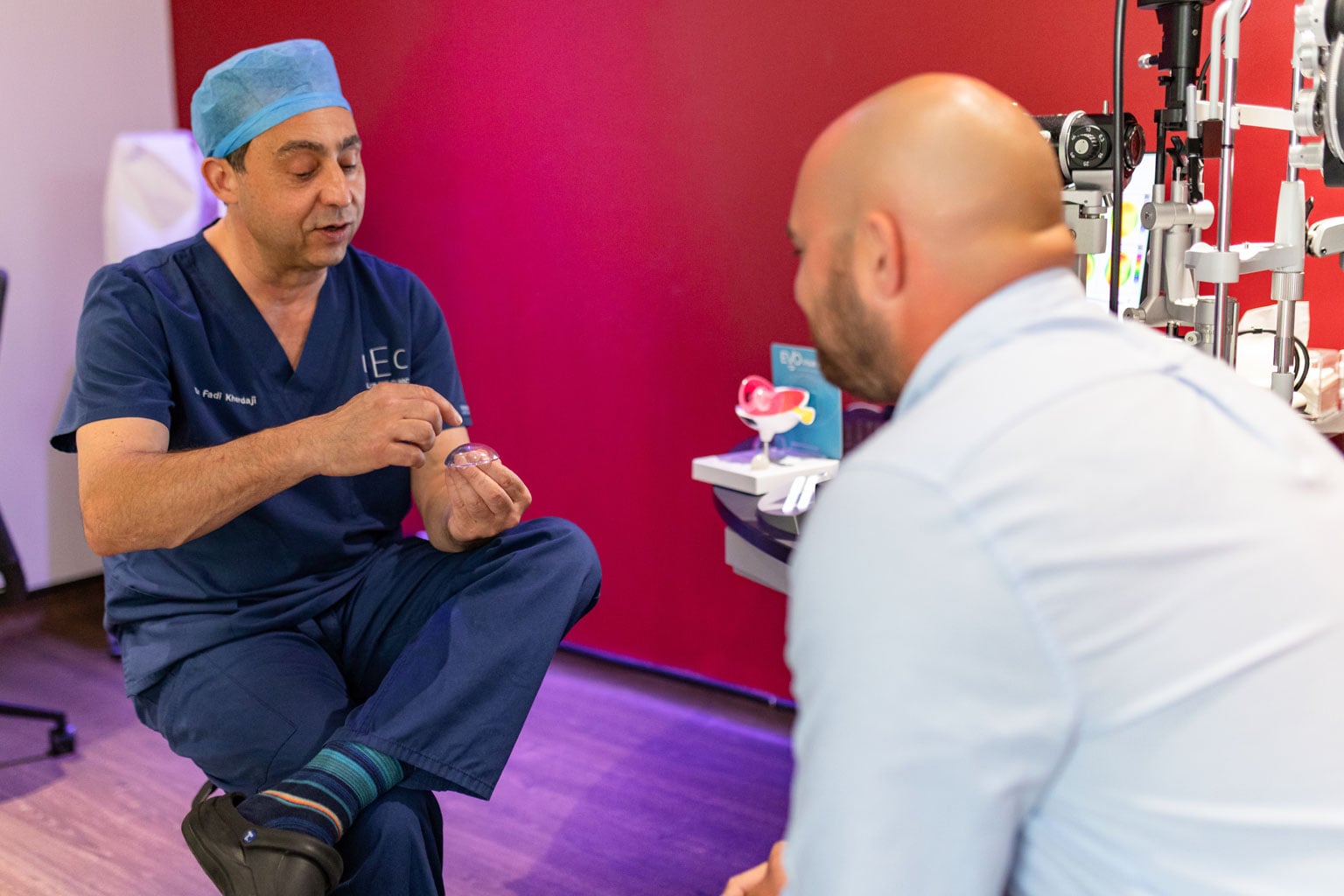
In some borderline cases, subtle corneal irregularities or dry eye symptoms may increase the risk of visual disturbances after surgery. An advanced clinic may recommend optimising eye health first, or in some cases advise against surgery altogether. This restraint protects patients from avoidable complications and reinforces that safety and long-term quality of vision always come before procedural volume.
These decisions are rarely visible on a website, but they have a profound impact on results.
Advanced clinics think in systems, not appointments
High-performing clinics operate as integrated systems rather than isolated appointments.
This includes:
Standardised assessment protocols
For patients, this means every eye is evaluated using the same high clinical standards, not rushed or shaped by time pressure. Measurements are taken in a defined sequence, cross-checked, and reviewed before any recommendation is made. For the clinic, standardisation ensures consistency, patients are not dependent on who they see on the day, but on a shared system designed to protect accuracy and safety.
Multi-layer diagnostics
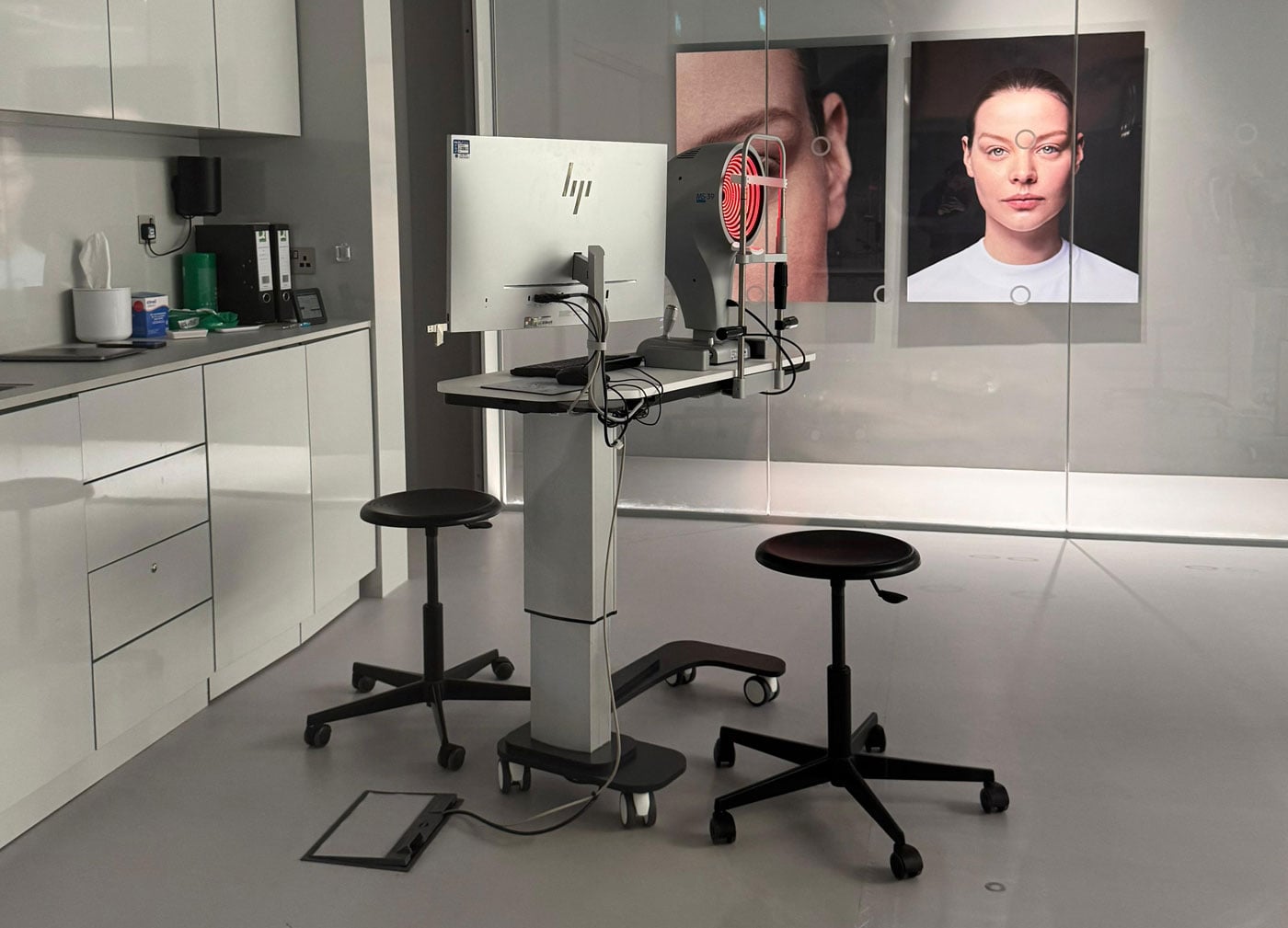
Rather than relying on a single test or scan, advanced clinics combine multiple diagnostic technologies to build a complete picture of how the eye behaves. Corneal mapping, depth imaging, tear film analysis and lens assessment each reveal different aspects of eye health. For patients, this reduces uncertainty and unexpected outcomes. For the clinic, it allows subtle risks to be identified early and managed appropriately.

Structured decision-making pathways
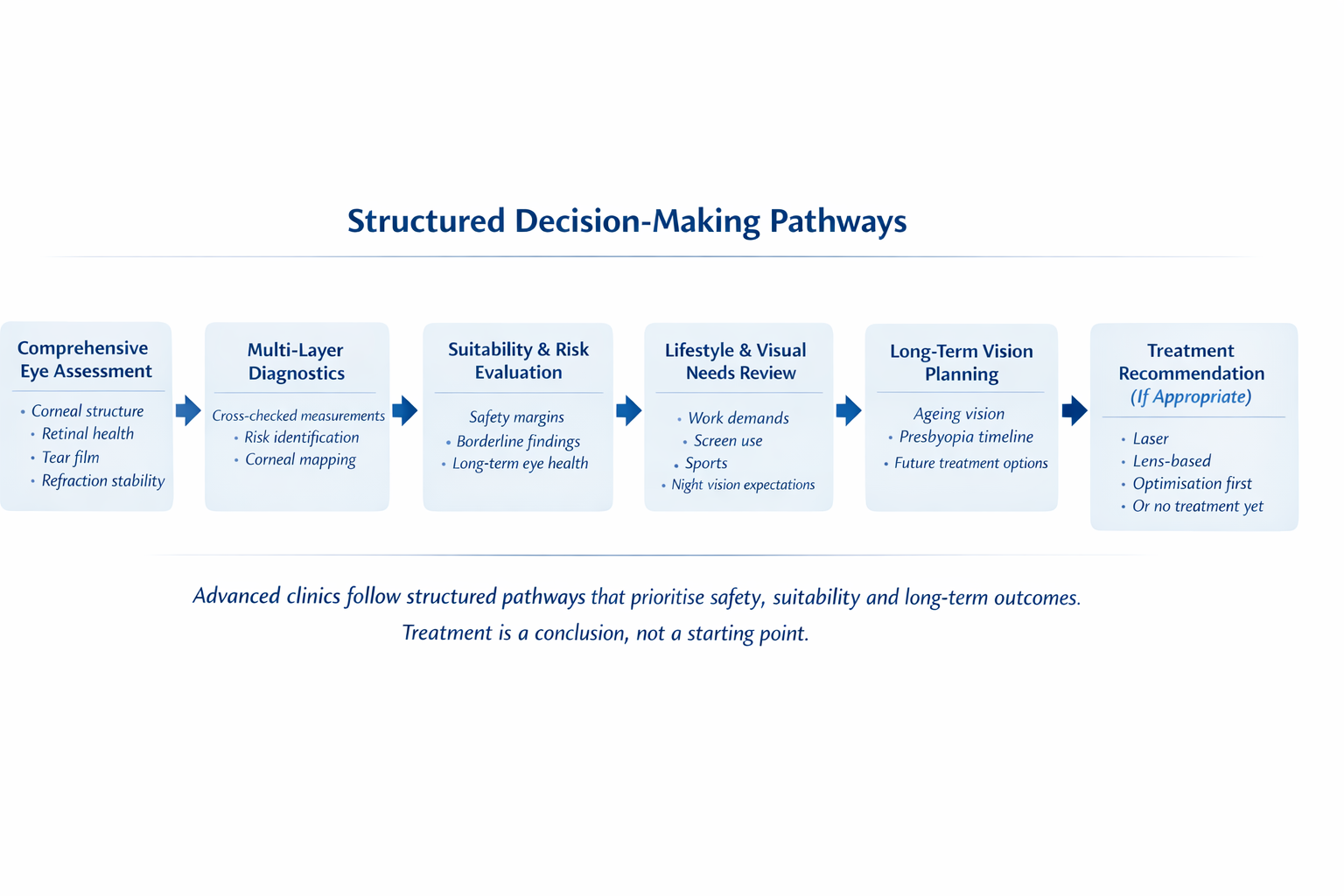
Instead of jumping straight from assessment to procedure, experienced clinics follow defined decision pathways. These pathways guide surgeons through suitability, risk factors, lifestyle needs and long-term planning before a treatment is approved. For patients, this means recommendations are reasoned and transparent. For the clinic, it creates accountability and decisions are deliberate, not reactive.
Consistent aftercare and follow-up
High-quality vision correction does not end when the procedure is complete. Consistent aftercare ensures that healing, visual quality and comfort are monitored over time, not just in the immediate recovery period. For patients, this provides reassurance and continuity. For the clinic, it allows outcomes to be tracked, refined and improved, feeding experience back into future care.
Why this matters more than people realise
Together, these elements turn eye care into a system rather than a series of appointments. Patients benefit from predictability, clarity and long-term support. Clinics benefit from safer outcomes, better insight and the ability to continuously improve.
This is how advanced eye clinics protect vision, not just correct it.
| Что замечают пациенты | Advanced clinic | Less advanced clinic |
|---|---|---|
| First conversation | Starts with understanding your eyes in depth before discussing procedures | Leads with a procedure early, before the full picture is clear |
| Assessment quality | Standardised assessment sequence with cross-checks and consistency | Variable tests depending on time, staff, or the day’s schedule |
| Diagnostics | Multi-layer diagnostics to confirm findings and reveal subtle risks | Relies heavily on one or two measurements without deeper confirmation |
| Decision-making | Follows structured decision pathways covering suitability, risk, lifestyle and long-term planning | Moves quickly from assessment to booking with limited reasoning shown |
| Suitability & safety margins | Comfortable recommending “wait” or “no treatment yet” when that is safer | Less likely to pause or delay when borderline findings are present |
| Long-term thinking | Plans for how vision will age and preserves future options where possible | Focuses mainly on short-term outcomes and quick recovery timelines |
| Персонализация | Recommendations shaped by work, sport, night vision needs and comfort | One-size-fits-many recommendations with minimal lifestyle discussion |
| Explanation & transparency | Clear, reasoned explanations that make trade-offs easy to understand | More technical or vague explanations, leaving patients unsure why |
| Послепродажное обслуживание | Structured follow-up that monitors comfort, healing and visual quality over time | Minimal follow-up beyond the early recovery window |
| What “advanced” really means | Experience + systems + judgement, supported by technology | Technology-led messaging without the same depth of systems and planning |
For patients, this means care feels coherent, predictable and well-managed, particularly important for international patients or those making long-term decisions.
Technology supports decisions, it doesn’t replace them
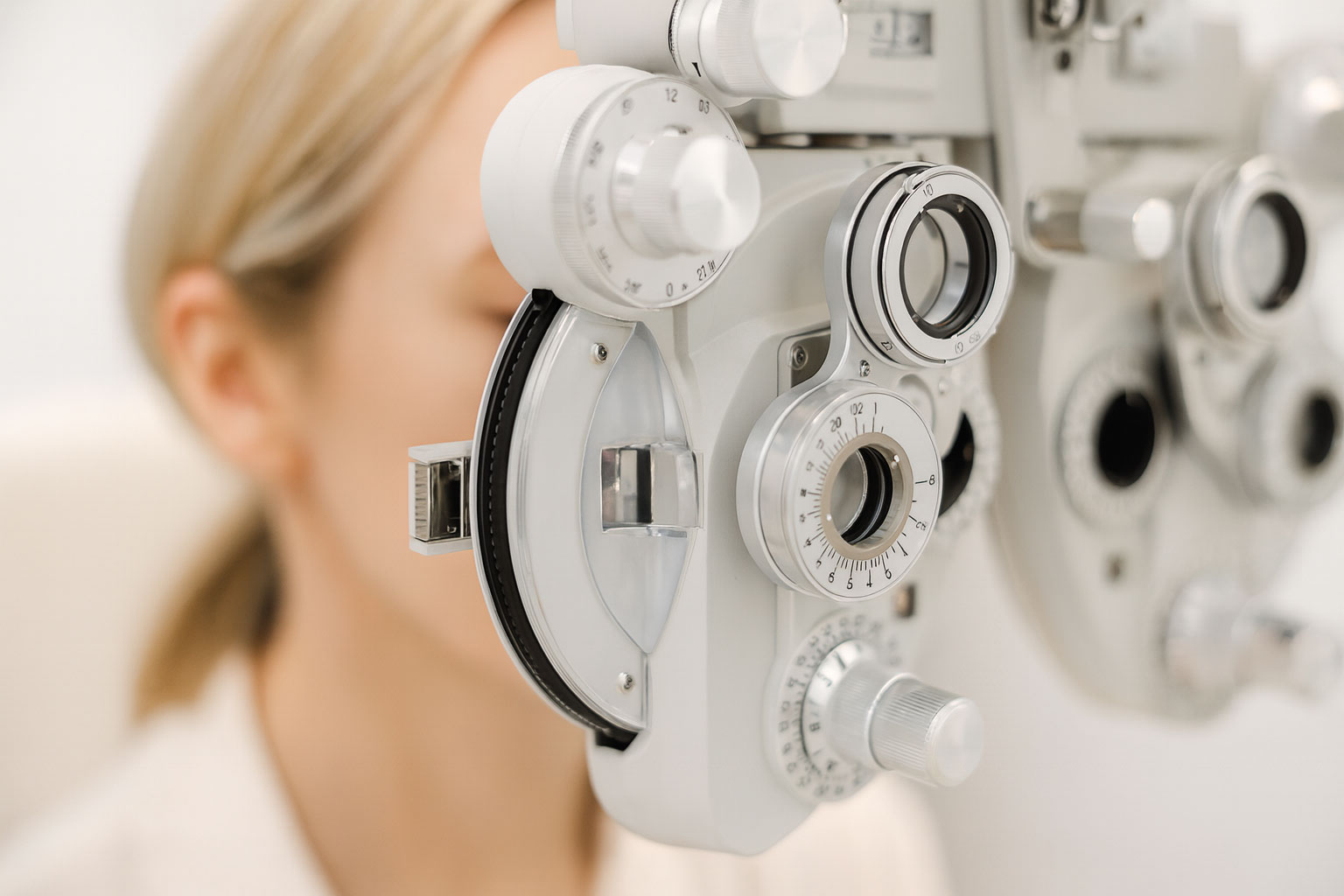
Advanced clinics use technology to inform judgement, not override it. Multiple diagnostic tools are combined to cross-check findings rather than relying on a single measurement. Imaging, mapping and analysis are used to understand how the eye behaves, not just how it looks at one moment. This layered approach improves precision and reduces surprises after treatment.
Long-term thinking is the real differentiator
Perhaps the most important difference is time horizon.
Many clinics focus on short-term results: recovery timelines, immediate clarity, rapid outcomes. Leading clinics plan further ahead, considering how today’s decisions will affect vision years or decades later.
This long-term thinking:
- Preserves future treatment options
- Reduces the likelihood of regret
- Builds trust through realism rather than promises.
Why this matters for patients
Choosing an eye clinic is not just about having surgery, it’s about trusting someone with your future vision.
An advanced clinic offers:
Clear explanations
A patient travels to London for a consultation expecting to be told they are suitable for laser eye surgery. Instead, the surgeon explains that while laser treatment is technically possible, their corneal measurements place them near the margin for long-term stability. The explanation isn’t rushed or overly technical; it’s visual, measured, and honest. The patient leaves understanding why certain options carry more risk, even if that means reconsidering what they originally wanted.
Thoughtful recommendations
Two patients arrive with similar prescriptions, both hoping for the same procedure. One is in their early 30s with stable vision and healthy corneas. The other is in their early 40s with early near-vision changes and a demanding screen-based job. Rather than offering identical treatment, the clinic recommends different approaches based on how each patient’s vision is likely to behave over the next decade. The recommendation is shaped by lifestyle and future needs, not just numbers on a chart.
Realistic expectations
A patient expecting “perfect vision forever” is guided through what modern vision correction can and cannot – do. The surgeon explains that while distance vision is likely to be excellent, near vision will still change naturally with age. By setting realistic expectations upfront, the patient avoids disappointment later and feels confident knowing that future options remain available if their needs evolve.
Care that extends beyond the procedure
An international patient returns home after surgery but continues follow-up care through a structured aftercare plan. Vision quality, comfort and healing are monitored, with clear guidance on what is normal and when to check in. Years later, when age-related changes begin, the patient returns for further assessment, knowing their history is understood and their future care has already been considered. The relationship didn’t end with surgery, it evolved with the patient’s vision.
What this shows patients
These moments rarely appear in marketing material, but they define high-quality care. Clear explanations reduce anxiety. Thoughtful recommendations protect long-term outcomes. Realistic expectations prevent regret. Ongoing care builds trust that lasts beyond the operating room.
Together, they reflect what patients are really choosing when they choose an advanced eye clinic.
The takeaway
An advanced eye clinic isn’t defined by the latest machine or the loudest claim. It’s defined by experience, judgement, systems and foresight.
When these elements come together, technology becomes powerful, not because it’s new, but because it’s used wisely.