How Does Laser Eye Surgery Work?
Understanding the Science, Technology and Procedure Behind Clearer Vision
免費諮詢
Your 30-minute consultation includes an eye assessment to determine if you’re suitable for refractive surgery.
The Laser Eye Surgery Journey
Laser eye surgery is one of the most precise forms of vision correction available today. Using advanced laser technology, ophthalmic surgeons can make carefully calculated changes to the cornea, the transparent surface at the front of the eye, to improve how light focuses on the retina. These microscopic adjustments can correct short-sightedness, long-sightedness and astigmatism, reducing or, in some cases, eliminating the need for glasses or contact lenses.
Although the procedure itself is relatively quick, the science behind it is the result of decades of ophthalmic research, technological development and clinical experience. Modern treatments such as LASIK, SMILE Pro and PRK use different techniques to achieve a similar objective: improving the optical accuracy of the eye while preserving its health and structural integrity. Understanding how these procedures work begins with something we rarely think about.
How Does Your Eye Focus Light?
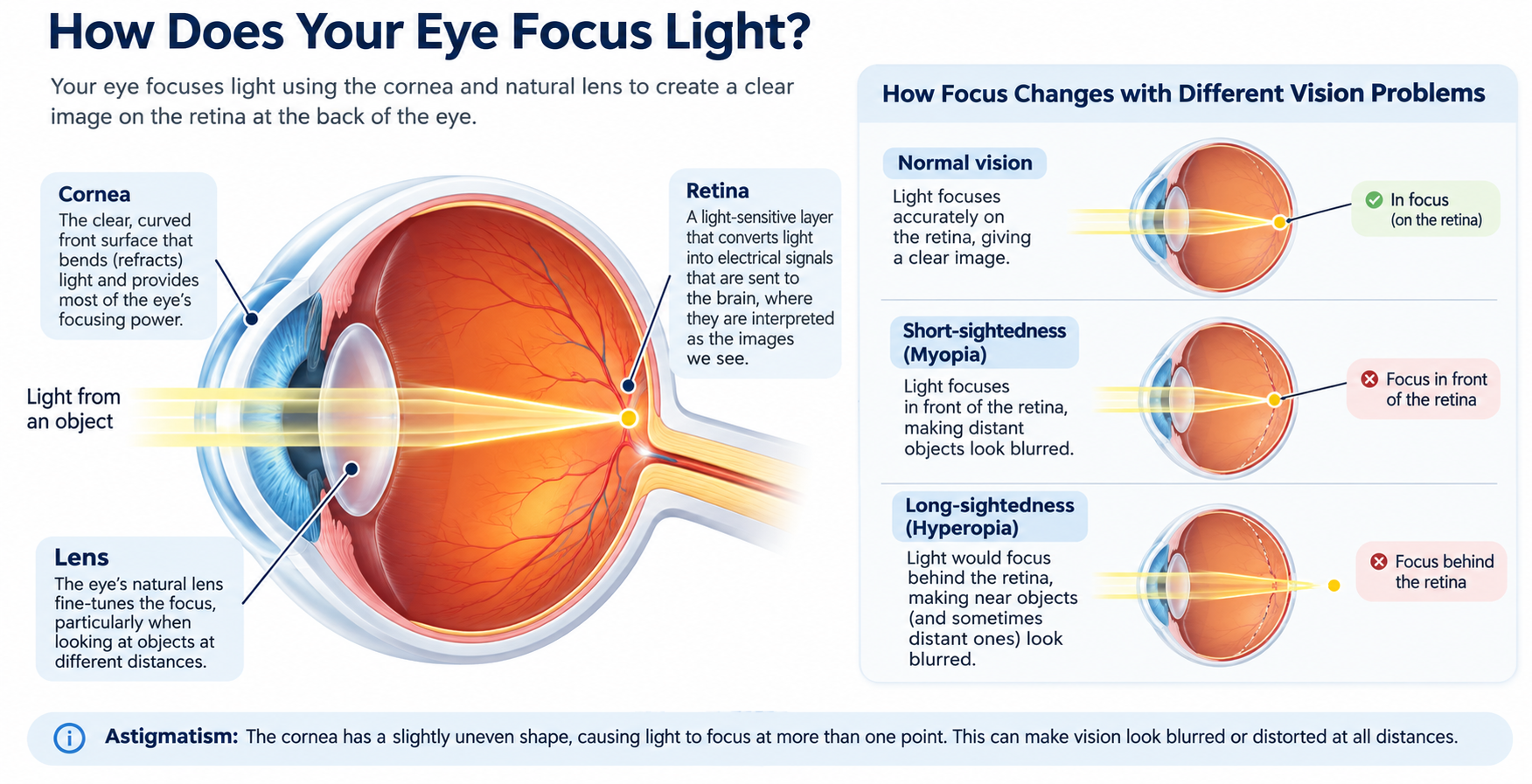
Your eye works through a combination of transparent structures that bend, or refract, incoming light. The cornea provides most of the eye’s focusing power, while the natural crystalline lens makes further adjustments, particularly when looking at objects at different distances. Light entering the eye passes through the cornea, travels through the pupil and natural lens, and reaches the retina at the back of the eye. The retina converts light into electrical signals that travel along the optic nerve to the brain, where they are interpreted as the images we see.
For clear vision, light must be focused accurately on the retina. Even relatively small differences in the length of the eye or curvature of the cornea can affect where that focal point falls. In short-sightedness, or myopia, light from distant objects focuses in front of the retina when the eye is relaxed. In long-sightedness, or hyperopia, the eye has insufficient focusing power relative to its length, meaning light would focus behind the retina without additional accommodation. Astigmatism occurs when the eye has different focusing powers in different directions, causing light to form an uneven or distorted image. Glasses and contact lenses compensate for these optical errors by changing the path of light before it enters the eye. Laser eye surgery takes a different approach, adjusting the cornea itself to alter the way light is refracted.
What Happens After Laser Eye Surgery?
How quickly can you recover after laser eye surgery and get back to enjoying everyday life with clearer, more comfortable vision?
Are You Suitable For Laser Eye Surgery?
How do you know if you're suitable for laser eye surgery and ready to enjoy life without glasses or contact lenses?
Time To Live Life Without The Need For Glasses
How quick and easy is it to get laser eye surgery and live life without glasses and contact lenses?
Eyesight Regression
Can your eyesight change after laser eye surgery, and what options are available if your vision begins to deteriorate again over time? Dr Fadi explains all in this video.
最新技術
How does the latest laser eye surgery technology improve precision, enhance treatment planning and help patients achieve clearer, more comfortable vision?
免費諮詢
What happens during your free laser eye surgery consultation, and how can our specialists help you explore the best treatment options for your eyes?
How Do Surgeons Know Exactly What to Correct?
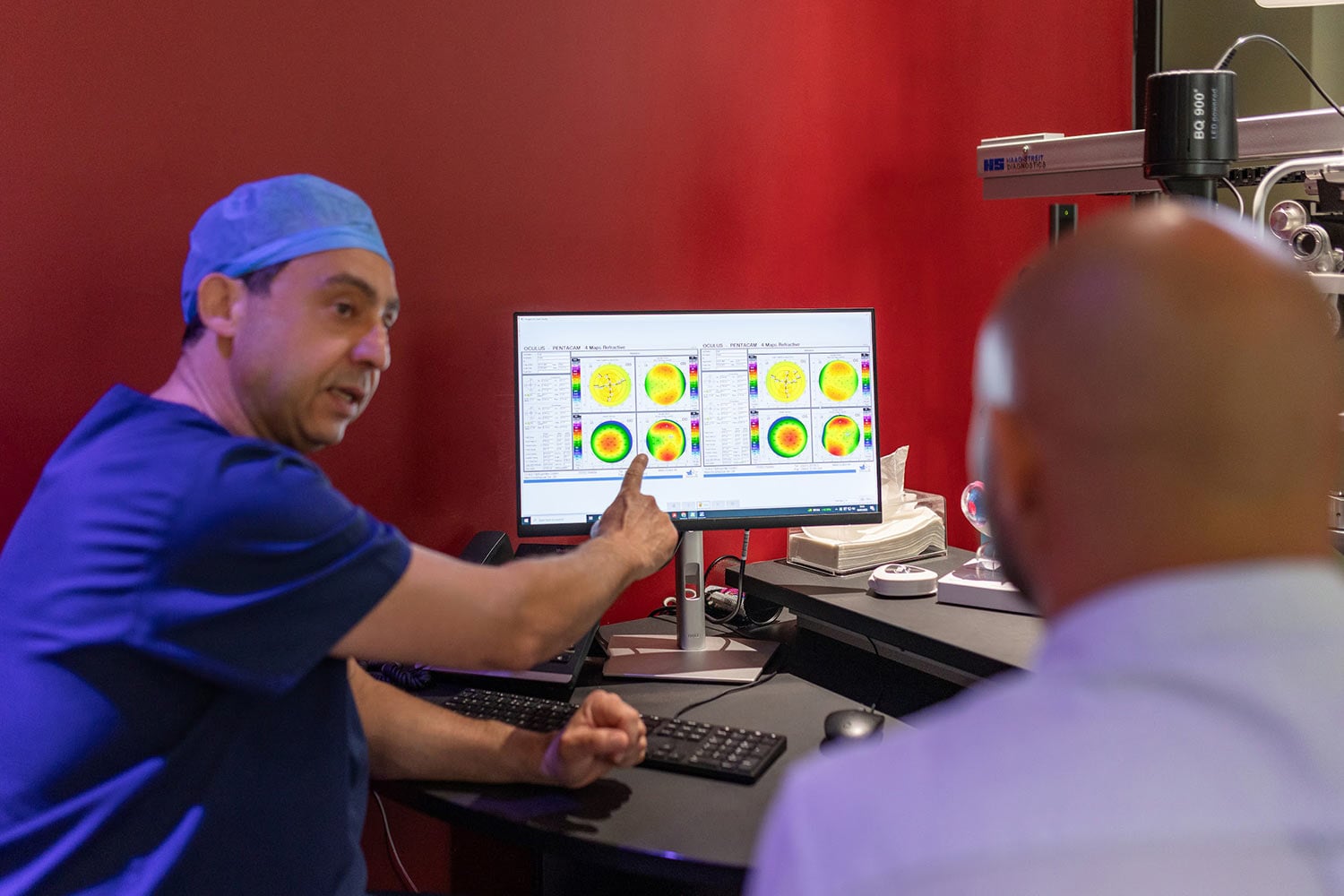
Long before a patient enters the operating theatre at EuroEyes, their eyes undergo a series of detailed measurements. These examinations establish whether laser eye surgery is appropriate and provide the information needed to plan treatment. A standard glasses prescription is only one part of this assessment. Our surgeons also need to understand the shape, thickness, stability and overall health of the cornea.
How We Assess Your Eyes Before Surgery
Understanding your cornea, prescription and overall eye health is essential before recommending laser vision correction.
| Assessment | What It Tells Your Surgeon |
|---|---|
| Corneal Topography & Tomography | Creates detailed maps of the cornea's shape and curvature, including its front and back surfaces and thickness distribution. These measurements help identify irregularities such as keratoconus that may make laser treatment unsuitable. |
| 角膜厚度 | Measures the thickness of your cornea and helps surgeons calculate how much tissue may be affected during treatment. This is essential for maintaining an appropriate margin of corneal structural safety. |
| Prescription & Optical Measurements | Establishes the correction required and may assess pupil size, optical aberrations and tear-film quality. These findings help surgeons create a personalised treatment plan based on more than your glasses prescription alone. |
Why these assessments matter: At EuroEyes London, detailed diagnostic examinations help our surgeons determine whether laser eye surgery is suitable for your eyes or whether another form of vision correction may be more appropriate.
What Happens During Laser Eye Surgery?
From preparing your eyes to your first postoperative checks, explore the five stages of laser eye surgery and understand what to expect throughout your treatment.
Preparing the Eye
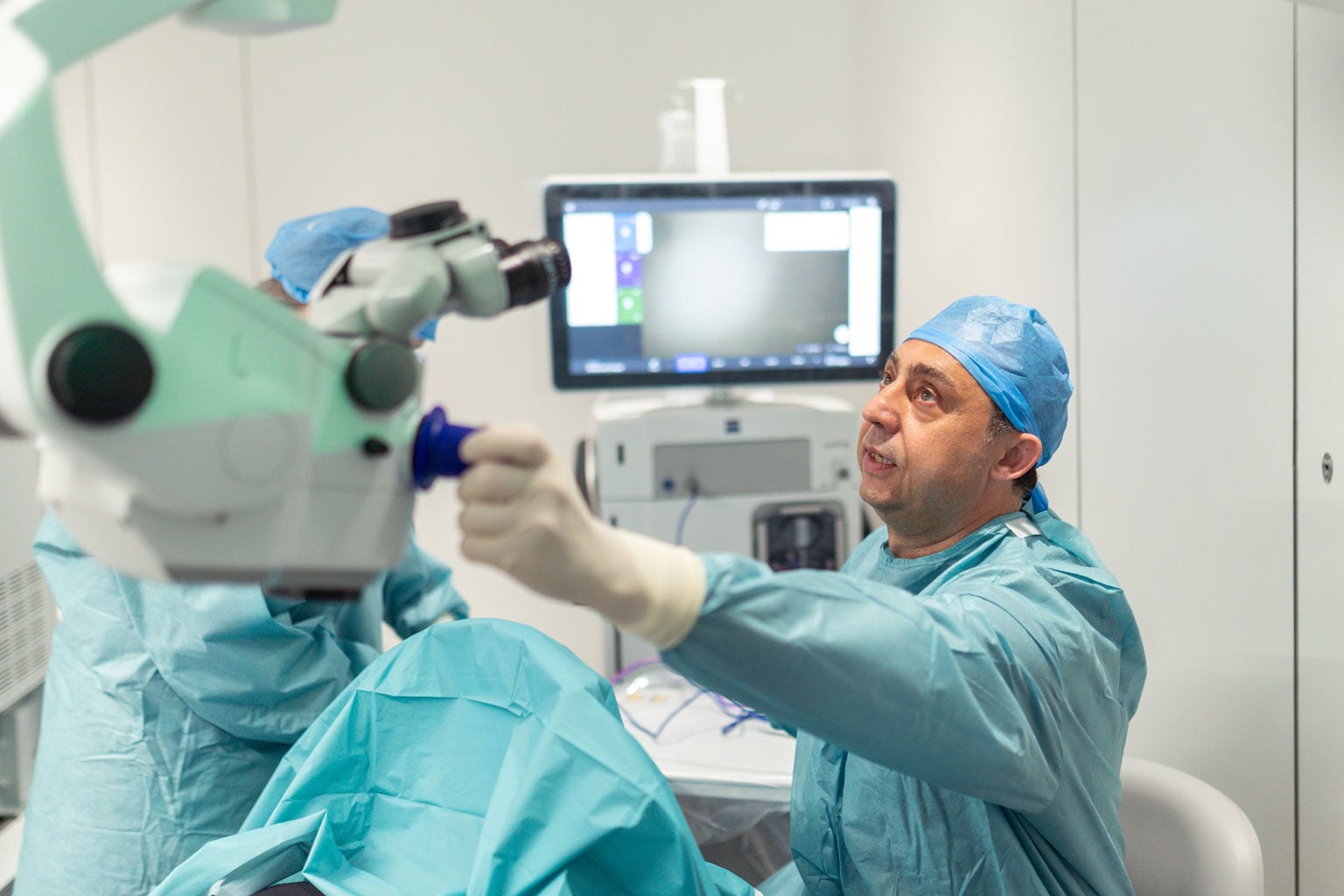
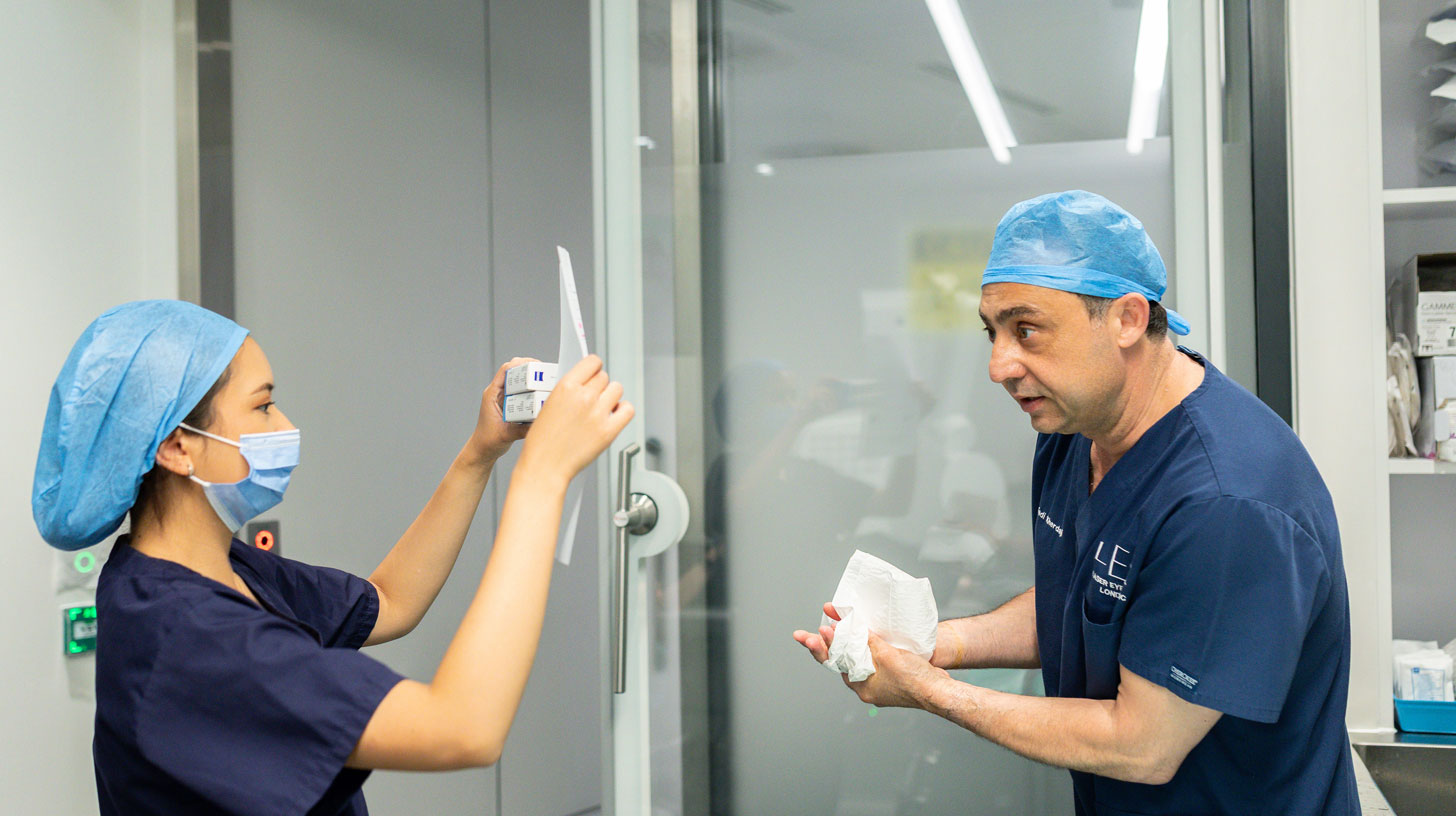
Before treatment begins, the surgical team confirms the planned procedure and checks the relevant measurements. Anaesthetic drops are placed in the eye, and the surrounding area is carefully prepared.
A small instrument called an eyelid speculum keeps the eyelids open during surgery, so patients do not need to worry about blinking.
Positioning and Stabilisation
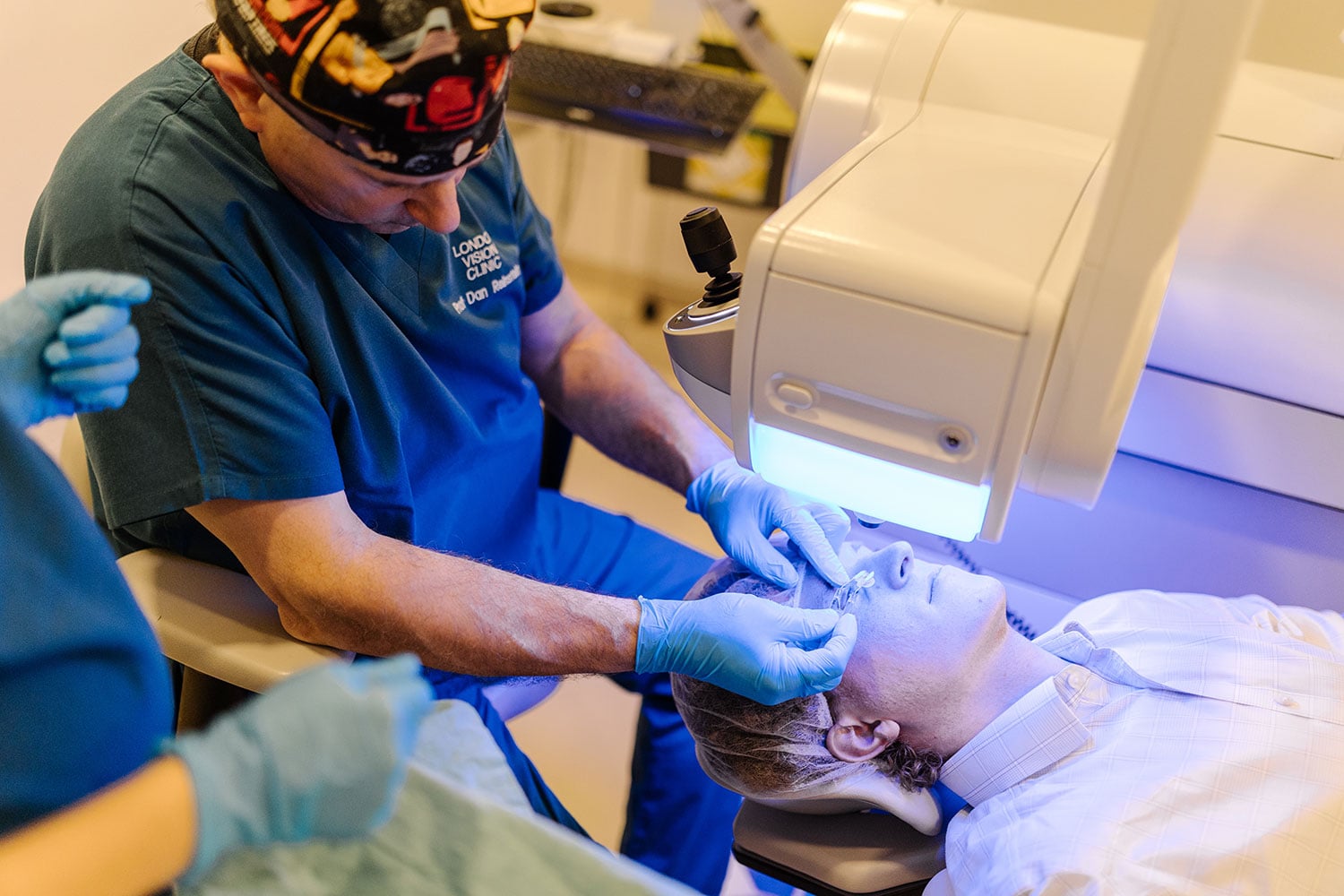
The patient lies beneath the laser system, and the surgeon carefully positions the eye. Depending on the technique, a specialised contact interface may be used to stabilise the eye while the laser operates. Patients may be asked to look towards a fixation light. During certain stages, vision may become temporarily blurred or dim, which is an expected part of the procedure.
The Laser Treatment
This is the stage where the cornea's focusing power is changed. The precise technique depends on the treatment recommended for your eyes.
LASIK
A femtosecond laser typically creates a thin corneal flap. The surgeon lifts the flap and uses an excimer laser to reshape the underlying tissue according to the treatment plan.
微笑專業版
A femtosecond laser creates a lenticule within the cornea. The surgeon removes it through a small incision, changing the cornea's curvature without creating a LASIK-style flap.
PRK / LASEK
The surgeon prepares the surface epithelial layer before an excimer laser reshapes the underlying cornea. The surface then heals over the following days.
The laser application itself is usually brief, although the complete procedure, including preparation and positioning, takes longer.
Completing the Procedure
Once the laser treatment is finished, the surgeon checks the eye. With LASIK, the flap is carefully repositioned and allowed to adhere naturally. With surface treatments such as PRK, a protective bandage contact lens is commonly placed over the eye while the epithelial layer heals.
For SMILE Pro, the small incision generally heals without sutures.
Initial Recovery and Aftercare
Patients receive instructions about postoperative eye drops, eye protection, activities to avoid and follow-up appointments. Vision may be blurred or fluctuate initially, and temporary irritation, watering or light sensitivity can occur.
The early recovery experience varies according to the procedure. LASIK often provides relatively rapid visual improvement, while surface laser treatments generally involve a longer period of initial healing. Postoperative appointments assess visual recovery, check corneal health and identify concerns requiring further attention.
常見問題
Does the laser actually cut your eye?
It depends on the procedure. In LASIK, a femtosecond laser is commonly used to create a thin corneal flap, while an excimer laser removes microscopic amounts of tissue beneath it. In SMILE Pro, the femtosecond laser creates precise tissue separations within the cornea, allowing a lenticule to be removed through a small incision. PRK and LASEK use surface laser treatment without creating a LASIK-style flap.
What happens if you move your eye during laser eye surgery?
Modern excimer laser systems commonly incorporate eye-tracking technology that monitors eye position and adjusts or interrupts treatment according to the system’s capabilities. During procedures involving a contact interface, such as SMILE Pro, the eye is stabilised while the laser operates. Surgeons also monitor positioning throughout treatment. Patients are given clear instructions, and small involuntary movements are anticipated in the design of modern surgical systems.
雷射眼科手術會痛嗎?
Anaesthetic eye drops are used to numb the eye before treatment, so patients generally do not experience sharp pain during the laser procedure. They may notice pressure, unusual visual sensations or mild discomfort, depending on the technique. After surgery, temporary irritation, watering or sensitivity to light is common. Surface treatments such as PRK can cause more discomfort during the first few days of healing than LASIK.
How long does the laser take to correct your vision?
The laser application itself typically takes seconds to a few minutes, depending on the procedure, prescription and equipment. However, the full surgical appointment includes preparation, positioning, checks and postoperative instructions, so patients should expect to spend considerably longer at the clinic than the actual laser treatment time.
What technology is behind better vision correction?
What makes modern laser eye surgery remarkable is not simply the speed of the procedure, but the relationship between detailed diagnostic measurements, precisely controlled laser technology and the surgeon’s clinical judgement. A treatment that may take only a short time in the operating theatre depends on an extensive understanding of the eye’s optical properties, its biological structure and how it is likely to respond to surgery.
At EuroEyes London, this combination of advanced diagnostic technology, experienced ophthalmic surgeons and personalised treatment planning helps determine which approach may offer the most appropriate outcome for each patient. The objective is not to change the eye unnecessarily, but to make a carefully measured correction where the expected visual benefits justify the risks. Because successful laser eye surgery begins long before the laser is switched on. It begins with understanding the eye.
Is Laser Eye Surgery Suitable for Everyone?
Not every eye is suitable for laser vision correction, and deciding against surgery can sometimes be the safest clinical recommendation. Surgeons consider several factors, including prescription stability, corneal thickness and shape, ocular surface health, age, general eye health and expectations. Conditions such as keratoconus, significant untreated dry eye or certain other ocular abnormalities may make particular procedures unsuitable.
Patients with higher prescriptions or thinner corneas may still have alternative options. Implantable Collamer Lens (ICL) surgery, for example, corrects refractive error using a lens placed inside the eye rather than permanently reshaping the cornea. For other patients, particularly those experiencing age-related lens changes, lens replacement surgery may be more appropriate. The most important part of the decision is matching the treatment to the individual eye, rather than choosing a procedure based solely on its popularity or technology.