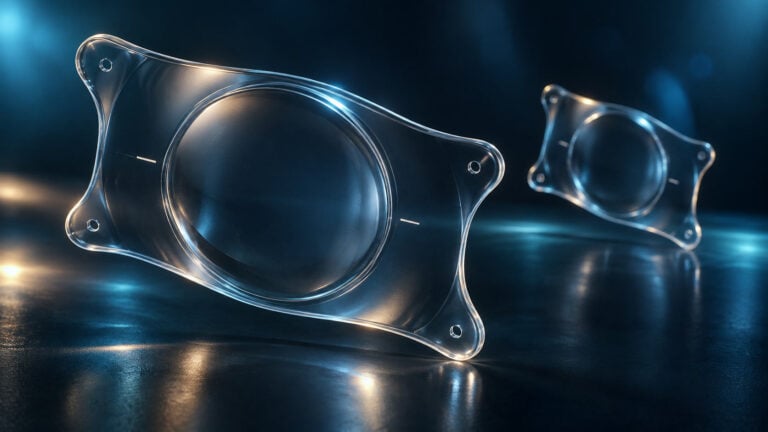
As surgeons, we often remind patients that vision correction procedures such as SMILE, ICL, or cataract surgery restore clarity, but the long-term health of the eye is deeply influenced by what you eat. Nutrition plays a central role in protecting the retina, maintaining the cornea, and slowing age-related changes that affect millions of people worldwide. While no diet can prevent presbyopia or reverse cataracts, the right foods can support healthy vision for decades and complement the advanced treatments we offer at EuroEyes.
Let us explore how nutrition influences your eyes, which foods are most beneficial, and how different stages of life bring unique dietary needs.
Why Nutrition Matters for Eye Health
The eye is one of the most metabolically active organs in the body. Every second, millions of cells in the retina convert light into electrical signals that allow us to see. This constant activity demands high levels of oxygen and nutrients. Without adequate support, the tissues are vulnerable to oxidative stress, inflammation, and vascular damage.
Specific nutrients strengthen different structures of the eye:
- Vitamin A is essential for the light-sensitive cells of the retina, supporting night vision.
- Lutein and zeaxanthin act as natural filters, protecting the macula from harmful blue light.
- Omega-3 fatty acids stabilise the tear film and support retinal cell membranes.
- Antioxidants such as vitamin C and vitamin E reduce oxidative stress, which contributes to cataract and macular degeneration.
- Minerals such as zinc support the enzymes needed for visual processing.
Understanding these relationships helps us connect food choices with measurable improvements in eye resilience.
Foods That Protect Against Age-Related Conditions
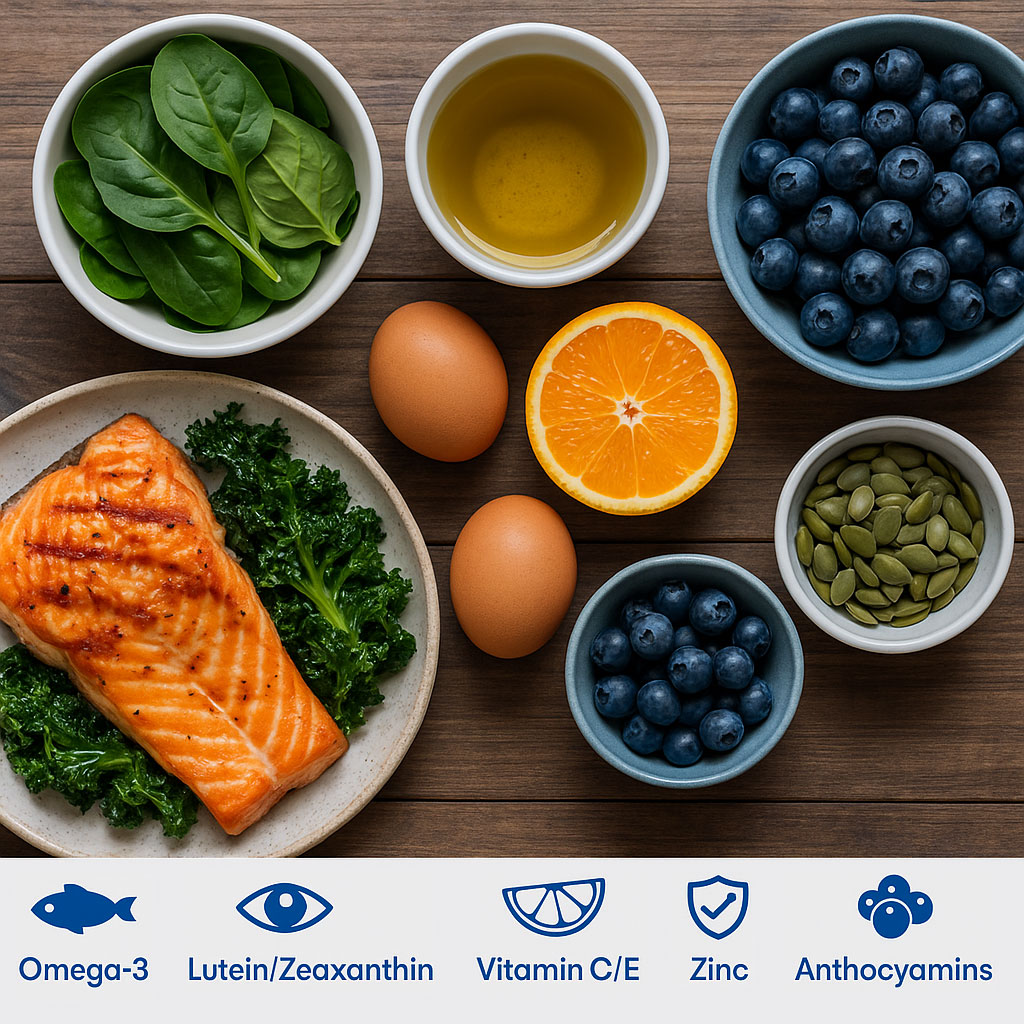
Leafy greens such as spinach, kale, and Swiss chard are rich in lutein and zeaxanthin, carotenoids that accumulate in the macula and act as protective pigments. Patients with higher intake of these nutrients have a reduced risk of age-related macular degeneration (AMD).
Oily fish like salmon, mackerel, and sardines provide omega-3 fatty acids, particularly DHA, which forms part of the retina itself. Clinical studies suggest regular intake lowers the risk of dry eye syndrome and may slow macular degeneration.
Citrus fruits and peppers deliver vitamin C, an antioxidant concentrated in the aqueous humor of the eye. Vitamin C supports collagen in the cornea and lens, reducing the risk of early cataract formation.
Foods That Support Everyday Vision
Eggs are a compact source of lutein, zeaxanthin, and zinc. Unlike leafy greens, the fat in the yolk enhances absorption, making eggs one of the most efficient eye foods.
Nuts and seeds such as almonds, walnuts, and sunflower seeds provide vitamin E and selenium, which protect fatty acids in the retina from oxidative damage.
Blueberries and dark berries supply anthocyanins, flavonoids that improve microcirculation in the retina and may support night vision.
Whole grains stabilise blood sugar levels, lowering the risk of diabetic retinopathy, which remains a leading cause of blindness worldwide.
Modern and Overlooked Superfoods for Eyes
Beyond the classics, modern nutritional research highlights other foods that deserve attention:
- Turmeric contains curcumin, an anti-inflammatory compound being studied for its ability to reduce oxidative stress in the retina and ease dry eye symptoms.
- Pumpkin seeds are an excellent source of zinc, a mineral critical for night vision and macular health.
- Seaweed and spirulina offer plant-based lutein alternatives, ideal for patients following vegan diets.
- Green tea contains catechins, powerful antioxidants that reach ocular tissues and may protect against glaucoma.
These foods are not often included in standard “eye health” articles but provide a modern edge to preventive nutrition.
Common Questions Patients Ask About Food and Eyesight
Does eating carrots really improve eyesight?
Carrots contain beta-carotene, which converts to vitamin A, essential for the retina’s rods that control night vision. Carrots can prevent night blindness in vitamin A deficiency but will not give “superhuman” vision.
What fruit is best for eyesight?
Citrus fruits like oranges and kiwis are excellent for vitamin C, while blueberries and blackberries provide anthocyanins for retinal circulation. Together, these support lens clarity and macular health.
Can diet prevent cataracts?
Diet alone cannot prevent cataracts, which are caused by lens ageing, but antioxidants and vitamin C can slow oxidative stress and delay onset. Once cataracts form, surgery is the only solution.
Do omega-3s help with dry eyes?
Yes. Omega-3 fatty acids improve the quality of the tear film and reduce inflammation on the ocular surface. Patients with chronic dry eye often benefit from diets rich in oily fish or flaxseed oil.
Which vitamins help with eye strain from screens?
Lutein and zeaxanthin help filter blue light, while vitamin A supports retinal sensitivity. Omega-3s may also ease digital eye strain by supporting tear production.
Advanced Nutrition Guide for Eye Health
| Nutrient | RDA (Adults)¹ | Best Food Sources | Eye Health Benefits | Key Age Focus |
|---|---|---|---|---|
| Vitamin A | 700–900 µg | Carrots, sweet potatoes, spinach, eggs | Essential for retinal function and night vision; prevents dry eye | All ages, critical in childhood and midlife |
| Vitamin C | 75–90 mg | Citrus fruits, kiwis, bell peppers, broccoli | Protects lens from oxidative stress; supports collagen in cornea & sclera | 40s+ for cataract prevention and lens clarity |
| Vitamin E | 15 mg | Almonds, sunflower seeds, avocado | Antioxidant protecting retinal cells and fatty acids from free-radical damage | 50s+ to slow AMD progression |
| Lutein & Zeaxanthin | No official RDA (6–10 mg suggested) | Kale, spinach, egg yolks, corn, broccoli | Natural macular pigments filtering blue light; reduce AMD risk; support screen health | 20s+ for prevention, 50s+ for AMD protection |
| Omega-3 (DHA/EPA) | 250–500 mg | Salmon, mackerel, sardines, flaxseed oil | Maintains retinal structure, reduces dry eye, supports visual development | All ages, especially 30s+ for dry eye & AMD |
| Zinc | 8–11 mg | Pumpkin seeds, beef, oysters, chickpeas | Essential for night vision and macular enzyme activity | 40s+ for macular health |
| Anthocyanins | No set RDA | Blueberries, blackberries, cherries | Improve retinal circulation; support night vision and protect microvessels | 40s+ for vascular health, 60s+ for AMD |
| Curcumin | No set RDA | Turmeric | Anti-inflammatory properties; reduces oxidative stress and may ease dry eye | 50s+ where inflammation is more common |
| Selenium | 55 µg | Brazil nuts, tuna, sunflower seeds | Supports antioxidant systems protecting retina and lens | 40s+ for long-term oxidative stress protection |
¹Values based on EFSA/WHO/NIH guidelines; optimal intake may vary by gender, health, and lifestyle.
How to Use This Table
- Younger adults should focus on building macular pigment density with leafy greens, berries, and omega-3s.
- Midlife adults (40s–50s) benefit most from antioxidants like vitamin C, E, and zinc, which delay cataract and AMD onset.
- Older adults (60s+) should prioritise lutein, zeaxanthin, omega-3s, and selenium to maintain macular health and slow degeneration.
Nutrition keeps the eye tissues resilient, but when presbyopia or cataracts set in, surgery becomes the defining step to restore clarity.
Nutrition Across Different Age Groups
In your 20s and 30s, nutrition helps protect long-term eye health. Leafy greens, berries, and omega-3s build a foundation for healthy retinal tissue.
In your 40s and 50s, as presbyopia emerges, nutrition cannot reverse near-vision changes but remains vital for protecting against early cataracts and macular degeneration. Diets rich in antioxidants and zinc reduce risk factors.
In your 60s and beyond, the focus shifts to maintaining independence. Foods high in lutein, vitamin C, and omega-3s can support vision in the presence of cataracts or AMD, though surgical treatments such as lens exchange or cataract surgery become the defining solutions.
The Limits of Nutrition and the Role of Surgery
As surgeons, we often emphasise that while diet is crucial for maintaining healthy eyes, it does not replace medical or surgical treatment. No amount of spinach or salmon will correct presbyopia, astigmatism, or advanced cataracts. These conditions are structural, not nutritional.
At EuroEyes, we combine preventive advice with advanced treatments:
- Presbyond laser surgery offers independence from reading glasses in midlife.
- Implantable Collamer Lenses (ICL) provide a reversible solution for patients with high prescriptions.
- Lens exchange and cataract surgery permanently restore clarity, often with premium lenses that also correct astigmatism.
The message is clear: eat well to protect your vision, and seek expert care when age-related changes arise.
Nutrition & Vision-Correction Matrix
| Common Eye Issue | Potential Nutrient Gap | Dietary Focus | When Diet Isn’t Enough: Vision-Correction Options | Notes |
|---|---|---|---|---|
| Dry, irritated eyes | Omega-3 (DHA/EPA) | Oily fish, flaxseed oil, walnuts | Tear film optimisation; refractive options (e.g., SMILE Pro, LASIK) once surface is stable | Treat meibomian gland dysfunction first for best surgical accuracy/comfort. |
| Poor night vision / glare | Vitamin A, Zinc, Lutein/Zeaxanthin | Eggs, leafy greens, pumpkin seeds | If refractive: SMILE Pro/LASIK/PRK; if lens-driven (early cataract): cataract/lens surgery | Nutrition supports retina/macula; surgery addresses optical causes. |
| Screens & digital eye strain | Lutein/Zeaxanthin, Omega-3 | Kale/spinach, salmon/sardines | Refractive options if a residual prescription exists (SMILE Pro/LASIK/ICL) | Ergonomics, blink breaks, tears are first-line alongside diet. |
| Blurry distance vision from astigmatism/myopia | – (nutrients don’t correct refractive error) | General eye-healthy diet | SMILE Pro, LASIK, PRK, or ICL; toric options for astigmatism | Diet supports ocular tissues but doesn’t change corneal shape/refraction. |
| Reading difficulty (presbyopia) | – (age-related lens change) | Antioxidant-rich diet for lens health | Blended-vision/Presbyond LASIK; or EDOF/trifocal lenses via lens exchange | Nutrition can’t restore accommodation; corrective optics are needed. |
| Cataract-related blur and glare | Vitamin C/E, antioxidants (supportive) | Citrus, peppers, nuts/seeds | Cataract surgery with monofocal/EDOF/trifocal or toric IOLs | Only surgery clears an opacified lens; diet may slow oxidative stress. |
| Macular protection (family history/AMD risk) | Lutein/Zeaxanthin, Zinc, Omega-3, Vitamin C/E | Leafy greens, eggs, pumpkin seeds, oily fish, citrus | Refractive surgery doesn’t treat AMD; focus on risk reduction + routine scans | Discuss AREDS-style supplementation with your eye doctor if appropriate. |
| Blood-sugar–linked changes (diabetes risk) | – (glycaemic control + antioxidants) | Whole grains, berries (anthocyanins), balanced diet | Refractive options considered only when retinopathy is controlled/stable | Medical management comes first; surgery depends on retinal status. |
Note: Nutrition supports ocular tissues and may reduce risk, but it cannot by itself correct refractive errors, presbyopia, or cataracts. Your surgeon will advise when lifestyle, medical therapy, or surgery is the most effective path.
Direct From Your EuroEyes Experts
The best foods for eye health are those that supply antioxidants, omega-3s, vitamins, and minerals tailored to the unique demands of the eye. Leafy greens, oily fish, citrus fruits, nuts, and berries form the foundation. Turmeric, pumpkin seeds, seaweed, and green tea provide modern nutritional support.
A healthy diet can reduce risk, slow aging, and maintain retinal resilience, but it cannot stop the natural progression of presbyopia or cataracts. That is where EuroEyes’ surgical expertise bridges the gap, combining the power of prevention with the precision of modern vision correction.
Your diet keeps your eyes strong, but surgery restores the clarity of sight when age or disease demands it. Together, they form the complete picture of lifelong eye health.