
What Is Screening for Laser Eye Surgery?
Learn how EuroEyes assesses your eye health and checks suitability.
Free Consultation
Your 30-minute consultation includes an eye assessment to determine if you’re suitable for refractive surgery.
Understanding Your Eye Assessment and Why It Matters
Before undergoing laser eye surgery, your eyes need to tell their own story. Two people may have exactly the same glasses prescription, yet their eyes can differ considerably in shape, thickness, tear film quality and overall health. These differences are important because successful vision correction depends on much more than simply knowing how short-sighted, long-sighted or astigmatic someone may be.
This is where laser eye surgery screening comes in. Screening is a detailed assessment designed to establish whether your eyes are suitable for laser vision correction and whether any factors might influence the safety or effectiveness of treatment. Although the terminology can sound rather clinical, screening is a routine part of responsible refractive surgery and provides an opportunity to understand your eyes in greater detail.
What Does Screening for Laser Eye Surgery Actually Mean?
Laser eye surgery screening is a series of examinations and diagnostic measurements performed before a decision is made about treatment. It allows eye care professionals to evaluate the structures responsible for clear vision, identify potential concerns and assess whether the cornea can be treated safely. Unlike a routine sight test, which primarily determines your prescription and checks aspects of eye health, refractive surgery screening investigates whether your eyes have the characteristics needed for surgical vision correction. This includes examining the shape and thickness of the cornea, the stability of your prescription, the condition of your tear film and any underlying eye conditions that could influence the outcome. Screening can also reveal information that may not be apparent during everyday activities.
Someone might enjoy reasonably comfortable vision with contact lenses, for example, but have subtle corneal irregularities or signs of ocular surface disease that warrant further investigation before surgery. The objective is to identify these factors early, allowing the clinical team to make informed recommendations rather than proceeding with treatment based on prescription alone.
What Happens During Laser Eye Surgery Screening?
A comprehensive screening assessment involves several different examinations. Each provides a different piece of information, helping build a more complete picture of your eyes and their suitability for treatment.
Checking Your Prescription and Visual Acuity
The assessment begins with understanding how your eyes currently focus light and how well you can see with and without glasses or contact lenses. Your prescription is measured and compared with previous records where available, helping establish whether your vision has remained sufficiently stable. Prescription stability matters because laser eye surgery corrects the refractive error present at the time of treatment. If your prescription is still changing, the benefit of surgery may be reduced as your eyes continue to develop or change afterwards.
Your age, visual requirements and everyday activities are also relevant. Someone who spends long periods working at a computer may have different visual priorities from someone whose main concern is distance vision for driving or sport.
Measuring the Shape of Your Cornea
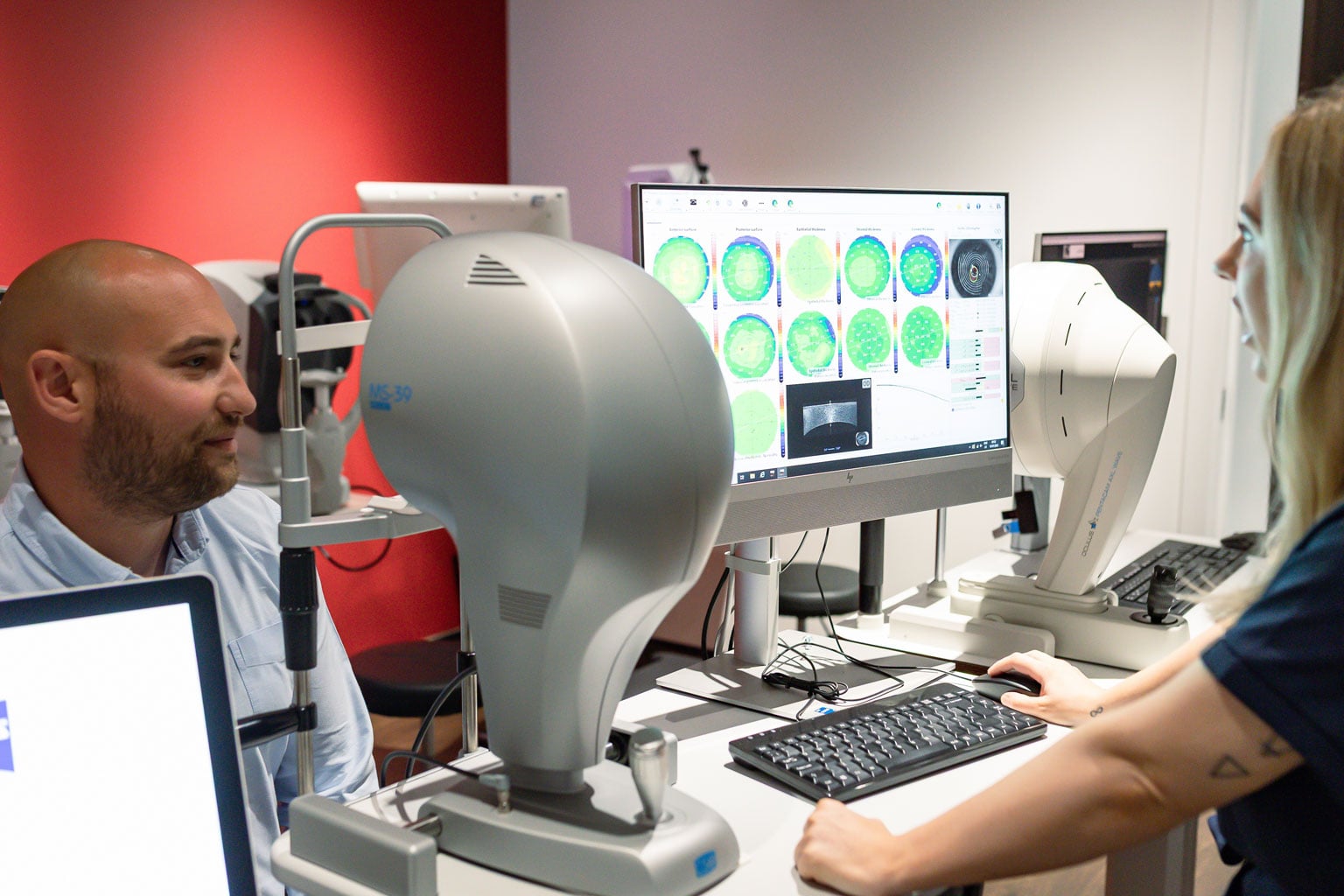
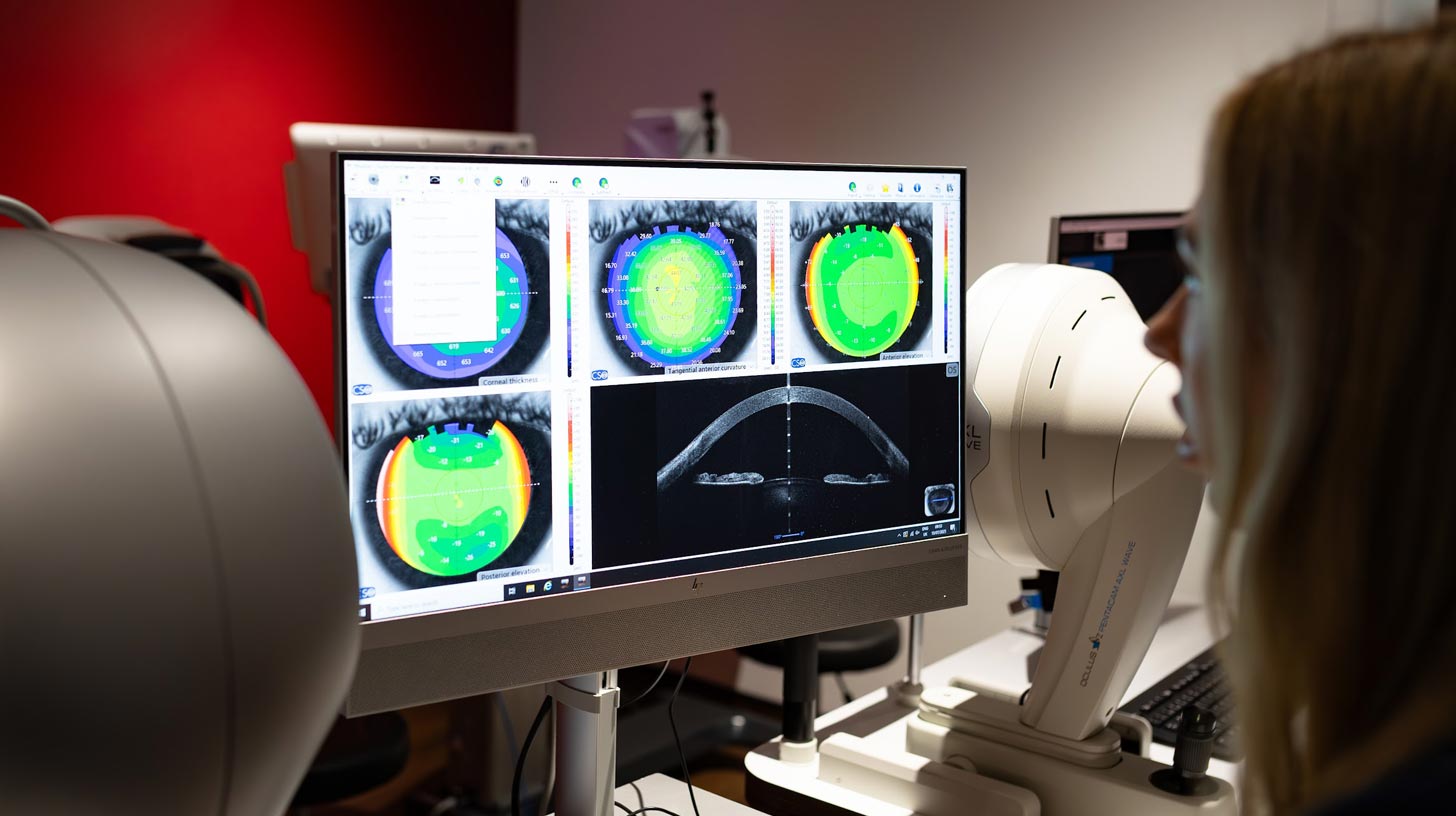
The cornea is the transparent, curved surface at the front of your eye. It performs much of the eye's focusing work and is the structure reshaped during laser eye surgery. Specialist diagnostic instruments create detailed maps of its curvature and, depending on the technology used, its front and back surfaces. These examinations are commonly known as corneal topography and tomography.
The resulting measurements help identify irregularities that may affect suitability, including signs associated with conditions such as keratoconus. They also help surgeons assess whether the corneal shape is appropriate for a proposed laser procedure. Importantly, an irregular measurement does not automatically indicate a serious problem. Some findings may reflect temporary changes, contact lens wear or measurement quality, while others require additional investigation.
Measuring Corneal Thickness
Corneal thickness is another important consideration because laser eye surgery removes a carefully calculated amount of corneal tissue to change how light focuses inside the eye. The measurement, known as pachymetry, helps the surgeon evaluate whether sufficient corneal tissue would remain following treatment. This assessment considers not only the original thickness but also the prescription being corrected, the proposed procedure and other characteristics of the cornea.
A thinner cornea does not necessarily mean that all forms of vision correction are unsuitable. However, it can influence which procedures may be considered and whether a non-laser alternative would be preferable.
Assessing Tear Film Quality and Dry Eye
The tear film is essential for maintaining a smooth optical surface and comfortable vision. When the eyes do not produce sufficient tears, or the tears evaporate too quickly, vision can fluctuate and symptoms such as burning, irritation or dryness may occur. During screening, the clinical team may assess tear film stability, the condition of the eyelids and the health of the ocular surface. This is particularly important because laser eye surgery can temporarily worsen dry eye symptoms, and some patients may experience more persistent difficulties.
If dry eye is identified, treatment may be recommended before proceeding with further surgical assessment. Improving the ocular surface can also make diagnostic measurements more reliable.
Examining Overall Eye Health
Screening is not limited to the cornea. A comprehensive assessment may include measuring eye pressure, examining the crystalline lens and checking other structures within the eye. Depending on your circumstances, additional examinations may be needed to investigate the retina, optic nerve or other aspects of ocular health. Dilating eye drops may be used when a more detailed internal examination is required.
These checks help identify conditions that could affect surgical suitability or require treatment independently of your glasses prescription.
Bringing the Results Together
Each examination contributes to a more complete understanding of your eyes. By reviewing the measurements together, the clinical team can identify potential concerns, assess suitability and determine whether further investigations or personalised treatment planning are appropriate.

Understanding Your Screening Results
Screening provides important information about your eye health and helps specialists decide whether laser vision correction is appropriate. Here are three things worth understanding about the results.
Why Corneal Screening Matters
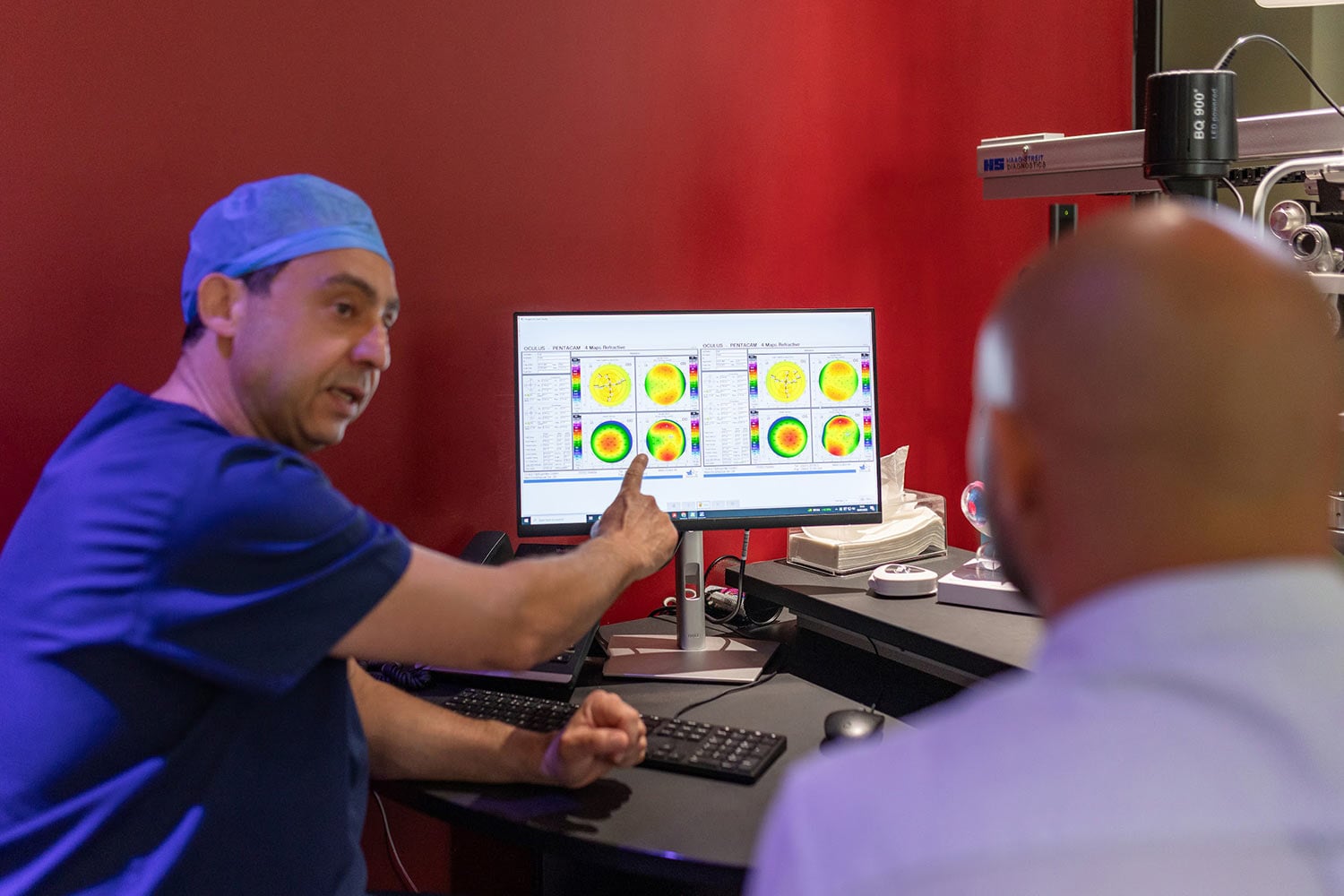
Detailed corneal imaging helps identify irregularities, including early signs of keratoconus. Detecting these changes is important because unsuitable corneas may be at greater risk of postoperative ectasia, a condition involving progressive weakening and distortion. Surgeons assess several measurements together rather than relying on a single result.
Screening vs Treatment Planning
Screening determines whether surgery is suitable. Treatment planning establishes how an appropriate procedure should be performed. The same diagnostic measurements may inform both stages, helping surgeons choose a treatment based on your cornea, prescription and visual requirements.
What If You're Not Suitable?
Screening is not a test you pass or fail. Some findings, such as dry eye, may be managed before reassessment. Others may lead to consideration of alternatives, including ICL or lens replacement surgery, where appropriate. Sometimes postponing or avoiding surgery is the safest recommendation.
Preparing for Your Screening Appointment
Most screening examinations are straightforward. Understanding what to expect can help you feel more comfortable before your visit.
Does Laser Eye Surgery Screening Hurt?
Most examinations are non-invasive and painless. You may notice bright lights or brief flashes, while some eye drops can cause temporary stinging. If dilating drops are used, your vision may be temporarily blurred and sensitive to light. Follow the clinic's advice about driving afterwards.
Should You Stop Wearing Contact Lenses?
Contact lenses can temporarily change the shape of your cornea and affect diagnostic measurements. You may be asked to stop wearing them before screening, with the required period depending on the lens type and your individual circumstances. EuroEyes London will provide preparation instructions before your visit.
What Happens After Screening at EuroEyes London?
Once your examinations are complete, the findings help guide the next stage of your vision correction journey. The aim is to make an informed recommendation based on your individual eyes, rather than assuming one treatment will suit everyone.
Reviewing Your Results
Your clinical measurements are assessed to identify suitability, potential risks and whether further investigation is needed.
Discussing Your Options
Your surgeon explains appropriate treatments, expected outcomes, possible limitations and alternatives where relevant.
Making an Informed Decision
You have the opportunity to ask questions and consider the recommendations before deciding whether to proceed.
FAQs
How long does laser eye surgery screening take?
The time required depends on the examinations being performed and whether additional measurements or dilating drops are needed. A comprehensive assessment may take considerably longer than a routine sight test. Your clinic can confirm the expected appointment duration when booking.
Can screening detect eye problems I didn't know I had?
Yes. Detailed examinations may identify corneal irregularities, ocular surface problems or other findings that were not previously apparent. Some require further investigation, while others may simply need monitoring or treatment before surgery can be considered.
Does passing screening mean laser eye surgery will be successful?
No. Screening helps establish suitability and assess potential risks, but it cannot guarantee perfect vision or eliminate the possibility of complications. Your surgeon should explain the expected benefits, limitations and risks based on your individual assessment.
Can I have laser eye surgery if my screening results are borderline?
Borderline findings require careful individual evaluation. Additional measurements, repeat examinations or a period of monitoring may be recommended. In some cases, an alternative procedure may be more appropriate, while in others elective surgery may not be advised.
