(White Paper)
Expert Insights from EuroEyes London
Beyond 20/20 Vision:
Abstract
For decades, cataract surgery has focused on restoring vision. In 2025, this definition has evolved. Many patients now expect to gain the type of visual freedom often associated with refractive surgery, including independence from glasses at multiple distances, crisp night vision and high contrast sensitivity.
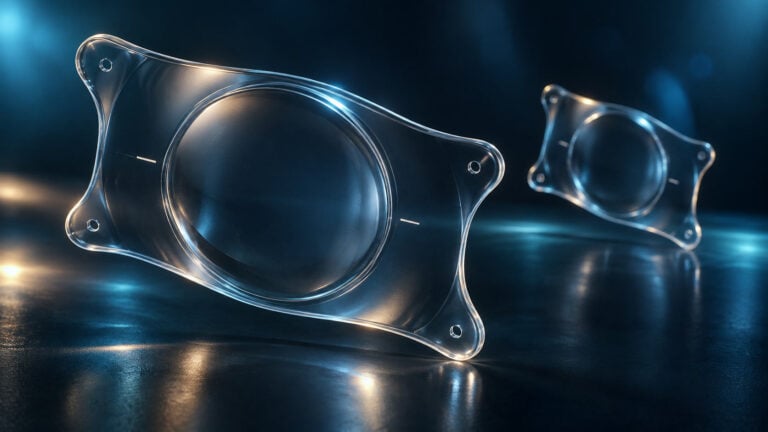
Extended-Depth-of-Focus (EDoF) and trifocal intraocular lenses represent a turning point in the field. These lenses use advanced optical engineering to produce a fuller, more continuous range of vision than monofocal or earlier multifocal designs. Improvements in materials, light distribution and chromatic correction have significantly reduced the dysphotopsias that once limited adoption.
This white paper examines the science and real-world performance of modern EDoF and trifocal implants, exploring how EuroEyes combines diagnostic precision with surgical expertise to deliver consistent outcomes for patients seeking more than standard cataract treatment.
Introduction
Cataract surgery remains the most common operation performed worldwide. However, the expectations of today’s patients are very different from those of even ten years ago. They are older but more active, more digitally engaged, and increasingly unwilling to depend on glasses for everyday tasks.
Premium IOLs have emerged to meet these expectations. Extended-Depth-of-Focus lenses offer a smooth, elongated focal range with minimal optical side effects, while trifocal lenses provide distinct focal points that allow comfortable near, intermediate and distance vision.
In 2025, global data shows rising selection of these lenses among private clinics, with EDoF and trifocal implants together accounting for a significant proportion of premium patient choices. This shift reflects both technological sophistication and greater patient awareness of what is now possible.
This report explores the key developments shaping these lenses, the clinical evidence behind them and how EuroEyes integrates them into personalised surgical planning.
1. Cataract Surgery in 2025: From Restoration to Optimisation
The traditional goal of cataract surgery was to remove the cloudy natural lens and restore clarity. Modern premium lens technology has transformed this approach. Many patients now view cataract surgery as an opportunity to reduce or eliminate glasses, improve intermediate tasks such as computer use, maintain safe driving vision, enhance night-time contrast and achieve stable, predictable optical performance.
This shift means the choice of lens is no longer a secondary decision. For many, it is the determining factor in the quality of life after surgery.
Premium lens design now incorporates improved light-splitting strategies, chromatic aberration control, enhanced material stability, reduced glare and halo profiles, and a smoother transition between focal ranges. These innovations are now redefining what patients can expect from cataract surgery.

3. Clinical Preference Trends Among UK Refractive Surgeons
Recent UK refractive surgery surveys and European clinical trends show that adoption of trifocals and EDoF lenses is steadily increasing. Monofocals remain dominant in the NHS but not in private clinics. Surgeons often prefer EDoF for patients prioritising contrast and night vision, while trifocals remain the first choice for those seeking high levels of spectacle independence. Hybrid blended approaches, such as EDoF in one eye and a trifocal in the other, are also increasing in specific patient profiles.
Key data highlights include the rapid growth of EDoF lenses as one of the fastest-expanding categories globally, strong trifocal adoption among patients aged 55 to 75, and a rising willingness among private UK patients to invest in premium optics. Outcomes reported in peer-reviewed journals consistently show high satisfaction, supported by technological improvements that have addressed halos, glare and contrast loss that once limited multifocal uptake.
4. Visual Quality: Contrast, Halos, Glare and Night Performance
Visual quality is influenced by a combination of optical design and individual anatomy. Modern EDoF and trifocal lenses use advanced engineering to minimise traditional optical compromises and support comfortable day and night vision.
Improvements seen in 2025 include better contrast sensitivity, reduced halo size, lower glare intensity during night-time driving, increased tolerance to minor decentration, better chromatic aberration control and optimised performance across different pupil sizes.
EDoF lenses generally produce the fewest visual disturbances and remain a strong choice for patients concerned about night vision. Trifocals, while still capable of mild halos in the early period, now deliver a far more refined optical profile compared with earlier generations.
5. Diagnostic Precision and Patient Selection
Success with premium lenses begins with detailed diagnostics. EuroEyes utilises ocular biometry, high-resolution corneal mapping, aberrometry, tear-film analysis, posterior segment assessment and lifestyle mapping to build a complete picture of each eye.
Key considerations include pupil size in different lighting, corneal regularity, tear film stability, previous refractive surgery, patient expectations and professional demands such as night driving, digital work or fine craftsmanship. This ensures that the lens chosen aligns with both the eye’s optical landscape and the patient’s visual goals.

6. Matching IOL Technology to Lifestyle and Expectations
A premium IOL must fit the patient’s daily life. When lens choice is guided by lifestyle as well as measurements, satisfaction rates are consistently high.
EDoF
EDoF implants suit patients who value clarity, contrast and night-time confidence. They tend to provide a more natural visual experience with fewer halos, making them well suited to people who drive regularly after dark or who are particularly sensitive to photic effects. These lenses also offer excellent intermediate range, which helps with computer work, dashboards and general daily activity without constant refocusing. EDoF is often chosen by patients who want dependable, balanced optics more than full spectacle independence for very fine near work.
Summary: night drivers; people sensitive to halos; patients who want strong intermediate vision; those who prefer a more natural visual feel.
Trifocal
Trifocal lenses are designed for people who need functional vision across all distances, including close reading. They work well for those who move frequently between screens, documents and distant objects, and who want to minimise their reliance on glasses entirely. While trifocals can produce mild halos in the early period, most patients adapt quickly, especially when they understand this possibility in advance. For individuals seeking broad visual freedom and strong near performance, trifocals remain the most comprehensive option.
Summary: avid readers; active professionals switching between screens and documents; patients wanting minimal reliance on glasses; those comfortable with the possibility of mild halo phenomena.
Setting the Right Expectations
The success of any premium IOL depends on matching the lens profile to the patient’s lifestyle. When people understand how each lens performs and what visual tasks it supports best, satisfaction rates are extremely high. A clear discussion about priorities, work patterns and night-time tolerance ensures that the chosen lens aligns with the way the patient uses their vision every day.
7. EuroEyes Outcomes and a Real-World Case Study
EuroEyes surgeons consistently report high satisfaction rates with both modern trifocal and EDoF implants, with outcomes closely aligned to international benchmarks.
Case Example 1
A 61-year-old consultant and amateur photographer underwent bilateral trifocal implantation at EuroEyes. Before surgery, he relied on multiple pairs of glasses for reading, digital work and outdoor activity, and he described the constant switching as disruptive and limiting.
Following surgery, he reported immediate clarity for distance and impressive stability at intermediate ranges. Photography became easier due to improved contrast and more predictable depth. Although he noticed mild halos in the first few weeks, these declined steadily. Three months later, he described his near vision as liberating, allowing him to participate in detailed editing work without strain.
His experience mirrors a common patient theme: cataract surgery has not only restored clarity but expanded visual freedom, something he did not expect before his consultation.
Case Example 2
A 57-year-old secondary school teacher from Surrey sought treatment at EuroEyes after struggling with progressive cataracts and increasing dependence on reading glasses. She described her daily work as visually demanding, shifting constantly between marking books, projecting lesson slides and tracking students across the classroom. Over time, she noticed a persistent softness in distance vision and significant difficulty reading small print, which left her feeling fatigued by midday.
After assessment, the decision was made to implant an EDoF lens in each eye. The goal was to maximise clarity at distance and intermediate ranges, while providing comfortable reading function for daily tasks without the need for strong magnifying lenses.
Her recovery was smooth and steady. She reported that within days colours appeared brighter, the edges of projected text looked crisp again and she could move naturally between near and mid-range tasks without losing focus. In meetings, she found she could read handouts while still maintaining eye contact across the room, something she had been unable to do comfortably for several years.
What surprised her most was the improvement in evening vision. Night driving became noticeably safer, with reduced glare from headlights and clearer separation of road markings. She commented that the visual relief was not only functional but emotional, restoring confidence in her work and independence.
Her experience highlights an important theme: for many patients, EDoF lenses are not just about reducing glasses use but about reducing fatigue, restoring ease and bringing back visual balance in environments that demand constant focus shifts.
Have Premium IOLs Already Changed the Standard of Care?
Modern cataract surgery now offers outcomes significantly beyond those provided by monofocal implants. While monofocals remain useful in certain cases, the rapid adoption of EDoF and trifocals reflects a broader truth: patients want more from their vision.
Premium IOLs allow surgeons to deliver a higher standard of optical performance, and as technology continues to improve, the distinction between cataract surgery and refractive surgery is becoming increasingly blurred.
Closing Thoughts from Dr. Fadi Kherdaji
“Premium lens technology has transformed the expectations and outcomes of cataract surgery. With the right diagnostics, planning and surgical precision, patients can now achieve clarity and independence that would not have been possible even a decade ago. At EuroEyes, we see cataract treatment not just as restoring sight but as enhancing the way patients engage with their world.”
References
- European Society of Cataract & Refractive Surgeons (ESCRS) Refractive Trends Report, 2024
- Global Uptake of EDoF and Trifocal Lenses (2023–2024), PMC Journal
- National Institute for Health and Care Excellence (NICE) Guidance NG77: Cataracts in Adults – Management
- Reinstein DZ. Optical Bench Developments in Multifocal IOLs, Eye (2023)
Frequently Asked Questions
Q: Are EDoF lenses better than trifocals?
A: Both lens types have strengths. EDoF lenses provide smoother visual transitions and fewer halos, while trifocals offer the widest range of spectacle independence, including near work.
Q: Do premium lenses last a lifetime?
A: Yes. Modern IOLs are designed to remain stable and effective permanently.
Q: Will I still see halos at night?
A: Some patients notice mild halos with trifocals initially, but these often reduce over time. EDoF lenses typically produce fewer photic effects.
Q: Can I choose a different lens for each eye?
A: Yes. Some patients benefit from combining an EDoF lens in one eye with a trifocal in the other, depending on their lifestyle.
Q: Is everyone suitable for premium lenses?
A: Suitability depends on ocular health, corneal shape, tear film quality and lifestyle needs. A full assessment determines the right match.
Further Reading
- European Society of Cataract & Refractive Surgeons (ESCRS) Refractive Trends 2024
- NICE Guidance NG77: Cataracts in Adults – Management
- Peer-reviewed optical bench research on EDoF and trifocal IOLs: