Your Options Compared For Near Vision Loss
Varifocal glasses are often seen as the standard solution for age-related near vision loss. In theory, they sound ideal: one pair of glasses designed to help you see clearly at distance, up close and somewhere in between.
In everyday life, however, not everyone gets on well with varifocals. Some people struggle with dizziness, distorted side vision, narrow focus zones or the constant frustration of cleaning, finding and changing their glasses. It is no surprise that many patients eventually ask: is there a better alternative to varifocal glasses?
The answer is yes. Today, patients have several options, from contact lenses and separate reading glasses to long-term surgical solutions such as PRESBYOND laser blended vision and trifocal lens replacement.
What Alternatives to Varifocal Glasses Are Available?
Varifocal glasses can work well, but they are still a compromise. A single lens has to contain several different viewing zones, which can create blurred areas towards the edge of the lens. Many people also have to move their head rather than their eyes to find the sharpest point of focus.
If varifocal glasses are no longer giving you the comfort or freedom you want, the main alternatives include:
- Multifocal contact lenses – lenses with more than one prescription strength, designed to help with near and distance vision without wearing glasses.
- Several pairs of glasses – separate distance glasses, reading glasses and computer glasses, depending on the task.
- Long-term treatment options – procedures such as PRESBYOND laser blended vision or lens replacement with trifocal lenses, designed to reduce or remove dependence on glasses.
Multifocal Contact Lenses
Multifocal contact lenses work in a similar way to varifocal glasses. They combine more than one focusing power within a single lens, helping the eyes manage near and distance vision. The main difference is that the lens sits directly on the eye and moves with your natural eye movement.
Benefits of Multifocal Contact Lenses
- A more natural field of vision: because there is no glasses frame, side vision can feel less restricted.
- Good freedom for sport and activity: contact lenses do not slip, steam up or get in the way during exercise.
- No change to appearance: many patients prefer the feeling of having their face completely free from glasses.
Possible Limitations
- Dry eyes: as we get older, tear production can reduce, making contact lenses feel less comfortable.
- Glare and halos: some people notice light effects around lamps or car headlights, especially at night.
- Reduced contrast: the brain has to adapt to different focus points, which can make vision feel less crisp for some wearers.
Using Several Pairs of Glasses
Some people prefer to avoid varifocals altogether and use separate single-vision glasses instead. This might include distance glasses, reading glasses and a dedicated computer or occupational pair for screen work.
Benefits of Separate Glasses
- Excellent sharpness for one distance: each pair of glasses is optimised for a specific task.
- No varifocal adaptation: there are no zones to get used to, which can reduce distortion and dizziness.
- Better screen comfort: computer glasses can be tailored to your working distance, helping with posture, neck strain and eye fatigue.
Possible Limitations
- Constant switching: moving between different pairs throughout the day can quickly become frustrating.
- Not ideal for mixed-distance tasks: driving, cooking, shopping or using a phone while walking can all involve several distances at once.
- Ongoing cost: buying several quality frames and lenses can become expensive over time.
Long-Term Alternatives to Varifocal Glasses
Modern vision correction procedures work differently from glasses or contact lenses. Instead of placing a lens in front of the eye, they treat the focusing system of the eye itself.
For patients who want a more permanent solution, EuroEyes offers two advanced options for age-related near vision loss: PRESBYOND laser blended vision and lens replacement with trifocal lenses.
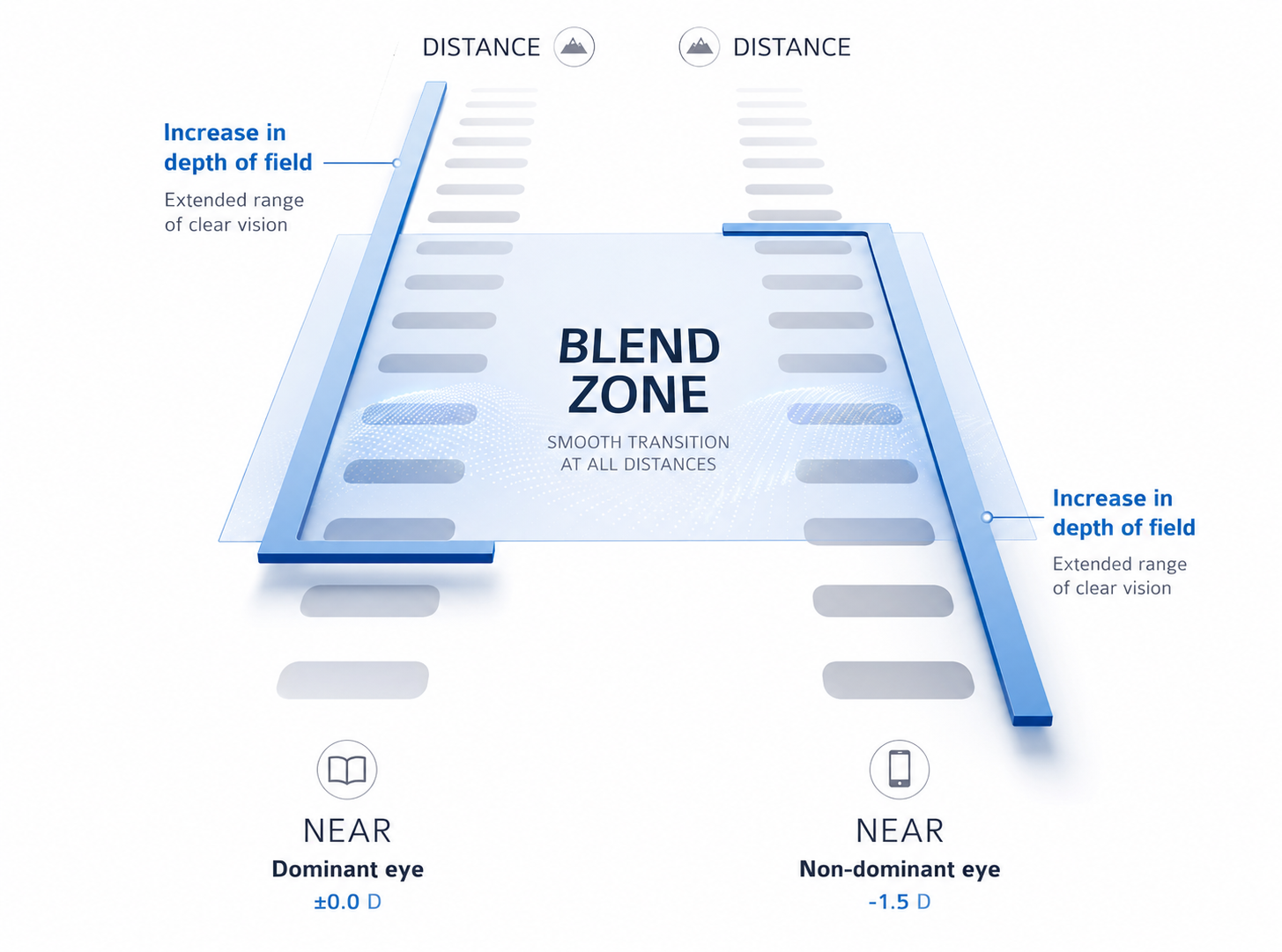
The image above demonstrates the principle behind PRESBYOND Laser Blended Vision. Instead of forcing the eyes to work independently for different tasks, PRESBYOND creates a carefully engineered Blend Zone where near, intermediate and distance vision overlap naturally.
This overlap allows the brain to merge visual information from both eyes, producing smooth, continuous vision across multiple distances. Whether reading a menu, working at a computer or looking towards the horizon, patients can enjoy a greater level of visual freedom without the limitations of reading glasses.
The result is a more natural visual experience that closely mirrors the way healthy younger eyes process the world around them.
Lens Replacement with Trifocal Lenses
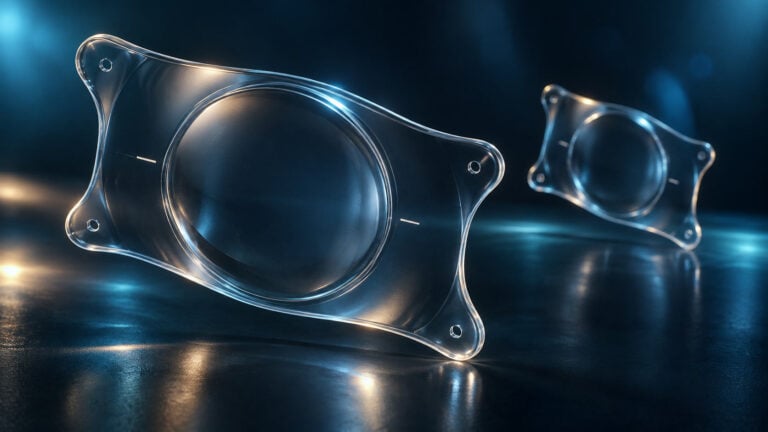
With lens replacement surgery, the eye’s natural lens is replaced with a highly advanced artificial lens. A trifocal lens is designed to support clear vision at three useful distances: far, intermediate and near.
This can help with everyday activities such as driving, using a computer, reading a menu, checking a phone or watching television without constantly reaching for glasses.
How It Works
The natural lens, which becomes less flexible with age, is gently removed and replaced with a premium trifocal intraocular lens. Unlike the natural lens, the artificial lens does not continue to age, which makes this one of the most long-lasting options for treating presbyopia.
Key Benefits
- Designed to provide clear vision across far, intermediate and near distances.
- Can significantly reduce dependence on glasses.
- The artificial lens does not age or cloud in the same way as the natural lens.
- If cataracts are present, they can also be treated during the same type of procedure.
Recovery and Adaptation
Many patients notice an improvement in vision within the first 24 to 48 hours. Full visual stability usually develops over the following weeks as the eyes heal and the brain adapts to the new way of seeing.
Some patients may notice light effects such as rings or halos around bright lights at first. These often become less noticeable as the brain adapts.

Who Is It Best For?
Trifocal lens replacement is often suited to patients from around their late 40s onwards who want a long-term solution for reading vision, distance vision and future cataract prevention.
Learn more about trifocal lenses at EuroEyes
PRESBYOND Laser Blended Vision
For patients with presbyopia who are not yet ready for lens replacement, PRESBYOND can be an excellent alternative. This advanced laser vision correction treatment is designed to improve reading and distance vision while preserving the natural lens inside the eye.
How PRESBYOND Works
PRESBYOND uses precise laser technology to reshape the cornea. One eye is gently optimised more for distance vision, while the other supports near vision. The treatment also creates a blended visual zone, allowing the brain to combine both images into a more natural range of focus.
The result is improved day-to-day vision across distance, intermediate and near tasks, from reading a message on your phone to looking across the room or seeing the road ahead.
Key Benefits
- The natural lens remains inside the eye.
- The treatment is minimally invasive.
- Recovery is usually quick.
- Many patients return to normal daily routines within a short period.
Who Is It Best For?
PRESBYOND is often suitable for patients in their late 30s and 40s who are beginning to struggle with reading vision but are not ready for lens replacement surgery. Suitability depends on prescription, corneal thickness, eye health and lifestyle needs.
Are Surgical Alternatives to Varifocal Glasses Safe?
Modern refractive surgery is highly advanced and widely performed. At EuroEyes, patients are assessed carefully before any treatment is recommended, helping ensure the chosen procedure is suitable for their eyes, prescription and lifestyle.
Procedures such as PRESBYOND and lens replacement are usually performed using anaesthetic eye drops, meaning the treatment itself is not painful. The procedure often takes only a short time per eye, although your full appointment will include preparation and aftercare checks.
EuroEyes uses advanced ZEISS technology and brings together decades of international experience in vision correction. Our surgeons perform a high volume of procedures, giving patients access to expertise, precision and carefully planned care.
Alternatives to Varifocal Glasses Compared
| Option | Comfort | Freedom | Adaptation | Best For |
|---|---|---|---|---|
| Several pairs of glasses | High for one distance | Limited | None | People who do not mind switching between glasses |
| Multifocal contact lenses | Moderate to good | Good | Days to weeks | Active patients without significant dry eye |
| PRESBYOND laser blended vision | Very good | Very good | Usually quick | Patients wanting more freedom from reading glasses without lens replacement |
| Trifocal lens replacement | Excellent | Excellent | A few weeks | Patients seeking a long-term solution, especially from their late 40s onwards |
Which Alternative Is Right for You?
The best alternative to varifocal glasses depends on your age, prescription, eye health, lifestyle and how much freedom you want from glasses or contact lenses.
If you only need occasional support, contact lenses or separate glasses may be enough. If you want a more lasting solution, PRESBYOND or trifocal lens replacement may offer a more advanced route towards visual freedom.
At EuroEyes, your journey begins with a detailed consultation and eye assessment. Our specialists will examine your eyes carefully and explain which options are suitable, realistic and safe for you.
Book your consultation with EuroEyes today and discover whether PRESBYOND or trifocal lens replacement could be the right alternative to varifocal glasses.