Millions of people begin to notice it around the age of 45: reading the newspaper, using a smartphone, or checking a menu suddenly requires holding it farther away. What once appeared crisp now looks blurry up close. It’s a moment many recognise, the first sign of presbyopia, or age-related farsightedness.
To better understand the condition and explore modern treatments, we spoke with Dr. Jørn S. Jørgensen, founder of the EuroEyes Clinic Group and one of the world’s leading ophthalmic surgeons.
Meet the Expert: Dr. Jørn S. Jørgensen on Trifocal Lenses & Life Without Glasses
Dr. Jørgensen:
Presbyopia is the natural stiffening of the eye’s internal lens. Over time, it loses elasticity and can no longer adjust its shape to focus on near and far objects. By our mid-fifties, almost everyone needs reading glasses, even those who never had vision problems before.
Dr. Jørgensen:
Yes! Absolutely. With modern trifocal or multifocal intraocular lenses, we can permanently correct presbyopia, regardless of whether a patient also has myopia (short-sightedness), hyperopia (long-sightedness), or astigmatism.
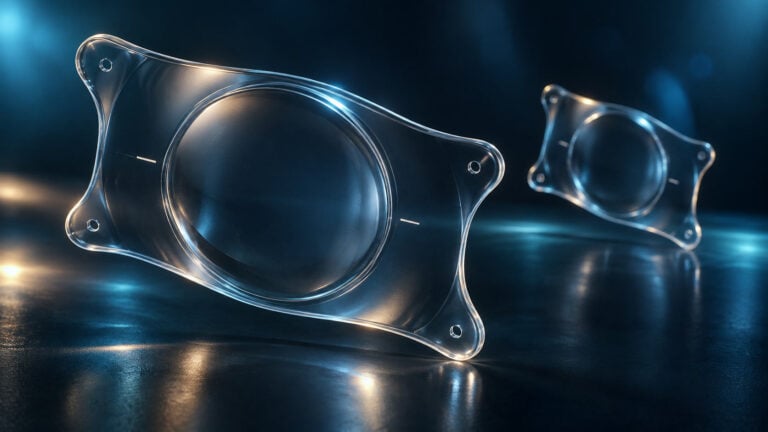
These premium lenses replace the eye’s natural, inflexible lens. After surgery, patients can once again see clearly at all distances: near, intermediate, and far, without needing glasses. Whether reading, driving, or using a computer, vision feels natural again.

Dr. Jørgensen:
The treatment is performed under local anaesthetic, is completely painless, and takes about ten minutes per eye.
Both eyes are usually operated on the same day so patients can enjoy balanced, binocular vision straight away. Most people return to work within two or three days.
Dr. Jørgensen:
We have been implanting trifocal lenses for more than 15 years and have performed over 100,000 such procedures.
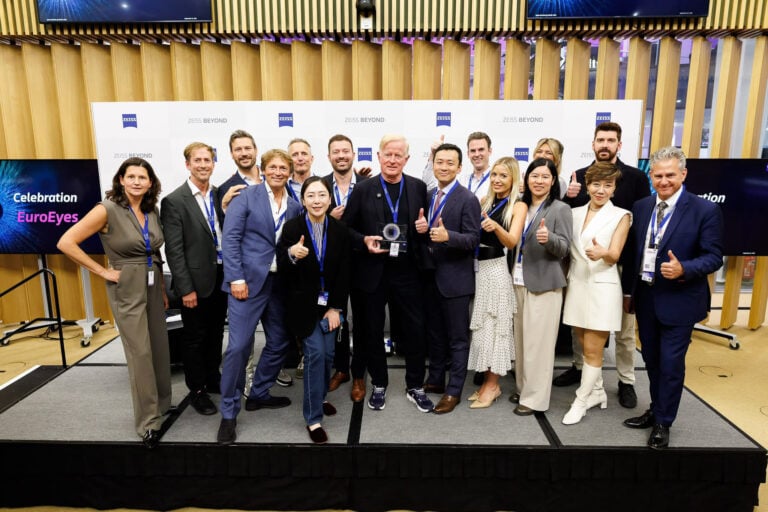
EuroEyes is among the most experienced centres in the world and has implanted more ZEISS trifocal lenses than any other group. This level of experience translates into exceptional safety and consistently excellent visual outcomes.
Dr. Jørgensen:
Most are between 50 and 60 years old, people who find reading glasses or varifocals increasingly inconvenient in daily life.
Many come because glasses interfere with sports, driving, or professional activities. For them, the trifocal lens offers a permanent, comfortable solution that restores visual freedom.
Dr. Jørgensen:
No. The implanted lens lasts a lifetime and never needs replacing.
Once the natural lens is removed, you will never develop a cataract either, so you’re free from both reading glasses and the risk of age-related clouding of the lens.
Dr. Jørgensen:
We combine state-of-the-art laser technology, premium ZEISS lenses, and highly personalised diagnostics.
Every treatment plan is tailored to the patient’s eye anatomy and lifestyle needs to ensure the best possible outcome; lifelong freedom from glasses and optimal quality of vision.
Dr. Jørn S. Jørgensen
Dr. Jørn S. Jørgensen, a Danish ophthalmologist and founder of the EuroEyes Clinic Group, is regarded as a pioneer of modern eye surgery.
He introduced outpatient cataract surgery to Hamburg in 1990 and performed one of the first LASIK procedures there in 1993.
Today, he oversees more than 25 EuroEyes clinics across Europe and Asia and has completed over 100,000 eye surgeries, helping shape the future of refractive and lens-based correction worldwide.