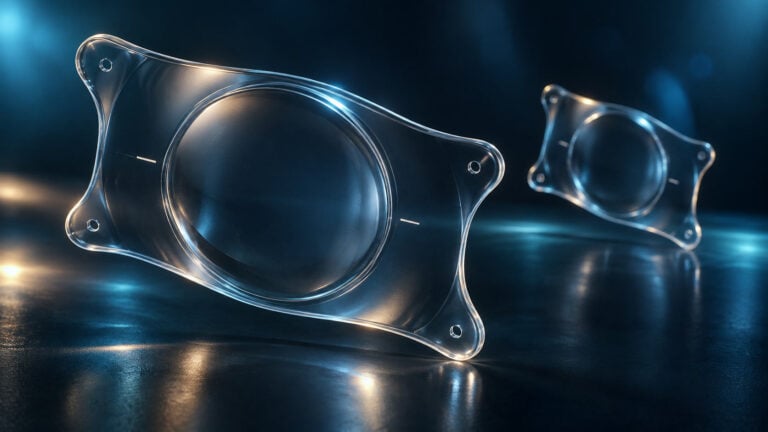
If glasses or contact lenses have been part of your daily routine for years, an implantable contact lens, commonly known as an ICL, could provide lasting visual freedom without permanently reshaping the cornea.
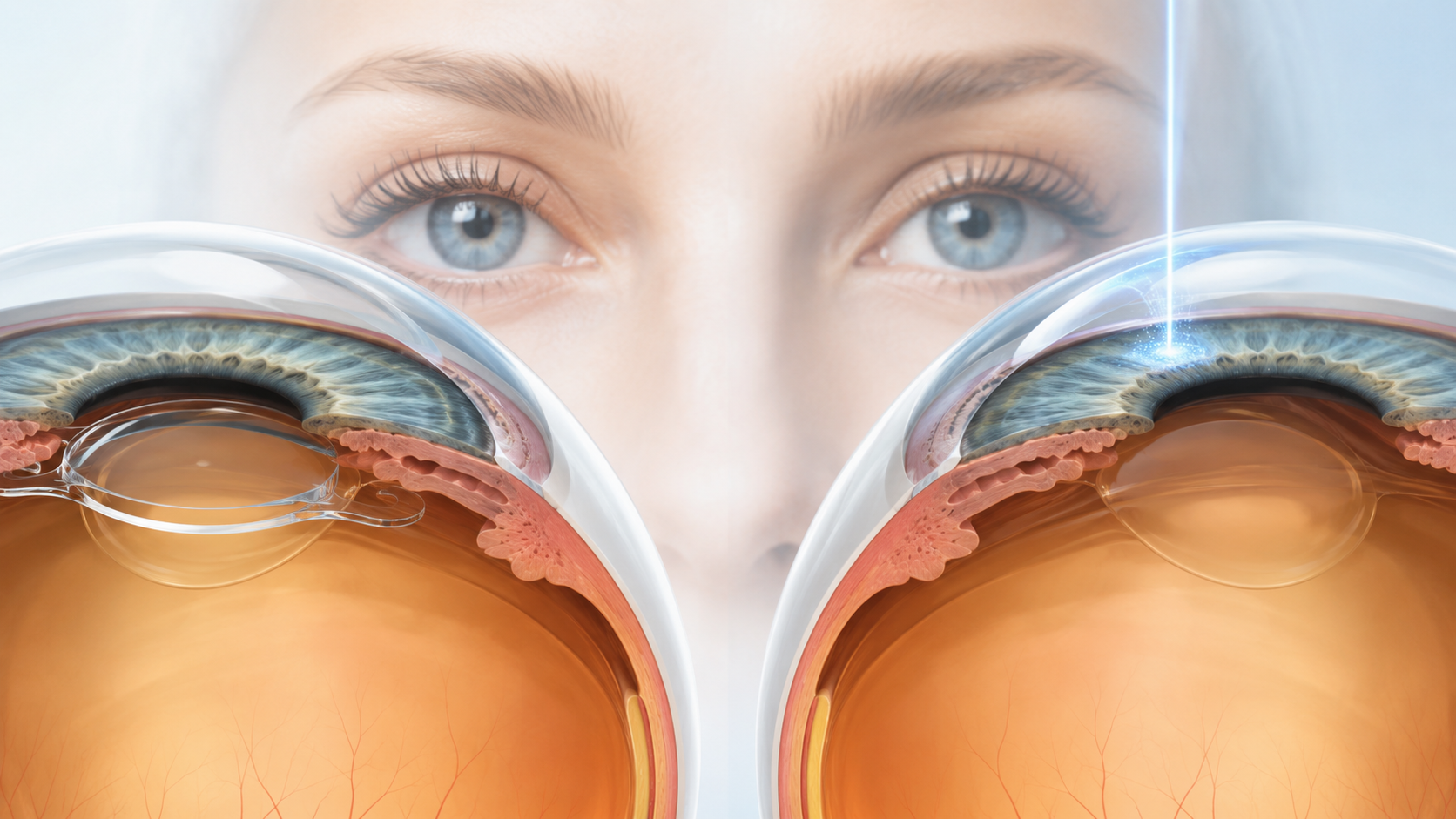
An ICL is a small, biocompatible lens placed inside the eye, behind the coloured iris and in front of your natural lens. It works rather like a contact lens, but you cannot see it, feel it or remove it yourself. Once positioned, it remains inside the eye to correct your prescription throughout the day and night. Unlike ordinary contact lenses, there is no daily cleaning, replacement schedule or risk of losing a lens. Unlike laser eye surgery, ICL treatment does not remove corneal tissue. This makes it particularly valuable for people with high prescriptions, thinner corneas, dry-eye concerns or other factors that may make corneal laser treatment less suitable.
At EuroEyes London, every recommendation begins with detailed diagnostic testing. Your prescription, corneal health, internal eye measurements, age and lifestyle are considered before ICL or any alternative treatment is recommended.
What Is an Implantable Contact Lens?
An implantable contact lens is more accurately described as a phakic intraocular lens. “Phakic” means that your natural lens remains inside the eye. This is an important distinction because ICL surgery does not replace the natural lens in the way that refractive lens exchange or cataract surgery does.
The lens is folded and inserted through a small incision at the edge of the cornea. Once inside the eye, it gently unfolds and is positioned behind the iris. No stitches are normally required because the incision is designed to seal naturally.
Modern EVO ICL technology also incorporates a tiny central opening that supports the natural circulation of fluid within the eye. For suitable patients, this removes the need for the preoperative peripheral iridotomy that was commonly required with earlier generations of implantable lenses.
ICL in simple terms: laser eye surgery changes the focusing power of the cornea, while ICL adds a precisely calculated prescription lens inside the eye without removing corneal tissue.
What Are the Main Benefits of ICL?
- Long-term vision correction: the lens is designed to remain in place indefinitely, although it can be removed or exchanged by an eye surgeon if medically necessary.
- Suitable for high prescriptions: ICL can correct levels of short-sightedness that may fall outside the preferred treatment range for laser eye surgery.
- No corneal tissue removal: the natural shape and structural integrity of the cornea are preserved.
- An option for thinner corneas: some people who are unsuitable for laser eye surgery may still be eligible for ICL.
- Helpful for some dry-eye patients: because the corneal surface is not reshaped, ICL is less likely to aggravate dryness through corneal tissue removal.
- Correction for astigmatism: toric ICL models can correct suitable levels of astigmatism as well as short-sightedness.
- UV protection: the Collamer lens material includes ultraviolet protection, although sunglasses are still recommended in bright sunlight.
- Invisible once implanted: the lens sits behind the iris and cannot normally be seen by you or other people.
- Potentially removable: unlike corneal tissue removed during laser surgery, the ICL itself can be surgically removed or exchanged.
Although ICL is often described as permanent, long-term is a more helpful description. The lens is designed to stay inside the eye, but it does not prevent natural age-related changes and removal is possible if future eye health or treatment needs make this necessary.

Who Could Be Suitable for ICL Surgery?
ICL is often considered by younger adults whose natural lenses are still clear and flexible. It may be particularly appropriate when a prescription is too high for the preferred laser treatment range or when the cornea is not ideally suited to laser correction.
ICL may not be appropriate if there is insufficient space in the front of the eye, an unsuitable endothelial cell count, uncontrolled glaucoma, active eye disease, cataract formation or certain other health concerns. Pregnancy and breastfeeding can also temporarily affect treatment suitability because hormonal changes may alter the prescription.
Suitability ranges can vary according to the specific lens model and regulatory guidance. Your EuroEyes assessment will establish whether ICL is appropriate for your individual eyes.
Can ICL Correct Long-Sightedness and Astigmatism?
ICL is most widely used to correct short-sightedness, also known as myopia. Toric versions are available for people who also have astigmatism. Implantable lens options for long-sightedness may be available in selected circumstances, depending on the anatomy of the eye, the required prescription and the lens approved for use.
People with long-sightedness often have less space inside the front of the eye, so detailed internal measurements are especially important. In some cases, laser vision correction or refractive lens exchange may be a more appropriate recommendation.
What Happens During the ICL Treatment Journey?
Detailed assessment
Your prescription, cornea, eye pressure, pupil size, retinal health and internal eye dimensions are carefully measured.
Lens selection
Your surgeon selects the appropriate lens power, diameter and, where required, toric correction for astigmatism.
Lens implantation
Numbing drops are applied before the folded lens is inserted through a small corneal incision and positioned behind the iris.
الرعاية اللاحقة
Your vision, eye pressure, healing and the position of the lens are monitored during scheduled follow-up appointments.
How Long Does ICL Surgery Take?
The implantation itself commonly takes around 20 to 30 minutes per eye, although you should expect to spend longer at the clinic for preparation and postoperative checks. Treatment may be performed on both eyes during the same visit or according to the surgical plan recommended for you.
Anaesthetic eye drops are used to numb the surface of the eye. You may notice light, movement or gentle pressure, but the procedure should not normally be painful. After a short period of observation, most patients can return home with a friend or family member. You must not drive yourself home.
ICL Recovery: What Can You Expect?
Many patients notice a meaningful improvement in vision shortly after treatment, but initial blur, glare, light sensitivity or fluctuation can occur. Vision normally becomes clearer as the eye settles and heals.
These timings are general guidance rather than a promise of individual recovery. Your surgeon will provide personalised instructions based on your eyes, occupation and normal activities.
ICL vs Laser Eye Surgery
Both ICL and modern laser eye surgery can provide excellent vision for appropriately selected patients. The important question is not which treatment is universally “best,” but which method is safest and most suitable for your individual eyes.
When Might ICL Be Recommended Over Laser Treatment?
Your surgeon may consider ICL when your prescription would require more corneal tissue removal than is advisable, your cornea is too thin or irregular for the preferred laser procedure, or there are concerns about corneal dryness. It can also be a strong option for people whose prescription falls beyond the usual treatment range of LASIK, PRK or SMILE.
However, ICL is an internal eye procedure and therefore has a different risk profile from laser surgery. For someone with a moderate prescription and healthy corneal measurements, a laser procedure may provide an equally effective solution without placing a lens inside the eye.
The safest recommendation can only be made after both the front and inside of the eye have been carefully examined.
Does ICL Prevent Presbyopia or the Need for Reading Glasses?
No vision correction treatment can stop the natural ageing of the eye. A standard ICL corrects the prescription it was selected to treat, but it does not prevent presbyopia, the gradual loss of near focusing ability that commonly becomes noticeable during the forties.
This means someone who enjoys clear distance vision after ICL may eventually require reading glasses, just as a person with naturally good distance vision might. Developing presbyopia does not mean that the ICL has stopped working. It means the natural lens inside the eye has become less flexible with age.
For patients already experiencing presbyopia, cataracts or age-related changes within the natural lens, refractive lens exchange or cataract surgery with an appropriate replacement lens may be considered instead. The correct treatment depends on age, eye health, visual priorities and the condition of the natural lens.
Can You Feel an ICL Inside Your Eye?
Once correctly positioned, you should not be able to feel the ICL. It sits behind the iris and does not move across the surface of the eye like an ordinary contact lens. Other people cannot normally see it, and most patients are not consciously aware of the lens after the initial recovery period.
Can Eyesight Change After ICL Surgery?
Yes. The ICL is designed to provide stable, long-term correction, but your eyes can still change naturally. A prescription may alter over time, presbyopia can affect near vision and cataracts may eventually develop within the natural lens.
Small prescription changes do not always require further surgery and may be managed with glasses for particular tasks. In selected cases, an enhancement, lens exchange or removal may be considered following a new clinical assessment.
Is ICL Surgery Safe?
ICL has an established international clinical history and modern lens designs have continued to improve. Most appropriately selected patients achieve a significant reduction in their dependence on glasses or conventional contact lenses.
Nevertheless, ICL is surgery inside the eye and should not be described as risk-free. Possible side effects and complications can include:
- Temporary glare, halos or altered night vision
- Inflammation or infection
- A rise in eye pressure
- An unsuitable distance between the ICL and natural lens, known as the vault
- Rotation of a toric lens used to correct astigmatism
- Damage to the corneal endothelial cells
- Cataract formation
- The need to reposition, exchange or remove the lens
- Retinal complications, particularly in highly short-sighted eyes
Serious complications are uncommon, but they must be discussed openly before treatment. Careful patient selection, accurate lens sizing, an experienced surgical team and properly structured aftercare all play an important role in reducing avoidable risk.
When to seek urgent advice: contact your clinical team immediately if you experience increasing pain, a sudden reduction in vision, marked redness, flashing lights, a rapid increase in floaters or a curtain-like shadow in your sight following surgery.
How Long Does an Implantable Contact Lens Last?
An ICL does not have a routine replacement schedule. It is designed to remain inside the eye for the long term and does not need to be cleaned or changed like a conventional contact lens.
Removal or exchange may occasionally become necessary because of a prescription change, lens position, eye pressure, cataract development or another clinical reason. If cataract surgery is required later in life, the ICL would normally be removed before the natural lens is replaced.
Although removability is an advantage, it should not be interpreted as meaning that the eye is guaranteed to return to exactly its preoperative condition. Removing or exchanging an ICL is another surgical procedure with its own considerations.
Frequently Asked Questions About ICL
Will people be able to see the lens?
No. The ICL sits behind the coloured iris and is not normally visible to you or to someone looking at your eyes.
Will I still need an eye test after treatment?
Yes. ICL reduces your dependence on corrective eyewear, but it does not replace routine eye healthcare. Regular examinations remain important for monitoring your eye pressure, retina, natural lens, corneal health and the position of the ICL.
Can ICL treat both eyes?
Yes, provided both eyes are suitable. Your surgeon will explain whether treatment will be performed on the same day or according to a staged surgical plan.
Can I drive after ICL surgery?
You must not drive home following the procedure. You can resume driving only when your vision meets the legal standard and your clinical team has confirmed that it is safe.
Can an ICL move inside the eye?
The lens is designed to remain stable behind the iris. Movement is uncommon, although a toric ICL can occasionally rotate and affect the correction of astigmatism. If this happens, repositioning may be recommended.
Does ICL cause dry eyes?
ICL does not reshape the cornea and generally has less direct impact on the tear film than corneal laser treatment. However, existing dryness, medication and other eye-surface conditions can still cause symptoms and should be assessed before surgery.
Is an ICL the same as lens replacement?
No. ICL surgery adds a lens while keeping your natural lens in place. Refractive lens exchange removes the natural lens and replaces it with an artificial intraocular lens. The two procedures are intended for different eye conditions, ages and visual requirements.
How long does an implantable contact lens last?
An implantable contact lens is designed to remain inside the eye for the long term and does not have a routine replacement date. For many patients, the ICL can stay in place for decades without needing to be cleaned, maintained or changed. However, it cannot prevent natural changes such as presbyopia, prescription changes or cataract development. If your eyesight or eye health changes later in life, the lens can be surgically removed or exchanged following a clinical assessment.
Why Choose EuroEyes London for ICL Treatment?
Successful ICL treatment depends on much more than placing a lens inside the eye. Accurate measurements, appropriate lens sizing, careful surgical planning and reliable aftercare are all essential parts of the patient journey. At EuroEyes London, your eyes are assessed using advanced diagnostic technology before any treatment is recommended. Our experienced vision correction surgeons consider your prescription, eye anatomy, natural lens, corneal health and everyday visual demands when deciding whether ICL, laser eye surgery or another approach is most appropriate.
You will also receive clear information about expected benefits, potential limitations, recovery and risks, giving you the opportunity to make a properly informed decision without pressure.
Could ICL Be Right for Your Eyes?
Book a comprehensive consultation with EuroEyes London to explore whether implantable contact lenses could safely reduce your dependence on glasses or contact lenses.
This article provides general information and does not replace an individual examination or medical advice from a qualified ophthalmic surgeon. Suitability, treatment options and recovery vary between patients.