For many people, the first signs of ageing are not grey hairs or wrinkles. Instead, they arrive when reading a text message becomes difficult, restaurant menus appear blurry or your arms suddenly feel too short to hold a newspaper comfortably. This is presbyopia, also known as age-related long-sightedness. It is a natural part of the ageing process that affects almost everyone, typically from their mid-40s onwards. While reading glasses and varifocals remain common solutions, modern vision correction techniques now offer the possibility of clear vision at all distances without the need for glasses.
At EuroEyes, advanced treatments such as PRESBYOND Laser Blended Vision and Trifocal Lens Replacement are helping patients regain visual freedom and enjoy everyday life without constantly reaching for their spectacles.
Can Presbyopia Be Treated?
Yes. While the natural ageing process of the eye cannot be reversed, even through eye exercises, presbyopia can be corrected very effectively using modern refractive surgery. Presbyopia develops because the eye’s natural lens gradually loses flexibility over time. In younger eyes, the lens changes shape easily, allowing us to switch focus between near and distant objects. As we age, this flexibility decreases, making close-up tasks such as reading increasingly difficult.
Unlike short-sightedness (myopia) or long-sightedness (hyperopia), which are primarily related to the shape of the eye, presbyopia is caused by the ageing of the natural lens itself. The result is the same: light no longer focuses perfectly on the retina, leading to blurred vision. Fortunately, modern treatments can restore clear vision across multiple distances.
How Vision Typically Changes With Age
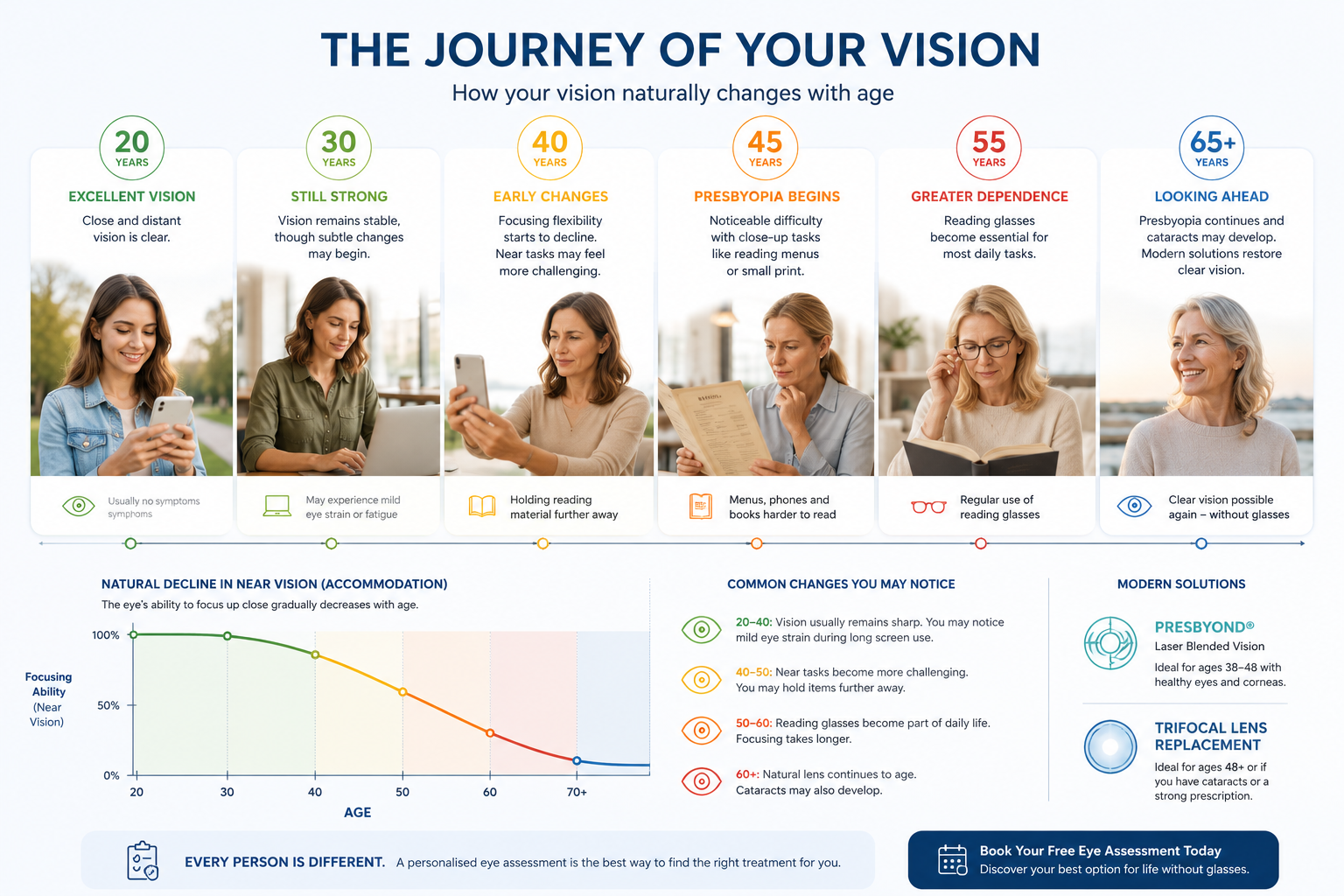
While every patient is different, the chart below illustrates how the eye naturally changes over time. Most people begin noticing the effects of presbyopia during their mid-40s, when reading menus, smartphones and small print becomes increasingly difficult.
Treatment Options for Presbyopia
Many people initially manage presbyopia with reading glasses, varifocal lenses or multifocal contact lenses. While these options can be effective, they do not address the underlying cause and often become a permanent part of daily life.
For patients seeking greater independence, modern refractive surgery offers two highly advanced solutions:
PRESBYOND: Laser Treatment for Presbyopia
PRESBYOND Laser Blended Vision is an advanced laser eye surgery technique designed specifically for patients developing age-related near vision problems.
Unlike traditional laser eye surgery, PRESBYOND creates a carefully balanced visual system between both eyes.
- One eye is optimised primarily for distance vision.
- The other eye is optimised for near vision.
- A unique Blend Zone allows both eyes to work together naturally.
Rather than creating two separate areas of focus, PRESBYOND enables the brain to merge visual information from both eyes into one seamless image. A process that allows patients to see clearly across near, intermediate and distance ranges, whether reading a newspaper, working on a laptop or watching television.
Why PRESBYOND Is Different From Traditional Monovision
Traditional monovision treats one eye for distance and one eye for near vision. While effective for some patients, it can leave a gap in the intermediate range where vision may feel less comfortable. PRESBYOND overcomes this limitation by creating a Blend Zone. Instead of forcing the eyes to work independently, both eyes contribute to vision across multiple distances. This helps preserve depth perception and creates a smoother, more natural visual experience.
The treatment reshapes the cornea using advanced laser technology while leaving the eye’s natural lens untouched. Recovery is typically rapid, with many patients returning to normal activities within days.
Trifocal Lens Replacement: A Long-Term Solution
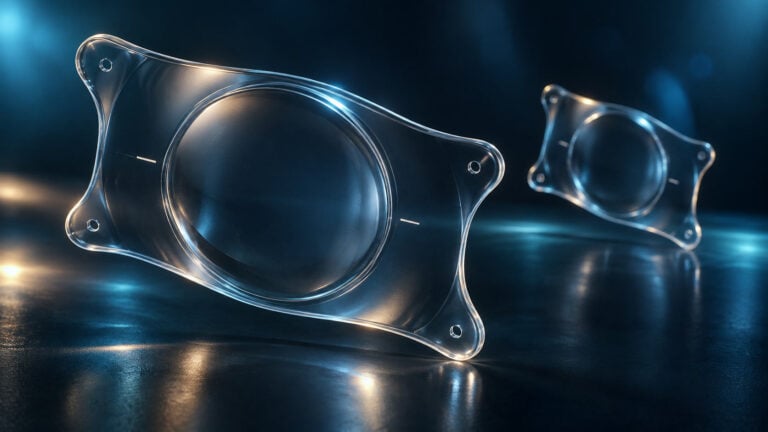
For patients looking for a permanent solution to presbyopia, lens replacement surgery with trifocal lenses can be an excellent option. Rather than reshaping the cornea, this procedure replaces the eye’s natural ageing lens with a premium artificial trifocal lens. The new lens is designed with three focal points, allowing clear vision across all key viewing distances.
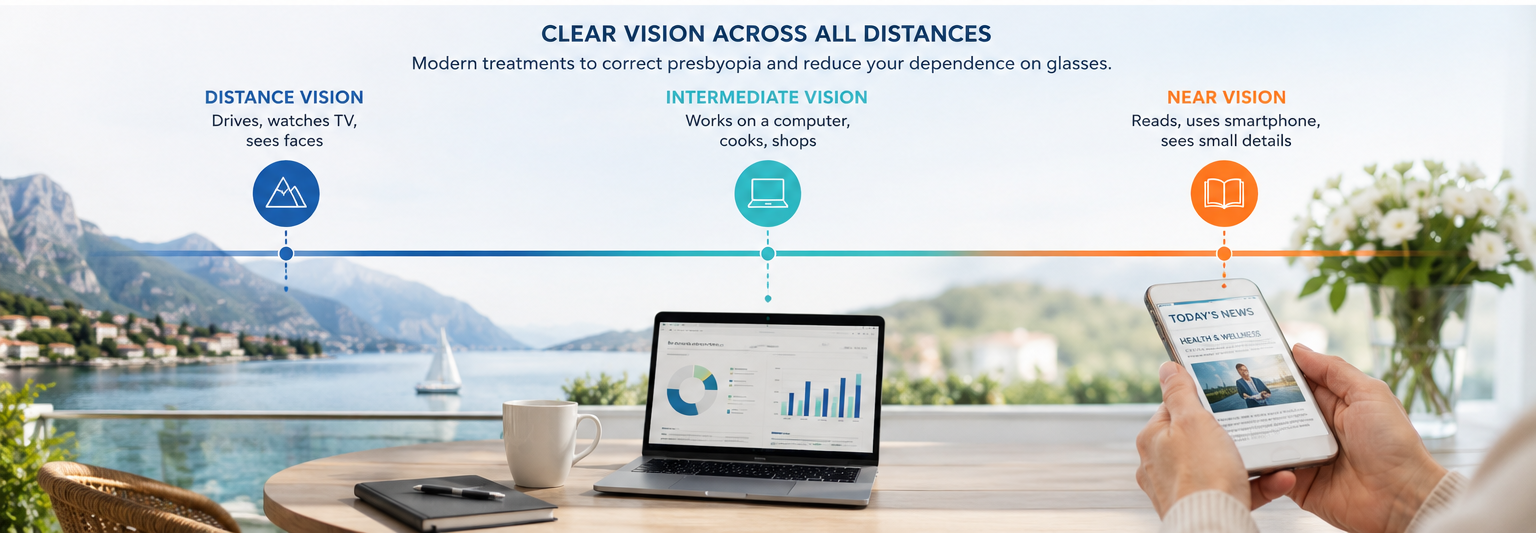
الرؤية عن بُعد
Driving, watching television, recognising faces and reading road signs.
الرؤية المتوسطة
Computer screens, tablets, cooking and everyday household tasks.
الرؤية القريبة
Reading books, using a smartphone, checking labels and menus.
Because the natural lens is replaced entirely, the effects of presbyopia are permanently corrected. The artificial lens cannot age in the same way as the natural lens and also prevents future cataract development.
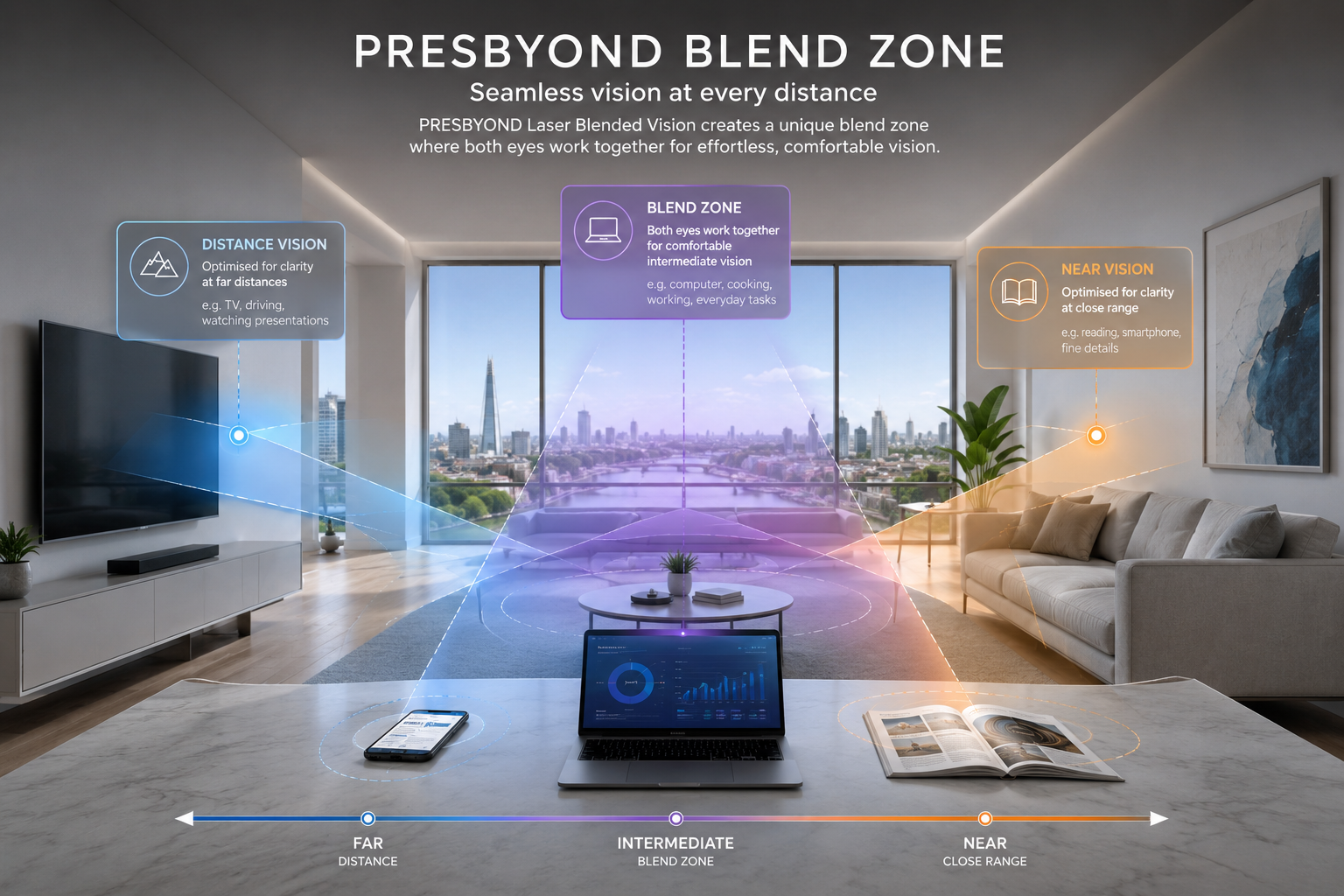
The illustration above provides a three-dimensional visualisation of how PRESBYOND Laser Blended Vision works in everyday life. Rather than viewing vision as separate zones for distance and reading, the graphic demonstrates how modern laser treatment creates a continuous range of focus across an entire living space. In the far distance, represented by the London skyline beyond the windows, vision is optimised for activities such as driving, recognising faces and enjoying scenery. In the foreground, objects such as a smartphone or book represent traditional near vision tasks including reading messages, browsing websites and viewing fine detail.
The most important feature is the central purple area, known as the Blend Zone. This represents the intermediate range where both eyes work together to create seamless vision between near and distance focus. In practical terms, this includes activities such as using a laptop, preparing meals, working at a desk, watching television or moving naturally through your home. Unlike conventional monovision, which creates two distinct focal points, PRESBYOND expands the depth of focus and allows these visual ranges to overlap. The result is a smooth transition between distances, helping maintain depth perception, visual comfort and a more natural viewing experience throughout the day.
The coloured light fields shown throughout the room highlight how modern laser technology creates a connected visual environment, allowing patients to move effortlessly between near, intermediate and distance tasks without constantly reaching for reading glasses.
PRESBYOND vs Trifocal Lens Replacement
| الميزة | PRESBYOND | Trifocal Lens Replacement |
|---|---|---|
| Treatment Type | Laser reshaping of the cornea | Replacement of the natural lens |
| Typical Age Range | 38–48 years | 48+ years |
| Natural Lens Retained | نعم | لا يوجد |
| التعافي | Usually very quick | Gradual adaptation over several weeks |
| نطاق الرؤية | Near, intermediate and distance | Near, intermediate and distance |
| Long-Term Outcome | Long-lasting correction | Permanent correction of presbyopia |
Which Presbyopia Treatment Is Right For Me?
The answer depends on several factors, including your age, prescription, lens clarity, corneal thickness, visual requirements, symptoms and lifestyle.
Patients in their late 30s and 40s often benefit from PRESBYOND because it preserves the eye’s natural lens and offers a rapid recovery. Patients in their late 40s, 50s and beyond frequently choose trifocal lens replacement because it provides a long-term solution and eliminates the possibility of future cataracts.
Choosing between the two is not simply a matter of preference. It requires a detailed assessment of your eyes and visual needs.
Your Journey Towards Life Without Glasses
At EuroEyes, we offer both PRESBYOND and Trifocal Lens Replacement, allowing our specialists to recommend the treatment that best suits your individual circumstances.
Our surgeons have extensive experience in treating presbyopia and have implanted more ZEISS trifocal lenses than any other provider worldwide. Using advanced diagnostics and personalised treatment planning, we help patients achieve greater visual freedom and confidence in everyday life.
Book your free, no-obligation eye assessment today and discover which presbyopia treatment could help you enjoy life without reading glasses.