Laser eye surgery in the United Kingdom is internationally known for its safety, precision and clinical standards. London, in particular, has become one of the world’s preferred destinations for vision correction. This reputation comes from a combination of FDA approved laser technology, strict regulatory oversight, and surgeons who specialise in treating both routine and complex eye conditions.
People travel to the UK from Europe, the Middle East, the United States and Asia because the environment here feels reassuring, advanced and well regulated. Patients often say they chose London because it offers treatments and expertise that are difficult to find elsewhere and after research the choice becomes worth it.
One of the main reasons is the availability of cutting-edge equipment. EuroEyes London use modern platforms including the ZEISS Visumax 800 for SMILE Pro and the MEL 90 excimer laser for LASIK and surface procedures. These systems are FDA approved or CE-certified, which gives patients confidence that their treatment is safe, consistent and based on proven science.
Another reason is the range of treatment options. In some countries, clinics specialise in only one procedure, which limits choice. In the UK, patients can access the full spectrum of laser treatments, which allows surgeons to choose whatever best suits the individual’s cornea, prescription and lifestyle.
Clinical regulation is also an important factor. UK centres are monitored by the Care Quality Commission, which ensures that quality, safety, protocols and patient communication remain consistent. Many patients prefer this level of oversight compared with clinics abroad where medical governance is less transparent.
London is also easy to reach from almost anywhere in the world, and the recovery time for most laser procedures is short. Many people travel in, attend their consultation and surgery, stay for a night or two, then fly home as their vision stabilises. Remote follow-ups are simple to arrange, and EuroEyes can coordinate any necessary after-care.
Finally, the UK experience tends to feel more personal. Consultations are detailed, treatment plans are adapted to the patient, and post-operative guidance is thorough and structured. Combined with modern technology, the patient journey becomes both safe and reassuring.
With that context, let’s look at how laser eye surgery actually works, which conditions it corrects, and the treatments available across EuroEyes clinics in London.

How Laser Eye Surgery Works
Vision begins at the front of the eye, where the cornea bends incoming light and begins to focus it. The lens then fine-tunes this focus and sends a sharp image to the retina. If the cornea is too steep, too flat, irregular in shape or the eye is too long or too short, the focal point lands in the wrong place. The result is blurred vision.
Laser eye surgery corrects this by reshaping the cornea or adjusting the eye’s optical system so that light focuses accurately again.
The process usually follows these steps:
Initial assessment
Before anything else, the eye is scanned in detail. This includes measurements of the corneal curvature, thickness, shape, the length of the eye, tear-film quality and the health of the lens and retina. These measurements allow the surgeon to design a plan that fits your unique vision profile.
Creating a new optical shape
Depending on the technique, the laser either reshapes the cornea directly or prepares tissue beneath the surface. The goal is to create a new curvature that bends incoming light to the correct focal point.
Healing and stabilisation
After treatment, the cornea heals over the course of several days to several weeks depending on the method used. Vision usually becomes clear quickly, particularly with SMILE Pro and LASIK. Surface procedures such as PRK or LASEK have a slightly longer healing period, but outcomes are equally strong.
Final vision outcome
Once the eye has stabilised, patients experience clearer vision at the distances targeted. Many people achieve independence from glasses and contact lenses vs laser eye surgery, and for those who do still require correction, the prescription is usually much smaller and easier to manage.

Which Conditions Laser Eye Surgery Can Correct
Laser eye surgery can correct a wide range of vision problems. The most common include:
Myopia (short-sightedness)
The eye is slightly too long, or the cornea too steep, causing light to focus in front of the retina. Laser correction flattens the cornea so distant objects come into focus.
Hyperopia (long-sightedness)
The eye is slightly too short, or the cornea too flat, which pushes the focal point behind the retina. Laser treatment steepens the cornea to restore clarity.
Astigmatism
The cornea is shaped more like a rugby ball than a symmetrical dome, causing light to scatter. Laser treatment smooths and regularises the cornea, improving focus at all distances.
Presbyopia
In midlife, the natural lens becomes less flexible, making reading more difficult. Traditional laser methods are not enough to fix this on their own, but advanced programmes such as Presbyond create functional focus zones that restore near and intermediate clarity.
Other conditions
Laser treatments can also be used to refine results after cataract surgery, correct residual refractive errors, reduce the effects of corneal surface irregularities and improve certain night-vision problems when caused by refractive shape issues.
Types of Laser Eye Surgery Available at EuroEyes London
Each patient is different, and no single technique suits everyone. The strength of the UK system is that all major treatment types are available, and surgeons can recommend the most suitable option based on the eye’s structure.
SMILE Pro
SMILE Pro is one of the most advanced and minimally invasive laser treatments available today. Instead of creating a flap, a small disc-shaped lenticule is formed within the cornea and removed through a tiny incision. Most of the corneal surface remains untouched, which helps maintain stability and comfort.
This procedure has become increasingly popular among younger adults, particularly those between 18 and 45, as well as individuals with active lifestyles or concerns about dry eye. The recovery is fast, with many patients seeing clearly within 24 hours. Results have been shown to be highly stable, and studies consistently report excellent long-term success rates. It is particularly useful for moderate to high short-sight and for patients who want a gentler, less invasive experience.
LASIK
LASIK involves creating a fine flap on the corneal surface, which is carefully lifted so the laser can reshape the tissue beneath. Once complete, the flap is placed back into position, where it begins to heal naturally. LASIK is known for its precision, comfort and extremely rapid improvement in vision, often within just a few hours.
It is one of the most requested treatments among adults aged 20 to 50 and remains the most widely performed laser eye procedure worldwide. LASIK is ideal for patients with stable prescriptions and suitable corneal thickness. Success rates are very high, especially in mild to moderate prescriptions, and the technique remains a trusted choice due to its predictable outcomes and long clinical history.
PRK and LASEK
PRK and LASEK fall under the group of surface treatments. In both cases, there is no corneal flap. Instead, the surface layer is gently removed or softened so the laser can reshape the underlying cornea directly. Because the surface needs time to regenerate, recovery can take several days, but the long-term results match those of LASIK or LASEK.
These treatments are especially suitable for patients with thinner corneas or those involved in activities where a corneal flap could be at risk, such as contact sports, military roles or high-impact professions. PRK has been used for more than three decades and continues to deliver excellent success rates with strong visual outcomes. Patients who choose PRK or LASEK often do so for its safety profile and long-term stability rather than speed of recovery.
Presbyond
Presbyond is designed for age-related reading difficulties that typically begin in the mid-forties. Unlike standard laser procedures, which reshape the cornea for a single focal point, Presbyond creates a carefully calibrated blend of focus that allows both eyes to work together for near, intermediate and distance tasks.
It is most popular among patients aged 45 to 60 who want a more natural alternative to reading glasses or varifocals. The success rate is extremely high, with many patients reporting improved visual freedom across multiple distances. Presbyond is known for delivering a natural visual experience, particularly for people who spend long hours reading, using screens or switching between close and far tasks.

When Laser Eye Surgery Is Not Suitable
Although modern laser treatments such as SMILE Pro, LASIK, PRK and Presbyond cover a wide range of prescriptions, there are situations where laser eye surgery is not the safest or most effective option. In these cases, EuroEyes London offers alternative vision correction methods that can provide excellent clarity without reshaping the cornea.
Thin or irregular corneas
Some patients naturally have thinner corneas or irregular corneal shapes that make laser reshaping less predictable. Surface treatments like PRK or LASEK are sometimes still possible, but in many cases, implantable contact lenses (ICLs) are the safer long-term choice.
Very high prescriptions
Laser techniques work best within certain limits. Extremely high levels of short-sight or long-sight may require too much corneal reshaping to be safe. ICLs or refractive lens exchange (RLE) often provide sharper and more stable results for these patients.
Dry eye disease
If the tear film is already compromised, laser surgery can sometimes worsen dryness. Patients with moderate to severe dry eye may be better suited to ICL treatment or lens-based procedures that do not involve altering the corneal surface.
Presbyopia beyond laser limits
Presbyond is an excellent solution for age-related reading issues, but some patients have additional lens changes that make a lens-based approach more suitable. In these cases, refractive lens exchange can offer distance and reading clarity in one procedure.
Corneal diseases or abnormalities
Conditions such as keratoconus, corneal scarring or instability make laser surgery unsafe. EuroEyes will identify these during your diagnostic scan. Depending on findings, alternatives may include cross-linking, ICLs or specialist corneal treatments.
Unrealistic expectations
Laser eye surgery cannot guarantee perfect vision for every activity or distance. During consultation, your surgeon will discuss what is achievable and recommend the treatment that fits your goals. If the expected outcome does not align with what the patient hopes for, a non-laser option may be advised.

Alternatives: When Laser Is Not the Best Fit
EuroEyes offers several solutions for patients who are not suitable for laser correction.
Implantable Contact Lenses (ICLs)
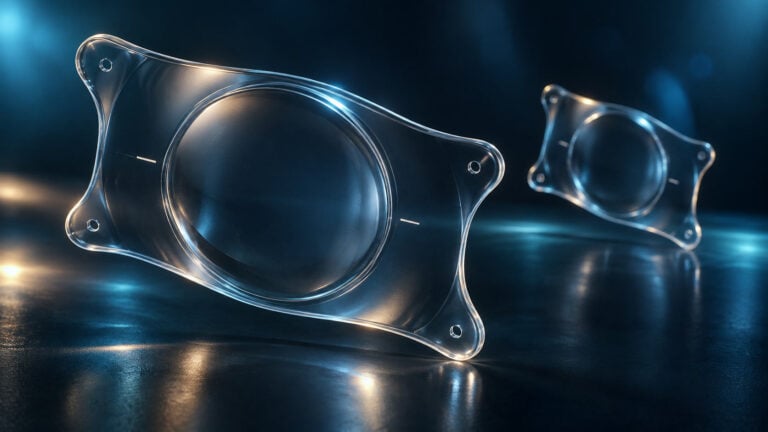
ICLs sit inside the eye, behind the iris, and provide high-definition clarity without removing corneal tissue. They are ideal for high prescriptions, thin corneas and patients wanting the sharpest outcomes with a reversible procedure.
Refractive Lens Exchange (RLE)
For patients over 45, especially those with presbyopia or early lens changes, RLE replaces the natural lens with a premium artificial lens. This can correct long-sight, short-sight, astigmatism and age-related reading issues in one step.
Specialist treatments for eye conditions
Some patients need targeted solutions such as cross-linking for keratoconus, corneal smoothing procedures or post-cataract enhancement strategies. The right pathway is always chosen based on safety and long-term vision stability.
The Patient Journey at EuroEyes London
Your journey with EuroEyes is designed to feel personal, reassuring and fully informed from the very first moment. Whether you live locally or are travelling from abroad, every step is structured around safety, clarity and long-term visual success.
Step 1: Choose your location
EuroEyes London offers two modern, centrally connected clinics: one in Knightsbridge and another within Westfield London. Both locations provide excellent transport links and easy access for patients travelling from across the UK or flying in from overseas. Appointments are available throughout the week, with dedicated scheduling options for international patients who require coordinated consultation and treatment times.
Step 2: Meet your surgeon
Your consultation is carried out by an experienced refractive surgeon who specialises in treating short-sight, long-sight, astigmatism and age-related reading problems. This is not a brief pre-check. Your surgeon will take time to scan, analyse and discuss your eyes in detail. You will understand exactly why certain treatments are suitable and why others may not be. Options are explained clearly and without pressure, so you can make an informed decision.
Step 3: Personalised treatment planning
Once the surgeon has assessed your scans, they create a plan that fits your eye anatomy and lifestyle. This may include SMILE Pro, LASIK, PRK, LASEK or Presbyond. For patients who are not suitable for laser, implantable contact lenses (ICLs) may be recommended instead. The aim is simple: choose the method that provides the safest, sharpest and most stable long-term vision.
Step 4: Treatment day
Laser eye surgery is typically quick and comfortable. Most procedures take only a few minutes per eye. Patients usually walk out of the clinic shortly afterwards, often with noticeably clearer vision within hours. If you are having ICL treatment, your experience will still be smooth and well supported, with the same level of care and guidance throughout.
Step 5: After-care and follow-up
Your after-care is planned carefully. You will return for follow-up appointments to monitor healing and ensure your vision is settling exactly as expected. If you are travelling from overseas, remote check-ins can be arranged so your after-care remains seamless even once you return home. The team is on hand to answer any questions and make sure your recovery feels steady, supported and predictable.
What Life Feels Like After Laser Eye Surgery
The benefits of laser eye surgery are often immediate and can be seen as a lifetime investment. Many patients describe waking the next morning to see the clock clearly without reaching for glasses. Others comment on the freedom during sports, driving, travel or even simply walking in the rain without smudged lenses.
Improvements in near vision after Presbyond can be gradual, but once settled, patients often describe it as one of the most natural solutions for age-related reading difficulties.
The psychological benefits are also significant. Many people feel more confident, less dependent on eyewear and more comfortable in everyday situations.
From Dr. Fadi Kherdaji
Laser eye surgery in the UK is highly refined, safe and technologically advanced. With a choice of SMILE Pro, LASIK, PRK, LASEK and Presbyond, almost every type of refractive issue can be corrected or improved. For people travelling from the UK or abroad, London offers the reassurance of expert surgeons, FDA approved technology and a level of clinical oversight that supports excellent long-term outcomes.
Choosing to correct your vision is a personal decision, and the best way to understand your options is through a detailed, face-to-face assessment. I invite you to visit us at EuroEyes London for a free consultation, where we can examine your eyes, discuss your goals and recommend the most suitable treatment for your individual needs. Our team is here to support you from the first scan to the final result, and we look forward to helping you achieve clearer, more comfortable vision.