When it comes to vision correction, few endorsements carry more weight than a surgeon choosing to undergo treatment themselves. Dr Jannik Jørgensen, an experienced refractive surgeon and part of the EuroEyes medical team, spent much of his life living with severe short-sightedness, relying heavily on glasses and contact lenses every day.
With a prescription of approximately -8.00 diopters, Dr Jannik’s vision without correction was extremely limited. Like many highly myopic patients, simple activities such as reading a clock, recognising faces across a room or finding his glasses in the morning could be challenging. Although he spent his professional life helping others achieve visual freedom, he eventually decided it was time to experience that freedom for himself.
Understanding Myopia: Where Does -8.00 Diopters Sit?
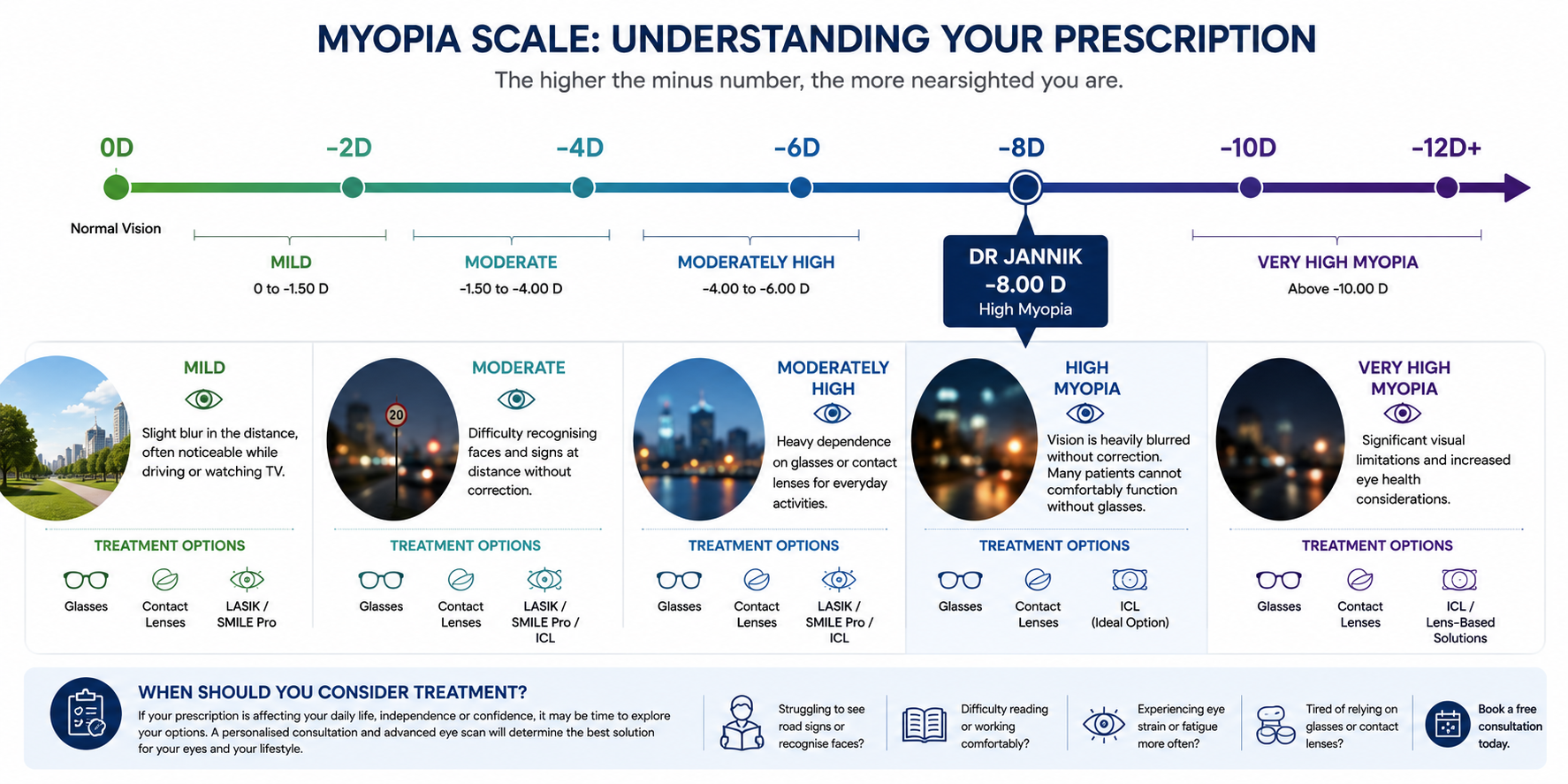
Dr Jannik Jørgensen’s prescription was approximately -8.00 diopters, placing him within the category of high myopia. At this level, everyday activities without glasses or contact lenses can become extremely challenging, with distant objects appearing heavily blurred.
The chart below provides a general guide to the different levels of short-sightedness and the types of vision correction often considered at each stage.
| Prescription | Myopia Level | What You Might Experience | Typical Treatment Options |
|---|---|---|---|
| 0 to -1.50 D | Mild | Slight blur in the distance, often noticeable while driving. | Glasses, Contact Lenses, LASIK, SMILE Pro |
| -1.50 to -4.00 D | Moderate | Difficulty recognising faces and signs at distance without correction. | LASIK, SMILE Pro, ICL |
| -4.00 to -6.00 D | Moderately High | Heavy dependence on glasses or contact lenses. | SMILE Pro, LASIK, ICL |
| -6.00 to -10.00 D | High Myopia | Vision is heavily blurred without correction. Many patients cannot comfortably function without glasses. | ICL Surgery often becomes an excellent option. |
| Above -10.00 D | Very High Myopia | Significant visual limitations and increased eye health considerations. | ICL, Lens-Based Solutions |
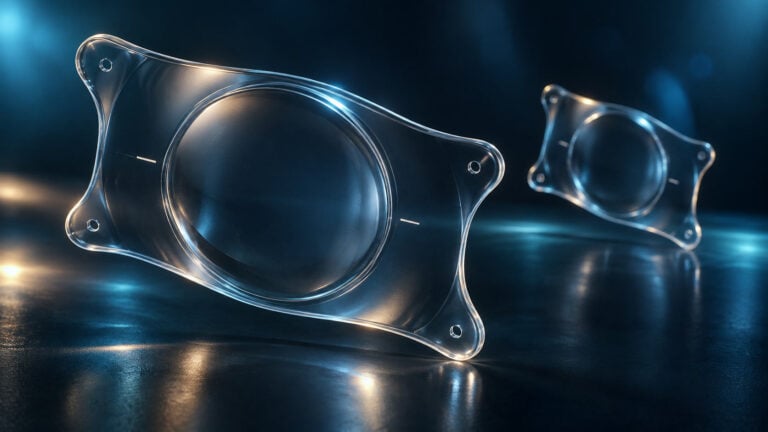
For his treatment, Dr Jannik chose Implantable Contact Lens (ICL) surgery, one of the most advanced vision correction procedures available today. Unlike laser eye surgery, ICL treatment places a specially designed lens inside the eye to permanently correct the prescription while preserving the natural cornea. It is often an excellent option for patients with higher prescriptions who may not be suitable candidates for laser treatment.
Perhaps even more remarkable was who performed the procedure. Dr Jannik placed his trust in his father, Dr Jørn Slot Jørgensen, the founder of EuroEyes and one of the world’s leading refractive surgeons. Having worked alongside the latest diagnostic technology, surgical systems and clinical protocols throughout his career, Dr Jannik knew exactly what was involved in the procedure and had complete confidence in both the technology and the expertise of the team performing it.
The treatment itself was quick, comfortable and highly precise. Within a short period, Dr Jannik was able to experience life without the constant dependence on glasses or contact lenses that had defined much of his daily routine.
Best Decision He Has Ever Made For His Vision
Today, he describes the procedure as one of the best decisions he has ever made for himself. As both a patient and a surgeon, he understands the life-changing impact that clear vision can have. His experience highlights a powerful message: when eye surgeons choose vision correction for themselves, they place their trust in the same expertise, technology and standards of care that their patients receive every day.
For patients considering vision correction, Dr Jannik’s journey provides a unique perspective. Even as a specialist in eye surgery, he chose to trust the latest ICL technology and one of the most experienced surgeons in the field to transform his own vision, and the results have left him extremely happy with his decision.