How This Technology Is Changing Visual Outcomes
Cataract surgery has evolved significantly over the past decade. What was once considered a straightforward procedure to restore cloudy vision has become an opportunity to refine and personalise sight with remarkable precision. One of the most important developments in this field is the introduction of Light Adjustable Lenses; a technology that allows surgeons to optimise vision after cataract surgery rather than relying entirely on predictions made beforehand.
At EuroEyes, we have seen first-hand how this advancement is improving both the accuracy of outcomes and the confidence patients feel in their vision.
What are Light Adjustable Lenses in cataract surgery?
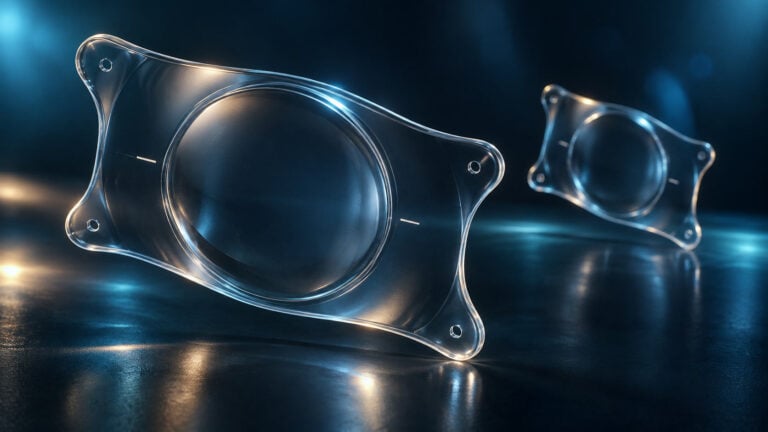
Light Adjustable Lenses are advanced intraocular lenses designed to replace the natural lens of the eye during cataract surgery. Like other implantable lenses, they permanently restore clarity by removing the cloudy cataract lens and inserting a clear artificial lens.
What makes Light Adjustable Lenses different is their ability to be refined after surgery.
Traditional cataract lenses are fixed at the time of implantation. Surgeons carefully calculate the required lens power using detailed measurements, but small variations in healing and individual eye response can influence the final result.
Light Adjustable Lenses introduce a new level of control. After surgery, once the eye has healed, the surgeon can use controlled light treatments to adjust the focusing power of the lens. This allows vision to be personalised based on how the eye actually performs, rather than relying solely on prediction.
This approach improves accuracy and reduces uncertainty, creating a more stable and predictable long-term outcome.

How do Light Adjustable intraocular lenses work?
Light Adjustable intraocular lenses are made from a specialised photosensitive material that responds to specific wavelengths of light. After implantation, the lens remains adjustable during the healing phase.
During follow-up visits, the surgeon measures your vision and applies controlled light treatments to reshape the lens at a microscopic level. This allows precise correction of small residual refractive errors.
Once optimal clarity has been achieved, a final light treatment permanently locks the lens configuration. At this point, the lens behaves like any other intraocular lens but with the benefit of having been customised to your eye.
This ability to refine vision after surgery represents one of the most important advances in cataract lens technology.
Can Light Adjustable Lenses correct astigmatism?
Yes, Light Adjustable Lenses can correct astigmatism. This is one of their most valuable advantages.
Astigmatism occurs when the shape of the cornea causes light to focus unevenly, leading to blurred or distorted vision. Traditional cataract lenses can correct astigmatism to a certain degree, but the final outcome depends heavily on pre-operative calculations.
With Light Adjustable Lenses, astigmatism can be refined after surgery once the eye has healed. This allows the surgeon to address any remaining irregularities and improve visual clarity.
For patients with astigmatism, this additional level of precision can significantly improve the chances of achieving clear, stable vision without relying on glasses.
Light Adjustable Lens vs multifocal lens: what is the difference?
Both Light Adjustable Lenses and multifocal lenses are advanced options designed to improve vision after cataract surgery, but they work in different ways.
Multifocal lenses provide vision at multiple distances by splitting incoming light into different focal points. This allows patients to see at near, intermediate, and far distances, reducing dependence on glasses. However, these lenses are fixed at the time of surgery and cannot be adjusted afterwards.
Light Adjustable Lenses, by contrast, offer the ability to refine vision after surgery. Instead of relying entirely on prediction, the surgeon can fine-tune the outcome once healing has occurred.
For patients who prioritise precision and predictability, this flexibility can be a significant advantage.
Both technologies have their place, and the best choice depends on the individual patient’s visual goals, eye health, and lifestyle.
What is recovery like after Light Adjustable Lens cataract surgery?
Recovery after cataract surgery with Light Adjustable Lenses is generally smooth and follows a predictable timeline.
Most patients notice improved clarity within the first few days as the eye begins to heal. Vision may fluctuate slightly during the early stages, which is a normal part of the recovery process.
Once the eye has stabilised, adjustment sessions begin. These are quick, non-invasive treatments that allow the surgeon to refine your vision. Several adjustment sessions may be performed over a few weeks to achieve the desired outcome.
After the final lock-in treatment, the lens becomes permanently stabilised, and the visual outcome remains consistent.
Most patients return to normal daily activities quickly and experience continued improvement as the eye fully settles.
| 特点 | 可调光透镜 (LAL) | 多焦点镜片 |
|---|---|---|
| How vision is optimised | Lens power can be adjusted after surgery using controlled light treatments. | Lens is fixed at the time of surgery based on pre-operative calculations. |
| Level of personalisation | Highly personalised, refined according to real healing and visual performance. | Pre-planned personalisation based on measurements taken before surgery. |
| 散光矫正 | Can be refined after surgery for greater accuracy. | Corrected at time of surgery; no post-operative adjustment possible. |
| Distance vision clarity | Optimised for sharp, precise distance vision with post-operative refinement. | Good distance vision, though light is split across multiple focal points. |
| Near and intermediate vision | Typically prioritises one focal strategy (often distance), though outcomes can be customised. | Designed to provide near, intermediate, and distance vision simultaneously. |
| Risk of visual phenomena (halos/glare) | Generally lower, as light is not split between focal points. | May increase risk of halos or glare due to light-splitting design. |
| Predictability of outcome | Very high outcome refined after healing before final lock-in. | Dependent on accuracy of initial calculations and healing response. |
| Best suited for | Patients prioritising precision, predictability, and post-surgery control. | Patients seeking greater independence from reading glasses across multiple distances. |
Are Light Adjustable cataract lenses worth it?
For many patients, Light Adjustable cataract lenses offer meaningful advantages compared to traditional options.
The ability to refine vision after surgery improves precision and reduces the risk of residual prescription. This can increase the likelihood of achieving clear, stable vision without needing glasses.
Patients who have astigmatism, complex prescriptions, or high expectations for visual accuracy may benefit particularly from this technology.
At EuroEyes, we have found that patients appreciate the added confidence that comes from knowing their vision can be optimised after surgery.
Who is suitable for Light Adjustable Lens cataract surgery?
Light Adjustable Lenses may be suitable for a wide range of patients, including:
- Patients undergoing cataract surgery who want the highest level of visual precision
- Patients with astigmatism
- Patients who have previously undergone laser eye surgery
- Patients with keratoconus or irregular corneas
- Patient with previous radial keratotomy (RK)
- Patients who want to reduce dependence on glasses
- Patients who value personalised visual outcomes.
Suitability is determined during a detailed consultation and diagnostic assessment.
How this technology is changing cataract surgery
Private or fast-track cataract surgery is no longer just about removing a cloudy lens. It is an opportunity to improve how patients see and experience the world.
Light Adjustable Lens technology represents a shift towards personalised vision correction. Instead of accepting a predicted outcome, surgeons can refine vision based on real healing and performance.
This improves stability, increases accuracy, and enhances overall satisfaction.
At EuroEyes, we see how this technology changes lives. Patients who once depended heavily on glasses regain clear, stable vision and greater confidence in daily activities.
As implantable lens technology continues to advance, cataract surgery is becoming not just a restorative procedure, but a transformative one.
Case Study 1: James, 52 London Business Owner Seeking Precision and Independence
James runs a logistics company in central London and spends most of his day moving between meetings, reviewing documents, and working across multiple screens. Over the course of two years, he noticed his vision becoming increasingly inconsistent. Bright environments made reading easier, but low-contrast conditions and night driving became more difficult. He also found himself relying more heavily on reading glasses.
A detailed examination confirmed early cataract formation in both eyes. James was particularly concerned about maintaining independence from glasses, as his work required constant visual flexibility and clarity at different distances.
During his consultation, we discussed the available implantable lens options, including multifocal lenses and Light Adjustable Lenses. While multifocal lenses could provide a broader range of vision, James was drawn to the precision offered by the Light Adjustable Lens. He understood that the ability to refine his vision after surgery would provide a greater degree of accuracy and stability.
Surgery was performed successfully, and within the first week, his distance vision improved significantly. Over the following weeks, we performed adjustment sessions to fine-tune his visual outcome based on his daily experience. This allowed us to optimise clarity for both screen work and distance vision.
Once the final adjustment was locked in, James reported that his vision felt natural, stable, and consistent. He was able to work comfortably without glasses and found driving, reading, and daily tasks significantly easier.
From a surgical perspective, his outcome reflected exactly what this technology is designed to achieve; a precise, personalised visual result tailored to the patient’s real-world needs.

Case Study 2: Margaret, 68 Retired Teacher Regaining Everyday Confidence
Margaret, a retired teacher living in North London, first noticed symptoms while reading and watching television. Colours appear duller, and text becomes harder to focus on, even with her glasses. She had always valued her independence and wanted to maintain an active lifestyle, including travelling and reading regularly.
Her examination confirmed cataracts affecting both eyes. She was aware of multifocal lenses but was concerned about achieving the clearest possible distance vision and wanted to minimise visual uncertainty.
We discussed the full range of implantable lens options. Margaret chose the Light Adjustable Lens because it offered the opportunity to refine her vision after surgery rather than relying entirely on pre-operative calculations.
Following surgery, her initial recovery was smooth. Within days, she noticed significant improvement in clarity and brightness. During the adjustment phase, we carefully refined her vision to reduce residual refractive error and improve overall sharpness.
After the final lock-in treatment, Margaret described her vision as clearer than it had been in many years. She was able to read, travel, and carry out daily activities with renewed confidence.
Her outcome demonstrated the stability and predictability that Light Adjustable Lens technology can provide, particularly for patients who want reassurance that their final vision has been carefully optimised.

A surgeon’s perspective on modern implantable lens technology
From a surgical standpoint, the most important advantage of the Light Adjustable Lens is control. It allows us to observe how the eye heals and refine the outcome accordingly. This improves accuracy, reduces the likelihood of residual prescription, and provides patients with greater confidence in their final result.
At EuroEyes, we use this technology as part of a broader commitment to delivering advanced, personalised vision correction. These real-world outcomes demonstrate how implantable lens advancements are changing the expectations of cataract surgery, shifting it from a restorative procedure to one that can truly optimise visual performance.