A SURGEON BECOMES THE PATIENT
I am an eye surgeon, and I had a prescription of -8 dioptres. In September 2019, my father, Dr Jørn Jørgensen, implanted ICL lenses into my eyes in Beijing. Seven years later, I can see without glasses or contact lenses. This is the story of what it really felt like.
Dr Jannik Jørgensen
Ophthalmologist, FEBO, Cataract and Refractive Surgeon at EuroEyes Hamburg
As an eye surgeon, I have spent much of my professional life helping people achieve greater freedom from glasses and contact lenses. However, understanding a surgical procedure from a clinical perspective is very different from experiencing it as a patient.
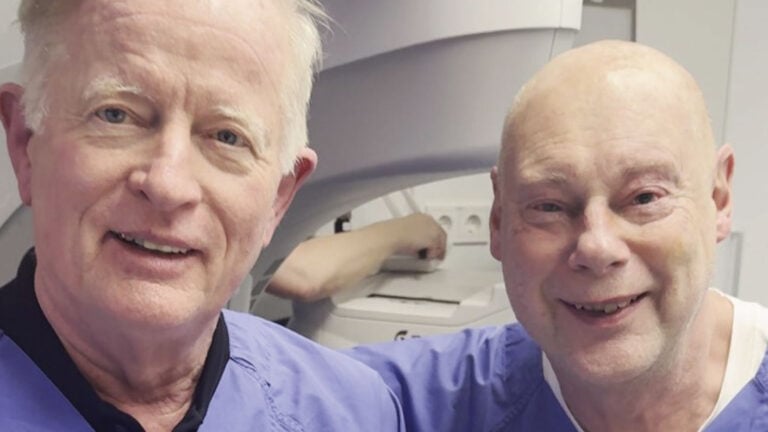
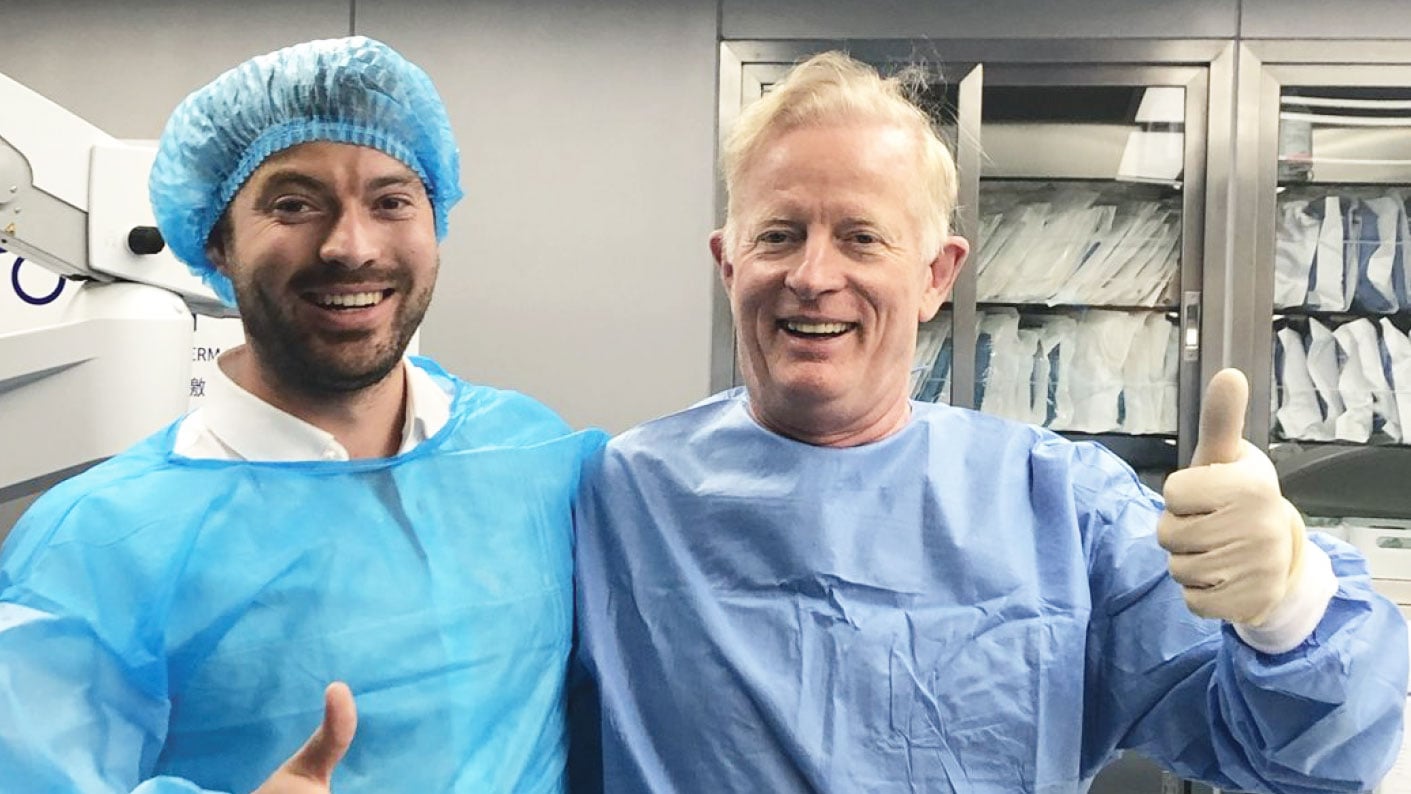
On 5 September 2019, I found myself on the other side of the operating microscope. My father, Dr Jørn Jørgensen, founder of EuroEyes, was preparing to perform my implantable contact lens surgery in front of 120 guests and approximately 40,000 people watching via a livestream.
Personal results reported by Dr Jannik Jørgensen. His decimal visual acuity of 1.25 is equivalent to approximately 20/16 or 6/4.8 vision. Individual outcomes vary.
When an Eye Surgeon Becomes the Patient
I had witnessed this operation around a thousand times, yet I was more nervous than I had expected. Two days before my surgery, I had to stop wearing my contact lenses. I found myself walking around Hong Kong wearing a pair of glasses that were ten years old, struggling to see clearly.
For the first time, I truly understood what my patients meant when they told me how much they wanted to be free from their glasses. The inconvenience, dependence and frustration were no longer simply things I heard about during consultations. They were part of my own daily experience.
That experience changed the way I approach patient care. Today, I recognise that explaining every technical detail is not necessarily what a nervous patient needs. Sometimes, reassurance, a familiar voice and a little human kindness can make all the difference.
What Does ICL Surgery Actually Feel Like?
On the morning of my surgery, I delivered a welcome speech while wearing my glasses for the final time before treatment. Shortly afterwards, the nurses began preparing my eyes with drops. There was music playing, conversation and even a few jokes to help me relax.
As a surgeon, I was naturally curious about how long the procedure would take, so I followed the time myself. From the beginning of the procedure to opening my eye afterwards, five minutes and 42 seconds had passed.
00:00 – Preparing the Eye
00:20 – Keeping the Eye Open
00:30 – Looking Towards the Light
01:00 – A Familiar Voice
01:45 – Implanting the Lens
03:00 – The Lens Unfolds
05:00 – Sitting Up
This timeline describes one individual’s surgical experience. Procedure duration, sensations and visual recovery vary between patients.
Five Hours Later, I Could Read a Clock 50 Metres Away
Later that day, I found myself at the airport looking towards a clock at the gate, approximately 50 metres away. I could read it with an eye that had required a prescription of −8 dioptres that very morning.
During the car journey to my hotel, I began reading the number plates of passing vehicles. It was a simple everyday activity, but experiencing it without corrective eyewear made it particularly memorable. My left eye was treated the following morning, and this time I felt considerably less nervous.
After My Procedure
A Moment I Remember
My recovery was not entirely without visual disturbances. During the first few days, car headlights appeared surrounded by pronounced halos, almost like disco balls. In my case, these disturbances settled as my eyes recovered.
Why I Value ICL Surgery as an Eye Surgeon
One of the characteristics I particularly appreciate about ICL surgery is that it corrects vision without removing corneal tissue. Unlike laser eye surgery, which reshapes the cornea, an implantable collamer lens is positioned inside the eye, behind the iris and in front of the natural crystalline lens.
This additional lens works alongside the eye’s natural optical system to correct refractive errors. For patients with high prescriptions or certain corneal characteristics, ICL surgery may offer an alternative when laser vision correction is not considered appropriate.
Preserving Corneal Tissue
ICL surgery does not involve removing corneal tissue to correct your prescription. This can make it an option for some patients with thinner corneas.
Removable Lens Technology
The implanted lens can be surgically removed or exchanged if clinically necessary. However, removal is another surgical procedure and does not eliminate the original surgical risks.
Higher Prescription Options
ICL technology can treat a wide range of prescriptions, including high levels of short-sightedness and astigmatism, depending on the lens model and individual suitability.
Individual Suitability
Not every eye is suitable for an implantable lens. Detailed examinations are essential to establish whether ICL, an alternative treatment or no surgery is the most appropriate recommendation.
ICL Surgery Compared with Laser Eye Surgery
Both treatments aim to reduce dependence on glasses and contact lenses, but they achieve this through different approaches. Understanding these differences can help patients appreciate why an eye surgeon may recommend one procedure over another.
| Treatment Feature | ICL 手术 | 激光眼科手术 |
|---|---|---|
| 工作原理 | Additional lens implanted inside the eye | Corneal reshaping using laser technology |
| Corneal tissue | No tissue removed for prescription correction | Tissue removed to reshape the cornea |
| Natural lens | Retained | Retained |
| High prescriptions | May be suitable for higher prescriptions | Dependent on prescription and corneal measurements |
| Thin corneas | May offer an alternative | Requires careful assessment of corneal suitability |
| 可逆性 | Lens can be surgically removed or exchanged | Corneal reshaping is permanent |
Neither treatment is universally better than the other. The most appropriate procedure depends on the patient’s prescription, eye anatomy, age, eye health and visual requirements.
Could ICL Surgery Be Suitable for Your Eyes?
Patients often begin researching implantable lenses after being advised that they may not be suitable for laser eye surgery. Others are interested in preserving their corneal tissue or exploring treatment options for a particularly high prescription.
Three Questions Worth Considering
01. How strong is your prescription?
02. Have you been advised against laser eye surgery?
03. Are you under or over 45?
Seven Years Later, What Has Changed?
My father and I have both changed over the past seven years, but my implanted lenses remain in place. Today, I have a reported decimal visual acuity of 1.25 in both eyes, equivalent to approximately 20/16 vision, without glasses or contact lenses.
I cannot feel the lenses inside my eyes, and most of the time I forget they are even there. Vision correction is no longer something I have to think about every morning. It has simply become part of my everyday life.
I chose my father as my surgeon not simply because he was my father, but because I knew and trusted his extensive experience with implantable lens technology. The fact that he continued talking to me throughout the procedure was, however, very much the reassurance of a father.
Understanding the ICL Patient Journey
Although my own treatment took place during a live surgical event, the principles behind careful patient assessment, treatment planning and postoperative care remain important for every individual considering ICL surgery.
Initial Assessment
Discuss your prescription, visual requirements, lifestyle and treatment expectations. An initial assessment provides an opportunity to explore your options without an obligation to proceed.
Detailed Screening
Comprehensive diagnostic examinations help determine whether your eyes are suitable for ICL surgery and which lens specifications may be appropriate.
Treatment and Aftercare
ICL surgery is generally performed as a day-case procedure. Follow-up examinations monitor your recovery, eye health and visual outcomes.
Frequently Asked Questions About ICL Surgery
Having experienced implantable lens surgery myself, I understand why patients want to know how the procedure feels, what recovery involves and whether they will notice the implanted lens in everyday life.
The Procedure Takes Minutes, but the Anxiety Can Last Weeks
Perhaps the most valuable lesson from my experience was understanding the emotional journey that patients go through before eye surgery. Even with my professional knowledge and experience, I was not immune to the anxiety of becoming a patient.
Seven years later, my experience continues to influence the way I care for people considering vision correction. Clinical expertise, advanced technology and careful treatment planning are essential, but so are empathy, reassurance and understanding the person behind the prescription.
If you are considering vision correction, take the time to understand your options. At EuroEyes London, a free initial assessment provides an opportunity to discuss your individual needs and learn more about the treatments available. You can also explore our latest special offers and patient benefits when considering your treatment journey.
About this patient story
This article is adapted from the personal account of Dr Jannik Jørgensen, ophthalmologist and cataract and refractive surgeon at EuroEyes Hamburg. His treatment took place in Beijing in September 2019. The experiences and visual outcomes described are personal and should not be interpreted as guaranteed results. A comprehensive clinical assessment is required to determine individual suitability.