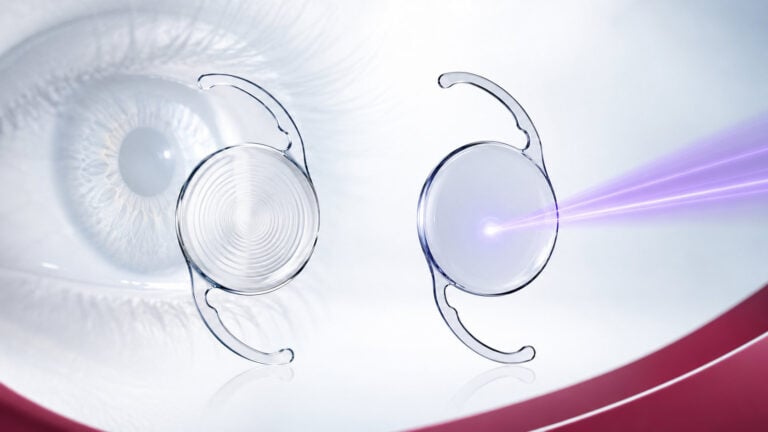
Clear Lens Exchange is a form of vision correction surgery in which the eye’s natural lens is removed and replaced with an artificial intraocular lens. The procedure can correct an existing prescription, address age-related changes in near vision and reduce a person’s dependence on glasses or contact lenses. The term can initially sound confusing. “Clear lens” does not describe the artificial lens being implanted. It refers to the natural lens being removed before a significant cataract has developed. The surgery is therefore performed primarily to improve vision rather than to remove a cloudy cataract.
Clear Lens Exchange is also commonly called Refractive Lens Exchange, or RLE. Both names generally describe the same procedure. At EuroEyes London, the artificial lens is selected according to the patient’s eye health, prescription, age, lifestyle and preferred range of vision.
How Does Clear Lens Exchange Work?
The natural lens sits behind the coloured iris and helps focus light onto the retina. When we are younger, this lens is flexible and can change shape to help us move our focus between different distances.
As we age, the natural lens gradually becomes less flexible. This process causes presbyopia, the age-related change that makes reading, phone screens and close work increasingly difficult. Glasses can compensate for this change, but they cannot restore the flexibility of the natural lens.
During Clear Lens Exchange, the natural lens is carefully removed through a small incision. A new artificial intraocular lens is then placed within the original lens capsule. This replacement lens remains permanently inside the eye and is not normally visible or felt by the patient. The implanted lens has a carefully calculated optical power. Depending on the lens selected, it may prioritise one focal distance, provide a broader range of vision or allow the result to be refined following surgery.
Is Clear Lens Exchange the Same as Cataract Surgery?
The surgical techniques used for Clear Lens Exchange and cataract surgery are very similar. In both procedures, the natural lens is removed and replaced with an artificial intraocular lens.
The principal difference is the reason for treatment.
- Cataract surgery is performed when the natural lens has become cloudy and is interfering with vision.
- Clear Lens Exchange is usually performed before a significant cataract has developed, with the primary aim of correcting vision and reducing dependence on glasses.
Once the natural lens has been removed, it cannot develop a cataract later. However, some patients may eventually develop clouding of the thin capsule behind the artificial lens. This is known as posterior capsule opacification and, where clinically appropriate, can usually be treated with a short YAG laser procedure.
How Is Clear Lens Exchange Different From Laser Eye Surgery?
Laser eye surgery changes the shape of the cornea at the front of the eye. The natural lens remains in place. Clear Lens Exchange does not reshape the cornea. Instead, it replaces the natural lens with an artificial implant.
Procedures such as LASIK and SMILE Pro can be highly effective for suitable younger patients whose natural lenses still function well. Clear Lens Exchange is more commonly considered as the natural lens begins to age and lose its ability to focus at different distances.
Someone in their 40s or 50s may have an excellent laser correction for distance vision but still experience presbyopia and require reading glasses. Replacing the ageing natural lens creates the opportunity to address prescription and focal range through the selection of an appropriate implantable lens. This does not mean that everyone over a certain age should have lens surgery. Corneal laser treatment, PRESBYOND laser blended vision and lens-based procedures can all have a place. The recommendation depends on the individual eye rather than age alone.
How Is Clear Lens Exchange Different From an ICL?
An Implantable Collamer Lens, or ICL, is placed inside the eye without removing the natural lens. It works alongside the natural lens and is frequently considered for younger patients with higher prescriptions or those who may not be suitable for corneal laser surgery.
Clear Lens Exchange removes the natural lens and replaces it completely. This makes it a fundamentally different procedure.
- An ICL is added to the eye while the natural lens remains in place.
- Clear Lens Exchange removes and replaces the natural lens.
- ICL surgery preserves the natural lens’s remaining focusing ability.
- Clear Lens Exchange can address the effects of an ageing natural lens and presbyopia.
For this reason, ICL surgery is generally associated with younger adults, while Clear Lens Exchange is more commonly considered when age-related lens changes have become an important part of the patient’s vision.
Which Lens Options Are Available?
Clear Lens Exchange is the name of the procedure rather than a single type of lens. The replacement lens selected can have a major influence on how the patient sees after surgery.
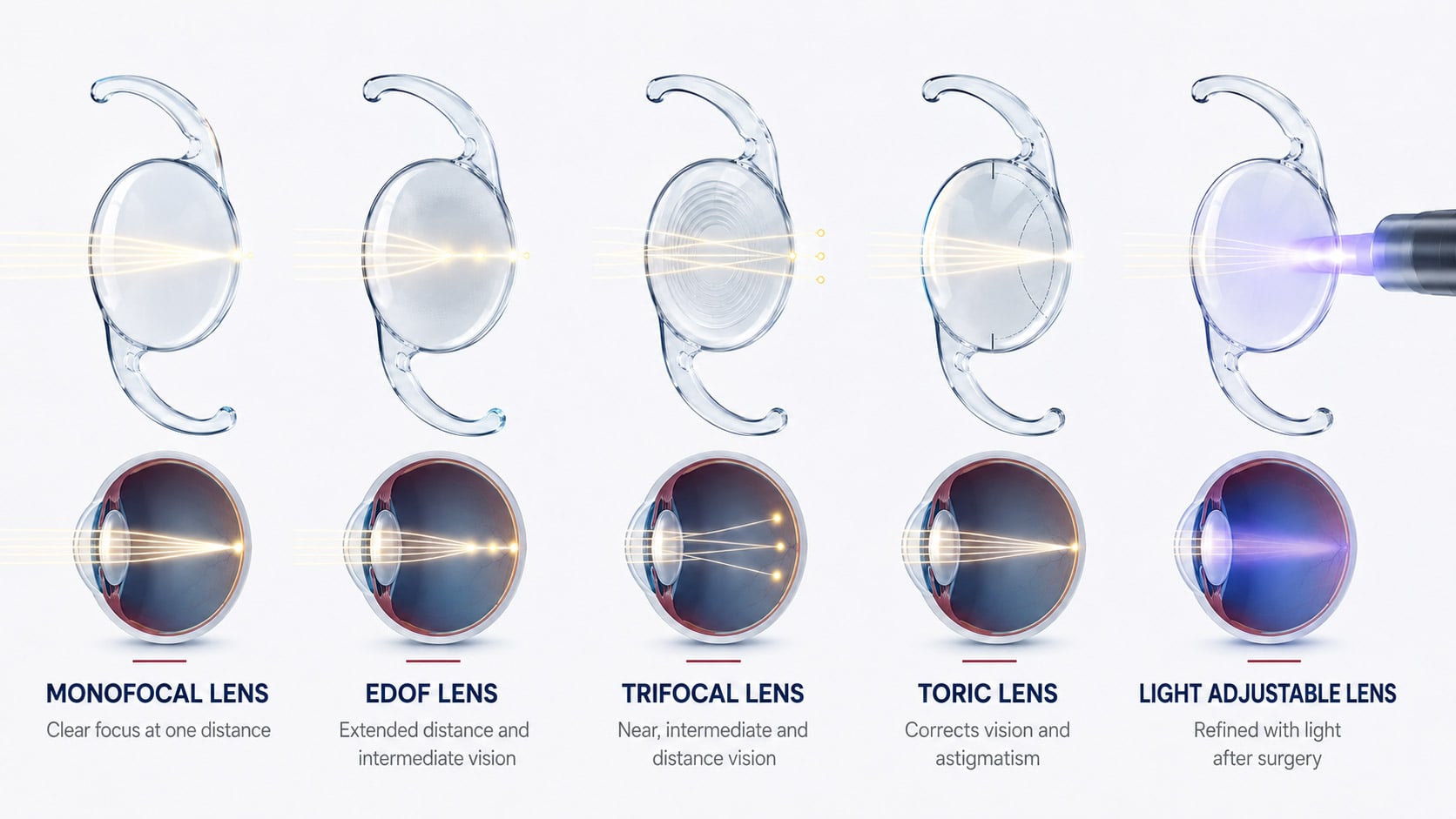
Modern intraocular lenses are designed around different visual priorities. Some prioritise the highest-quality focus at one distance, while others provide a wider range of near, intermediate and distance vision.
单焦点镜片
A monofocal lens is designed to provide clear vision at one principal focal distance. It is most commonly targeted for distance vision, although a different target may be selected according to the patient’s needs.
Monofocal lenses provide a straightforward and established form of vision correction. Patients whose lenses are set for distance will usually require glasses for reading and other close tasks. Some patients may choose a blended approach in which the two eyes are given slightly different visual targets, subject to suitability and tolerance.
三焦点镜片
Trifocal implantable lenses are designed to provide near, intermediate and distance focus. Near vision supports reading and close work, intermediate vision covers screens and dashboards, and distance vision supports activities such as driving and watching television.
These lenses may appeal to suitable patients who want to reduce their dependence on reading glasses, varifocals or multiple pairs of glasses. Because a trifocal lens distributes light between several focal ranges, some patients can initially notice halos or glare, particularly around lights at night. These effects often reduce as the visual system adapts, although individual experiences vary.
EDOF 镜头
Extended Depth of Focus, or EDOF, lenses are designed to create an elongated range of focus rather than several distinct focal points. They generally prioritise distance and intermediate vision, making them potentially useful for driving, television, computers and everyday activities.
Near vision can vary according to the lens, visual target and individual patient. Some people may still use light reading glasses for small print or prolonged close work. EDOF lenses can offer a useful balance for patients who value distance and intermediate vision but do not necessarily require the stronger near focus of a trifocal lens.
雷纳银河镜片
Rayner Galaxy lenses use a spiral, non-diffractive optical design intended to provide a continuous range of vision. They are designed to support near, intermediate and distance activities while reducing the light loss associated with some traditional multifocal designs.
As with every premium lens, suitability depends on the health of the eye, prescription, pupil characteristics and the patient’s expectations. The optical design must be matched carefully to the person rather than selected solely because it is the newest technology.
光线可调镜片
The Light Adjustable Lens offers a different approach. Conventional lens implants have a fixed optical power when they are placed inside the eye. A Light Adjustable Lens can be refined after surgery once the eye has healed.
Controlled light treatments are used to alter the lens power according to the patient’s real-world visual experience. Once the preferred result has been reached, final treatments permanently lock the lens into its finished configuration.
This can be particularly valuable when precise post-operative correction is a priority or when previous laser eye surgery makes conventional lens calculations less predictable. Patients must attend the required adjustment appointments and wear the prescribed UV-protective glasses until the final lock-in process is complete.
Toric Lenses for Astigmatism
Astigmatism occurs when the shape of the eye causes light to focus unevenly. Toric intraocular lenses contain additional correction designed to treat suitable levels of astigmatism. Toric correction can be incorporated into different lens categories, including monofocal, EDOF and trifocal designs. It is therefore not necessarily a separate visual-range option. It is an additional feature selected when astigmatism needs to be addressed.
Who May Be Suitable for Clear Lens Exchange?
Clear Lens Exchange may be considered by people who are experiencing age-related changes in their natural lenses and want to reduce their dependence on glasses or contact lenses. It may also be considered when a prescription falls outside the preferred treatment range for corneal laser surgery.
Potential candidates may include people who:
- Are becoming increasingly dependent on reading glasses or varifocals
- Have presbyopia combined with short-sightedness, long-sightedness or astigmatism
- Want a long-term lens-based alternative to glasses or contact lenses
- Are unsuitable for laser eye surgery because of their prescription or eye measurements
- Have early age-related lens changes that are beginning to affect visual quality
- Understand the benefits, compromises and recovery associated with lens surgery
Suitability cannot be established from age or prescription alone. The retina, optic nerve, cornea, tear film, eye pressure and general health of the eye must all be assessed before surgery is recommended.
When Might Clear Lens Exchange Not Be Recommended?
Clear Lens Exchange is an intraocular procedure and is not automatically the best solution for everyone who wears reading glasses. A surgeon must balance the potential visual benefits against the risks and limitations of operating inside the eye.
The procedure may not be recommended when another treatment provides a more appropriate balance of benefit and risk. Certain retinal conditions, corneal problems, uncontrolled glaucoma or other eye-health concerns may also affect suitability or the type of lens that can be used. Younger patients who still have useful natural focusing ability may be better suited to laser eye surgery or an ICL, depending on their prescription and measurements. Patients with a healthy natural lens should understand that Clear Lens Exchange permanently removes that lens and cannot restore its original biological function.
What Happens During Clear Lens Exchange?
Before surgery, detailed measurements are taken to calculate the required lens power and assess which implant is most appropriate. These investigations can include corneal mapping, retinal examination, optical biometry and analysis of the overall anatomy of the eye.
On the day of treatment, anaesthetic drops are used to numb the eye. The natural lens is gently broken into small pieces and removed through a tiny incision. The new artificial lens is then inserted in a folded form and positioned within the remaining lens capsule. The procedure is usually completed within minutes for each eye. Treatment arrangements can vary, including whether the two eyes are treated on the same day or separately. The surgeon will explain the recommended approach before surgery.

What Is Recovery Like?
Vision may initially appear blurred, bright or unsettled as the eye begins to heal. Many patients notice improvement during the first few days, although the final visual result can continue to stabilise over the following weeks. Patients are normally given eye drops and specific aftercare instructions. Rubbing the eyes, swimming and certain strenuous activities may need to be avoided during the early recovery period. Driving should only resume once the patient meets the required visual standard and has received appropriate clinical guidance.
Follow-up appointments allow the clinical team to monitor healing, eye pressure, lens position and visual development. Patients receiving a Light Adjustable Lens will have an additional adjustment and lock-in process after the initial healing period.
Will Clear Lens Exchange Mean I Never Need Glasses Again?
The aim is to reduce dependence on glasses, but no lens implant can guarantee complete glasses freedom for every person and every activity.
The likelihood of needing glasses depends on the lens selected, the visual targets chosen, the health of the eye and the patient’s individual response. A person with distance-focused monofocal lenses will normally require reading glasses. Someone with trifocal lenses may perform many everyday tasks without glasses but might still use them for very small print or demanding work.
The most important part of lens selection is establishing realistic priorities. A patient who wants the widest possible range of focus may accept different optical compromises from someone who prioritises night driving and high-contrast distance vision.
How Long Do Replacement Lenses Last?
Modern intraocular lenses are designed to remain permanently inside the eye and do not require routine replacement. Once the natural lens has been removed, it cannot develop a cataract later. The rest of the eye can still change with age. Retinal conditions, corneal changes, glaucoma and other eye-health issues can develop independently of the implant. Regular eye examinations therefore remain important after Clear Lens Exchange.
How Is the Right Lens Chosen?
The right lens is not simply the one with the greatest number of focal points or the newest technology. It is the lens that provides the most appropriate balance for the individual patient.
At EuroEyes London, the decision considers:
- The health of the cornea, retina and optic nerve
- The patient’s prescription and level of astigmatism
- Previous laser eye surgery or other eye procedures
- Reading, screen use, driving and night-vision requirements
- The desire to reduce dependence on glasses
- Tolerance of possible halos, glare or adaptation
- The ability to attend any additional adjustment appointments
- Long-term visual expectations
A detailed consultation gives the surgeon and patient an opportunity to compare the available options honestly. It also helps identify situations in which maintaining glasses, choosing laser treatment or delaying surgery may be more appropriate.
Clear Lens Exchange Explained Simply
Clear Lens Exchange is best understood as lens replacement surgery performed for vision correction before a significant cataract has developed. The natural lens is removed and replaced with a permanent artificial lens selected around the patient’s prescription and lifestyle. The procedure itself is only one part of the decision. The choice between monofocal, trifocal, EDOF, Galaxy, toric and Light Adjustable Lens technology determines the visual range and optical characteristics being created.
For that reason, Clear Lens Exchange should never be treated as a one-size-fits-all procedure. Careful diagnostics, experienced surgical planning and a clear understanding of the patient’s daily visual priorities are essential to selecting the most appropriate solution.