Modern Vision Correction: More Than Just Clear Sight
In today’s world, choosing laser eye surgery is no longer just about correcting your vision. Patients are increasingly looking for a complete experience, one that combines the expertise of a highly experienced surgeon, access to the latest technology, and treatment options that feel both safe and financially accessible.
Many people now compare the cost of surgery to the long-term expense of glasses and contact lenses, looking for a solution that not only improves vision but also makes sense over time.
There is also a growing expectation around clarity and professionalism. Patients want detailed consultations, honest recommendations, and a treatment plan that is tailored specifically to their eyes and lifestyle. Rather than a one-size-fits-all approach, modern vision correction is about precision, transparency, and confidence in the decision being made.
Choosing the right vision correction treatment is rarely about one single factor. In a clinical setting, the decision is made by looking at how your eyes function today, how they are likely to change over time, and how you use your vision in everyday life.
Understanding Your Eyes First
Before any treatment is discussed, we look at the structure and behaviour of the eye itself. Whether you are short-sighted (myopic), long-sighted (hyperopic), or have astigmatism, each condition affects how light focuses on the retina.
For example, a patient with mild myopia in their twenties may be an excellent candidate for laser correction, while someone in their forties with the same prescription may be experiencing early presbyopia, where near vision begins to decline. Although both patients appear similar on paper, the long-term solution is very different.
This is why modern diagnostics are so important. At EuroEyes, detailed scanning allows surgeons to assess corneal thickness, lens clarity and focusing ability, ensuring that treatment is based on how the eye truly behaves rather than just the prescription alone.
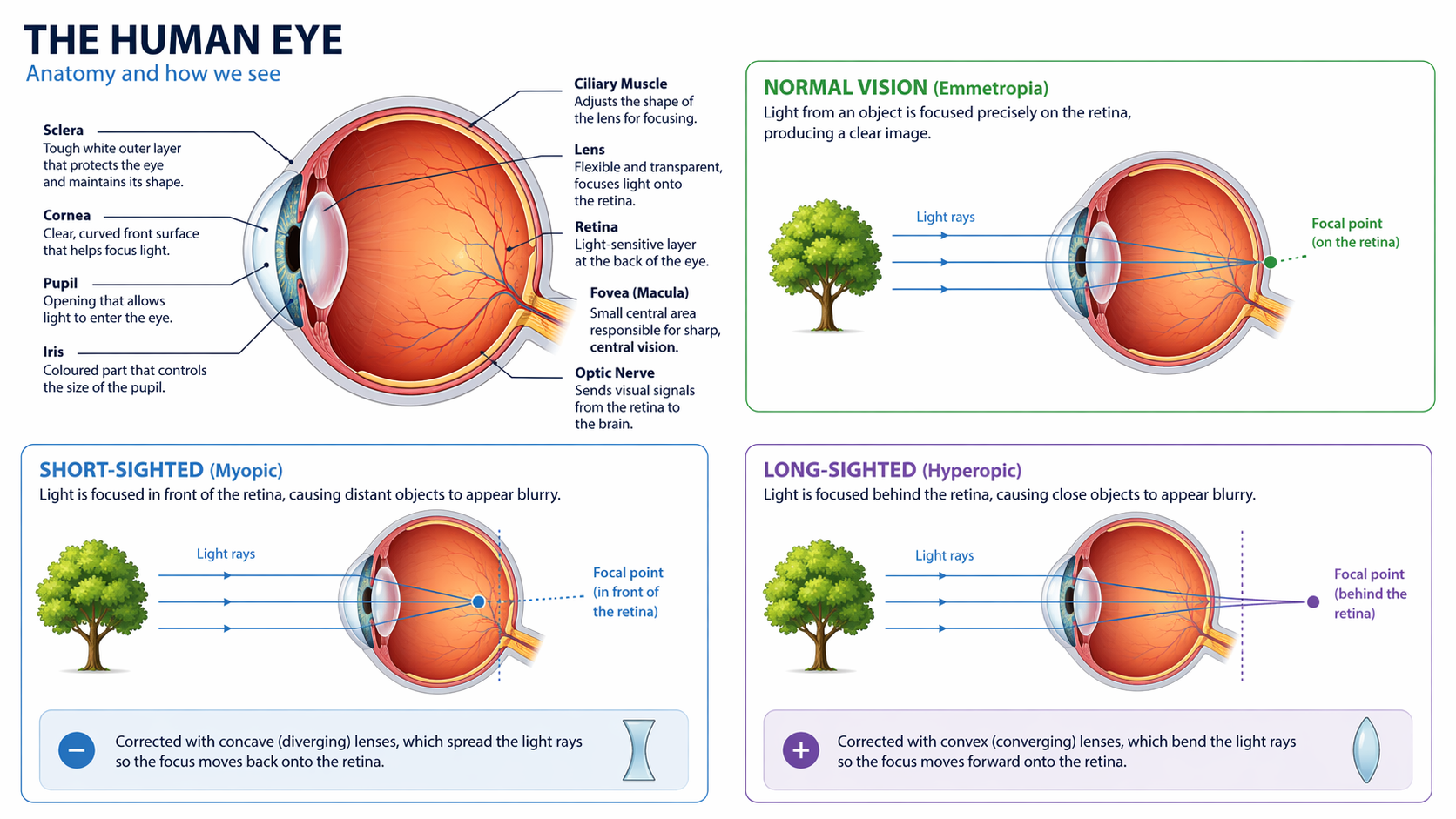
How Age Influences Treatment Choice
Age plays a significant role in determining the most appropriate treatment, not because the eye becomes weaker, but because it changes how it focuses.
In your twenties and thirties, the eye is still highly flexible. Treatments such as SMILE Pro or LASIK are often considered here, as they reshape the cornea to correct distance vision with excellent predictability.
As you move into your forties, the natural lens begins to lose flexibility. This is where presbyopia develops, and reading glasses often become necessary. In these cases, treatments such as PRESBYOND® laser eye surgery or lens-based solutions may be more suitable, as they are designed to restore a range of vision rather than just distance.
For patients in their fifties and beyond, particularly where early cataract changes are present, lens replacement or advanced intraocular lens treatments can provide both clarity and long-term visual freedom.
Matching Treatment to Lifestyle
How you use your eyes day to day is just as important as the clinical measurements.
Someone with an active lifestyle, for example, may benefit from a minimally invasive procedure such as SMILE Pro, which avoids creating a corneal flap and allows for a more stable recovery in physically demanding environments.
A patient who spends long hours working on screens may be more concerned with visual comfort at intermediate distances, where treatments like PRESBYOND® can provide a more balanced range of vision.
Similarly, individuals who rely heavily on night driving may prioritise clarity and contrast, which can influence the type of treatment recommended.
The Role of Modern Treatments
The landscape of vision correction has changed significantly over the last decade. Treatments are no longer one-size-fits-all. Modern vision correction offers a range of treatments, each designed to suit different eye types and lifestyles rather than a single “best” option.
- SMILE Pro is often chosen by patients with myopia and astigmatism who are looking for a minimally invasive approach. It preserves more of the cornea’s natural structure and can be beneficial for active lifestyles or those concerned about dry eye.
- LASIK remains one of the most widely performed procedures worldwide, known for its speed, predictability, and rapid recovery, often allowing patients to return to normal activities within a day or two.
- PRK and LASEK are surface-based treatments typically recommended for thinner corneas or when preserving corneal tissue is important. They offer a safe and effective alternative when flap-based surgery is not suitable.
- ICL (Implantable Collamer Lens) surgery takes a different approach by placing a lens inside the eye rather than reshaping the cornea. It is particularly suitable for higher prescriptions and offers excellent visual quality with a reversible solution.
- PRESBYOND® laser eye surgery is designed for patients experiencing age-related near vision changes, creating a balanced range of vision for both near and distance tasks.
Modern Vision Correction in the UK, A 20-Year Evolution
Over the past two decades, vision correction in the UK has evolved from a limited set of laser procedures into a highly personalised field of treatment. Today, patients in London and across the UK are assessed based on lifestyle, prescription, corneal structure, and long-term visual goals, rather than being guided toward a single default procedure.
LASIK dominance
2010
Surface treatments refined
2015
ICL adoption grows
2020
SMILE introduced
2025+
Personalised vision era
| 治疗 | Typical UK Age Range | 最适合 | UK Trend |
|---|---|---|---|
| SMILE Pro | 20–40 | Active lifestyles, myopia, astigmatism | Fastest-growing laser procedure in major UK cities |
| LASIK | 25–45 | General vision correction, quick recovery | Still widely performed, strong long-term outcomes |
| PRK / LASEK | 20–45 | Thinner corneas, surface-based correction | Niche but essential option in specialist clinics |
| ICL (Lens Implant) | 25–50 | High prescriptions, dry eye concerns | Rapid growth, especially in London private clinics |
| PRESBYOND® | 40+ | Reading vision, early presbyopia | Increasing demand as digital lifestyles evolve |
In London clinics, the shift is clear, patients are no longer asking “Which treatment is best?” but rather “Which treatment is best for me?”. This personalised approach, supported by advanced diagnostics and surgical precision, is shaping the future of vision correction across the UK.
When Laser Eye Surgery Is Not the Option
Not every patient is suitable for laser eye surgery, and this is something experienced surgeons assess very carefully during consultation. Factors such as corneal thickness, prescription strength, or the overall structure of the eye can mean that reshaping the cornea is not the safest or most effective option.
In these cases, modern alternatives have evolved significantly, with implantable lens procedures becoming an increasingly popular solution. Rather than altering the surface of the eye, treatments such as ICL involve placing a highly biocompatible lens inside the eye to correct vision directly.
This approach avoids removing corneal tissue and offers exceptional clarity, particularly for patients with higher prescriptions or more complex visual needs. For many, it has become the preferred route when laser is not suitable, providing both precision and long-term visual stability while preserving the natural structure of the eye.
Direct from the Surgeon
From a clinical perspective, the most successful outcomes come from matching the treatment to the individual, not the other way around. The goal is not simply to achieve clear vision on a chart, but to create a visual experience that fits naturally into your lifestyle.
At EuroEyes London, consultations focus on understanding how patients live, work and use their eyes throughout the day. Two patients with identical prescriptions may receive completely different recommendations, simply because their visual needs are not the same.
One Clear Way to Think About It
If there is one way to simplify the decision, it is this:
The right treatment is the one that matches your age, your eyes, and your lifestyle at the same time.
When those three elements are aligned, the result is not just clearer vision, but a more natural and effortless way of seeing the world.