There has been a quiet revolution in eye surgery over the past decade. When most people hear the word “cataract,” they still imagine a necessary but basic procedure, removing a cloudy lens and replacing it with a simple artificial one to restore functional vision. While that was once true, it no longer reflects the reality of modern ophthalmology.
Today, implantable lens technology has moved beyond simply restoring sight. It now offers the opportunity to refine, personalise, and even enhance vision beyond what many patients have experienced in decades. At EuroEyes, we see this transformation daily. Patients who once relied heavily on glasses or struggled with inconsistent visual clarity are now achieving stable, precise outcomes that were not possible just a few years ago.
This shift is not driven by a single innovation, but by a combination of advances in lens design, diagnostics, and post-operative refinement.
What are implantable lenses, and why are they used?
Implantable lenses, also known as intraocular lenses (IOLs), replace the eye’s natural lens when it becomes cloudy due to cataract formation, or when it no longer provides clear, functional vision due to age-related changes. The artificial lens remains permanently inside the eye and becomes part of the visual system.
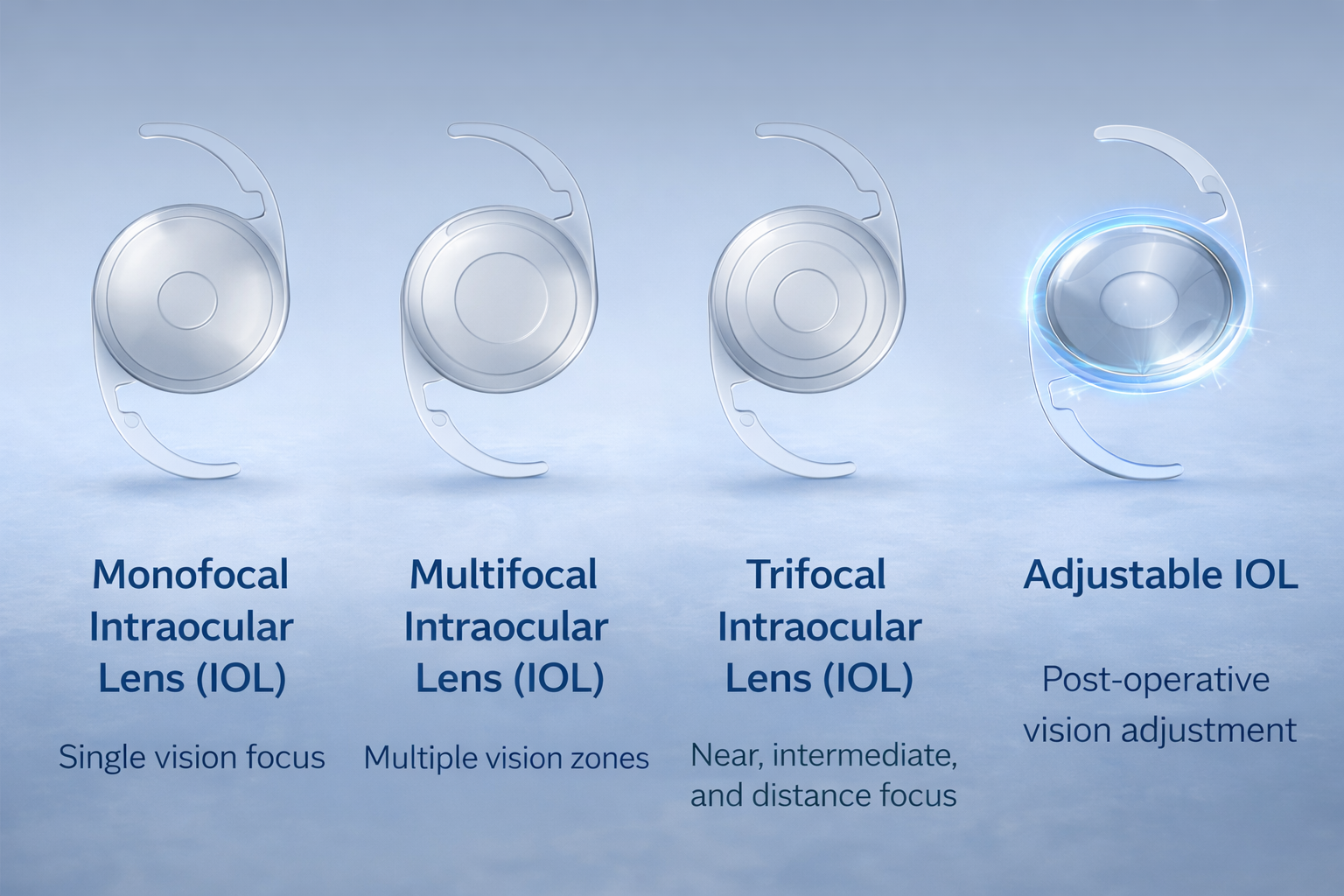
Traditional monofocal lenses were designed to provide clear vision at one distance, usually far. While effective, many patients still required glasses for reading or intermediate tasks such as computer work. This limitation led to the development of multifocal and trifocal lenses, which distribute light across multiple focal points to improve visual range.
More recently, the introduction of adjustable and highly customised lenses has pushed outcomes even further, allowing surgeons to refine vision after surgery itself.
How modern implantable lenses are improving visual outcomes
One of the most common questions patients ask is whether newer lenses actually produce better results. The answer is yes, but the reason is not simply technological complexity. It is precision.
Every eye heals differently after surgery. Even with advanced measurements, small variations in healing can affect the final visual outcome. Traditional lenses are fixed at the moment of implantation, meaning surgeons must rely entirely on predictive models. While these models are highly accurate, they cannot account for every biological variable.
Advanced implantable lenses, particularly adjustable lens systems, allow surgeons to refine the visual outcome after the eye has healed. This dramatically improves accuracy and stability. Instead of predicting the outcome, we can observe the real-world result and make controlled adjustments to optimise vision.
This approach removes a significant element of uncertainty and gives patients greater confidence in their long-term outcome.
Are adjustable lenses worth it?
This is one of the most searched and most important questions patients ask. From a clinical perspective, the ability to adjust vision after surgery represents one of the most meaningful advances in modern lens replacement.
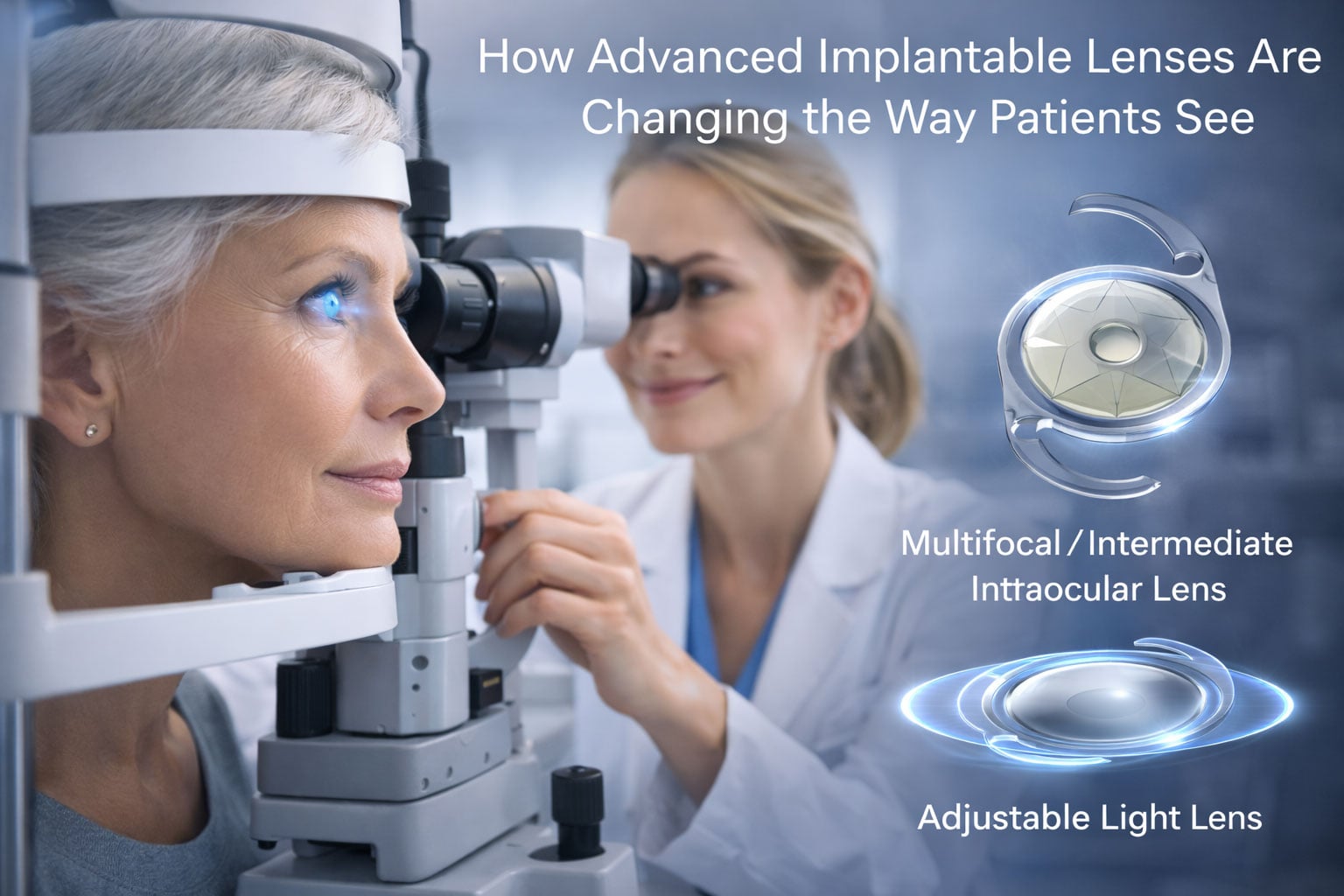
The Light Adjustable Lens, for example, allows us to fine-tune the eye’s focusing power using controlled light treatments after implantation. These adjustments occur once the eye has stabilised, ensuring the final outcome reflects the patient’s actual visual needs rather than a predicted value.
For patients who want the highest degree of visual precision, this technology provides an important advantage. It can reduce residual prescription, improve clarity, and increase the likelihood of achieving independence from glasses.
Recovery and stability: what patients can expect
Recovery after implantable lens surgery is typically smooth. Most patients notice improved vision within the first few days, although it can take several weeks for the eye to fully stabilise.
With adjustable lenses, there is an additional refinement phase. During this time, we carefully assess visual performance and make adjustments where needed. Once the desired result is achieved, the lens is permanently locked into its final configuration.
This process enhances long-term stability. Rather than accepting minor imperfections, we are able to refine and secure the outcome, creating a more predictable and consistent visual experience.Patients often report that their vision feels more natural and stable after this process, particularly in everyday activities such as driving, reading, and working on digital screens.
Which implantable lens options are available today?
At EuroEyes, we offer a range of advanced implantable lens options tailored to each patient’s needs. Monofocal lenses remain an excellent option for patients who prioritise clear distance vision and prefer a straightforward, reliable solution.
Multifocal and trifocal lenses are designed to provide vision at multiple distances, reducing dependence on reading glasses and supporting a more flexible lifestyle. Implantable contact lenses (ICL) offer another alternative, particularly for patients with high prescriptions or thin corneas who may not be suitable for laser vision correction. Adjustable lenses represent the most advanced category, allowing post-operative customisation and refinement. This makes them particularly valuable for patients seeking the highest level of precision and long-term visual stability.
The choice of lens depends on several factors, including eye health, prescription, lifestyle, and individual visual goals. Detailed diagnostic testing allows us to recommend the most appropriate solution.
Who benefits most from modern implantable lens technology?
While cataract patients form the largest group, implantable lenses are no longer limited to restoring vision lost to cataracts. Many patients choose lens replacement to improve visual quality and reduce dependence on glasses.
This includes professionals who rely on precise vision, such as pilots, engineers, and healthcare workers, as well as active individuals who want greater freedom in daily life. Patients who have previously undergone laser eye surgery may also benefit from adjustable lens technology, as it allows us to refine outcomes with greater accuracy. The most important factor is suitability, which is determined through detailed assessment and consultation.
How these advances are changing patients’ lives
The impact of modern implantable lenses extends beyond clinical measurements. It affects how patients experience the world.
We frequently see patients who have worn glasses for decades regain clear, stable vision without visual aids. Many describe the result as restoring confidence and independence. Tasks that were once frustrating, such as reading small text, driving at night, or switching between distances, become easier and more natural. This transformation reflects the shift from functional restoration to visual optimisation. We are no longer simply treating cataracts. We are helping patients achieve a level of clarity tailored to their individual needs.
Why experience and technology matter
Advanced lens technology requires equally advanced diagnostic systems and surgical expertise. Precise measurement, careful planning, and detailed follow-up are essential to achieving optimal results.
At EuroEyes, we combine modern diagnostic imaging, advanced surgical techniques, and personalised follow-up care to ensure each patient achieves the best possible outcome. Our surgeons work with implantable lens technologies at the forefront of ophthalmology, allowing us to offer treatment options that reflect the latest clinical advancements.
A new era in vision correction
Implantable lens technology continues to evolve, offering greater precision, stability, and flexibility than ever before.
For patients, this means cataract surgery is no longer simply about restoring vision. It is an opportunity to improve how they see the world, often achieving clarity and stability that enhances everyday life. From adjustable lenses to multifocal and implantable contact lenses, modern implantable lens options are redefining what vision correction can achieve. For many patients, the result is not just clearer sight, but a renewed sense of confidence in how they experience the world around them.
Frequently Asked Questions About Implantable Lens Options
What are Light Adjustable Lenses?
Light Adjustable Lenses are a newer generation of intraocular lens that allow vision to be refined after surgery. Unlike traditional lenses, which are fixed at the time of implantation, these lenses can be adjusted using controlled light treatments once the eye has healed. This allows the surgeon to fine-tune your vision based on your actual recovery and visual experience, improving precision and helping achieve a more personalised and stable long-term outcome.
Are Light Adjustable Lenses worth it?
For many patients, Light Adjustable Lenses offer a meaningful advantage because they allow a level of precision that was not previously possible. The ability to adjust vision after surgery reduces the likelihood of residual prescription and increases the chances of achieving clear, comfortable vision without relying heavily on glasses. This can be particularly beneficial for patients who want the highest level of visual accuracy or who have complex prescriptions.
How long does recovery take after implantable lens surgery?
Most patients notice improved vision within the first few days following surgery, although the eye continues to heal and stabilise over several weeks. With adjustable lens technology, there is an additional phase during which the surgeon can refine the visual outcome through adjustment sessions. Once the desired result is achieved, the lens is permanently stabilised. Overall, recovery is generally smooth, and most patients return to normal daily activities relatively quickly.
What is the difference between monofocal and multifocal lenses?
Monofocal lenses are designed to provide clear vision at a single distance, typically for driving and distance vision. Patients may still require glasses for reading or close work. Multifocal and trifocal lenses, on the other hand, are designed to provide vision at multiple distances, helping reduce dependence on glasses for activities such as reading, using digital devices, and daily tasks. The most suitable option depends on your visual goals, eye health, and lifestyle.
Which implantable lens is best?
There is no single lens that is best for everyone. The most appropriate choice depends on several factors, including the condition of your eye, your prescription, and your individual visual needs. Modern options such as multifocal, trifocal, implantable contact lenses, and Light Adjustable Lenses allow surgeons to tailor treatment more precisely than ever before. A detailed consultation and diagnostic assessment allows your surgeon to recommend the option most suited to achieving your desired outcome.