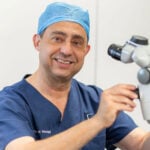
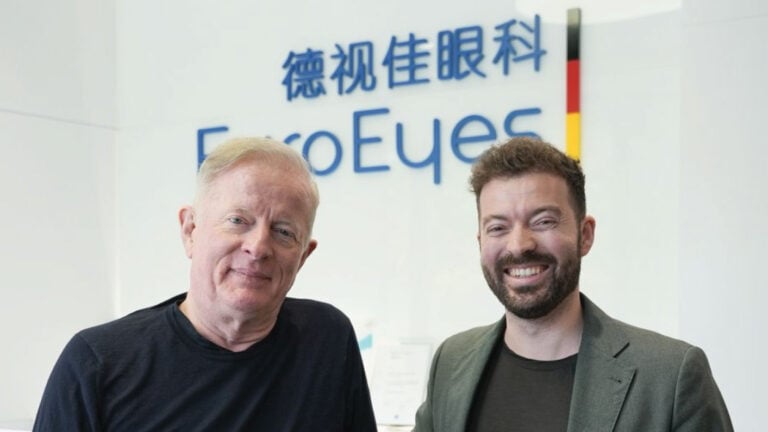
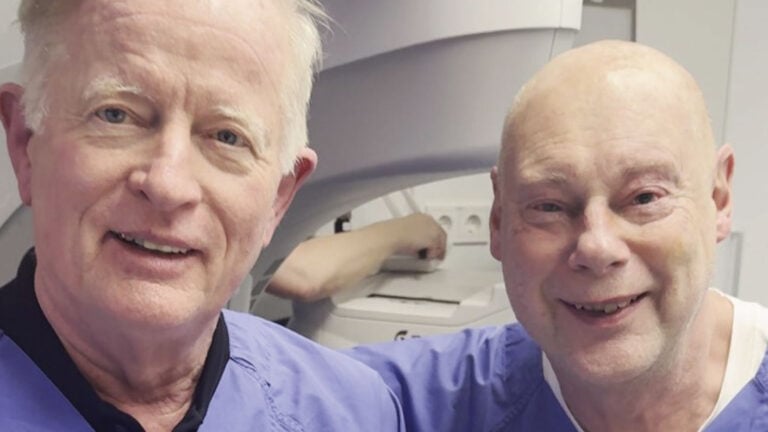
When you dedicate your professional life to caring for others, choosing someone to care for your own health becomes a particularly personal decision. For Fernando, a surgeon from Mexico, that decision brought him to EuroEyes, where he placed his trust in the expertise of Professor Dan Reinstein and the internationally recognised surgical team within the EuroEyes Group.
Like millions of people around the world, Fernando was experiencing the effects of presbyopia, an age-related change in the eyes that makes focusing on close objects increasingly difficult. Reading, using a mobile phone and carrying out everyday tasks that once felt effortless had become more challenging. Fernando wanted to explore a long-term solution that could reduce his dependence on reading glasses and provide greater visual freedom. His chosen treatment was PRESBYOND® Laser Blended Vision, an advanced laser eye surgery technique designed to address the loss of near vision associated with presbyopia.
A Patient Journey
From Mexico to EuroEyes
Follow Fernando as he prepares for PRESBYOND Laser Blended Vision with Professor Dan Reinstein, from his final clinical checks and aftercare guidance to the moment he completes his laser eye surgery.
A surgeon placing his own vision in the hands of another surgeon.
Why Does Near Vision Become More Difficult With Age?
Presbyopia is a natural part of the ageing process that typically becomes noticeable during our forties. As we get older, the natural lens inside the eye gradually loses its flexibility, reducing its ability to change shape and focus on nearby objects. Even people who have enjoyed excellent distance vision throughout their lives can find themselves reaching for reading glasses. For someone with a busy professional life, these changes can become increasingly frustrating. Moving between computer screens, documents, mobile devices and conversations can involve constantly putting on and taking off glasses.
Reading Vision
Small print becomes increasingly difficult to read without additional correction.
Digital Devices
Mobile phones, tablets and computer screens may become harder to focus on comfortably.
Changing Focus
Moving between near and distant objects can become less effortless.
Visual Independence
Greater reliance on reading glasses can affect the convenience of everyday activities.
Modern refractive surgery offers several approaches to managing presbyopia. For suitable patients, PRESBYOND Laser Blended Vision provides a way of addressing these changing visual requirements through laser eye surgery.
What Is PRESBYOND Laser Blended Vision?
PRESBYOND Laser Blended Vision is an advanced laser eye surgery technique designed to correct presbyopia by precisely reshaping the cornea of each eye. It combines an extended depth of focus with a small difference in the prescription between the eyes, creating an overlapping range of vision that helps suitable patients see at near, intermediate and far distances with reduced dependence on glasses.
Unlike conventional laser eye surgery, which typically focuses on correcting a refractive error for a particular distance, PRESBYOND is designed around a broader range of visual requirements. The treatment uses advanced laser technology to modify the optical characteristics of the cornea, increasing the depth of focus in each eye.
The dominant eye is generally optimised for distance and intermediate vision, while the non-dominant eye is optimised for near and intermediate vision. The overlapping range between the two eyes creates what is known as the Blend Zone, allowing the brain to combine visual information from both eyes.
Understanding the PRESBYOND Blend Zone
Intermediate Vision
Distance Vision
Non-Dominant Eye
Dominant Eye
Combined Binocular Vision
Near
Books & phones
Intermediate
Computer screens
Distance
Driving & outdoors
Illustrative representation of the PRESBYOND Blend Zone. Individual visual outcomes and adaptation vary.
The objective is not to restore the natural flexibility of the ageing lens but to create a more functional range of vision through carefully planned corneal laser correction. The treatment is personalised to each patient, taking into consideration their prescription, eye dominance, corneal health and ability to tolerate the blended vision approach.
Fernando’s Laser Eye Surgery Journey
For Fernando, the day of surgery brings together the preparation, clinical assessments and treatment planning undertaken before his procedure. Every stage has a purpose, from understanding his postoperative care to ensuring that his eyes are ready for treatment.
Preparing for Recovery
Before entering the treatment room, Fernando meets with the nursing team, who explain his postoperative care. Understanding how to use his prescribed eye drops, protect his eyes and manage the early stages of recovery is an important part of preparing for laser eye surgery.
Final Clinical Checks
Before surgery begins, the clinical team completes the necessary checks and confirms the personalised treatment plan. These final preparations are an important part of ensuring that the correct treatment is delivered to each eye.
Meeting Professor Dan Reinstein
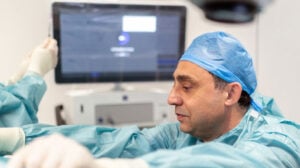
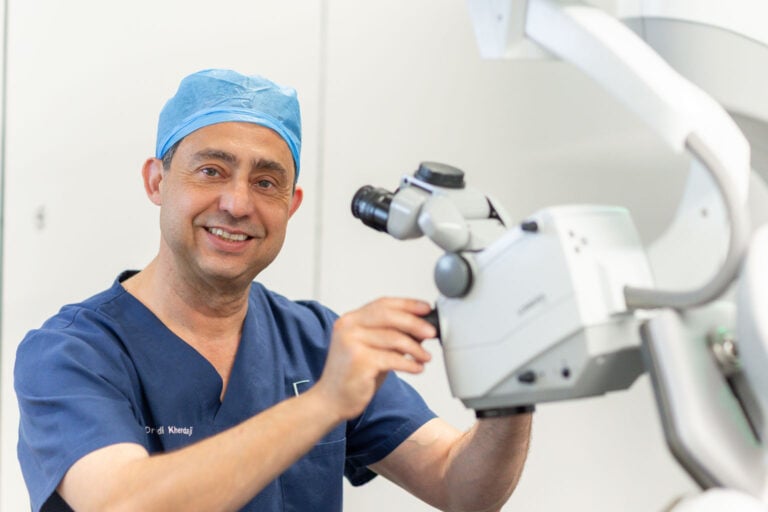
Fernando enters the treatment room, where Professor Dan Reinstein performs his PRESBYOND Laser Blended Vision procedure. Anaesthetic eye drops are used to numb the surface of the eyes, helping to keep the experience comfortable.
Precision Laser Vision Correction
Using a LASIK-based approach, a thin corneal flap is created before an excimer laser precisely reshapes the underlying corneal tissue according to Fernando’s individual treatment plan. The flap is then repositioned. The active reshaping laser treatment itself takes only seconds per eye, although the complete procedure involves additional preparation and surgical steps.
The First Moments After Surgery
Before long, Fernando is back on his feet and looking around the treatment room. These first moments following laser eye surgery can be particularly memorable as patients begin experiencing their vision following treatment. Some initial haziness and fluctuations are normal as the eyes begin to heal.
One Final Examination
Following his procedure, Fernando undergoes a further examination to check the condition of his eyes and the positioning of the corneal flaps. With his immediate postoperative assessment completed, he begins the next stage of his journey: recovery and visual adaptation.
Why Choose Professor Dan Reinstein for PRESBYOND?
Professor Dan Reinstein is internationally recognised for his contributions to refractive surgery and the development of advanced laser vision correction techniques. His work has played a central role in the development of PRESBYOND Laser Blended Vision, bringing together clinical research, optical science and personalised treatment planning.
Correcting presbyopia requires more than simply adjusting a prescription. It involves understanding how the two eyes work together, how the brain processes visual information and how an extended range of focus can be achieved while maintaining visual quality.
For Fernando, choosing EuroEyes meant placing his vision in the hands of a surgical team with specialist expertise in this field. As a surgeon himself, his journey offers a particularly meaningful perspective on the importance of clinical experience and trust when considering elective surgery.
How Quickly Does Vision Improve After PRESBYOND?
Many patients begin noticing changes in their vision shortly after laser eye surgery, although the complete recovery process takes longer. With PRESBYOND, the eyes must heal while the brain gradually adapts to the new blended range of vision.
Patients may begin noticing visual changes, although haziness, watering and light sensitivity can occur during the initial recovery period.
The corneal surface continues to recover. Patients follow their prescribed aftercare routine and attend their scheduled postoperative examinations.
Visual quality continues to settle as the brain adapts to the overlapping range of vision. The speed and extent of adaptation vary between individuals.
Regular postoperative examinations allow the clinical team to monitor healing, assess visual performance and provide guidance throughout recovery. Some patients may still require glasses for particular activities, and individual results depend on a range of clinical factors.
Is PRESBYOND Suitable for Everyone With Presbyopia?
Although PRESBYOND offers an exciting approach to managing age-related reading vision difficulties, it is not suitable for everyone. A comprehensive assessment is required to establish whether the eyes are healthy enough for laser treatment and whether the patient is likely to tolerate blended vision.
| Clinical Consideration | Почему это важно |
|---|---|
| Здоровье роговицы | The cornea must be suitable for the proposed laser correction. |
| Eye Dominance | Helps determine how each eye should contribute to the blended range of vision. |
| Blended Vision Tolerance | Helps establish whether the patient can comfortably tolerate the proposed difference between the eyes. |
| Natural Lens Health | Age-related lens changes or cataracts may make alternative treatments more appropriate. |
| Visual Expectations | Professional responsibilities, hobbies and everyday activities influence individual treatment planning. |
As with other forms of laser eye surgery, potential risks include dry eye, glare, halos, residual prescription and difficulties adapting to the new visual balance. These considerations should be discussed with your surgeon before deciding whether treatment is appropriate.
For patients who are unsuitable for corneal laser correction, lens-based procedures may provide an alternative approach. Our vision correction Help Suite explains the importance of clinical screening, treatment suitability and understanding the different options available.
A Shared Commitment to Better Vision
Fernando’s journey from Mexico to EuroEyes is a story about trust, clinical expertise and the possibilities of modern vision correction. Despite his own medical background, he experiences the same important stages as every patient: preparation, reassurance, personalised treatment and postoperative care.
Presbyopia may be a natural part of growing older, but the way we manage our changing vision continues to evolve. Through advanced diagnostic technology, specialist surgical expertise and personalised treatment planning, suitable patients now have more opportunities to reduce their dependence on reading glasses and enjoy greater visual freedom throughout everyday life.
For Fernando, the completion of his PRESBYOND procedure marks the beginning of a new chapter in his vision correction journey.