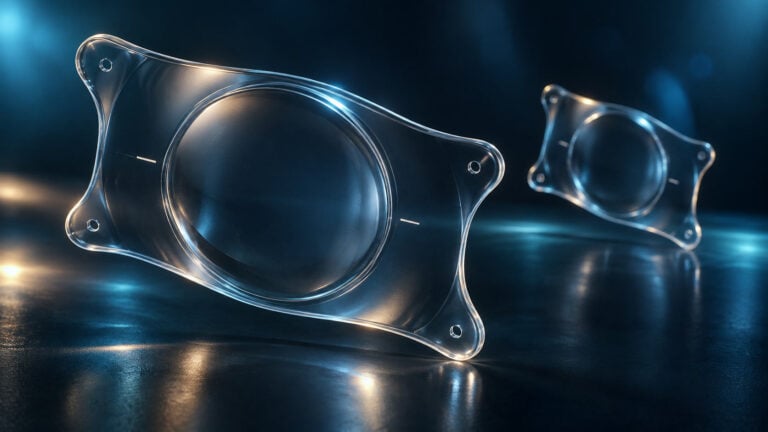
Myopia, commonly known as shortsightedness, is a vision condition that affects millions of children worldwide. While myopia itself is relatively common, high myopia (or severe shortsightedness) can lead to a range of eye health issues and increased risk of vision impairment in adulthood. The good news is that there are proactive measures parents and caregivers can take to help prevent high myopia in children. In this comprehensive guide, we will explore the factors contributing to myopia progression, the risks associated with high myopia, and a variety of strategies and interventions to reduce its development in children.
Understanding Myopia in Children
Myopia, commonly known as short-sightedness, causes distant objects to appear blurred while close-up vision often remains clear. A child may be able to read a book or use a tablet comfortably but struggle to recognise faces across a room or see the board clearly at school. Myopia most commonly develops when the eye grows longer than expected during childhood. This causes light to focus in front of the retina rather than directly upon it. Although changes in the cornea and the eye’s focusing system can also contribute, excessive growth in the length of the eye is the principal structural cause of progressive childhood myopia. Once myopia begins, it can continue to progress throughout childhood and adolescence as the eyes grow. Children who become short-sighted at a younger age have more time for their prescription to increase and may therefore face a greater risk of developing high myopia. Early detection is important because modern myopia-control strategies may help slow this progression and protect the child’s long-term eye health.
Childhood Myopia Is Becoming More Common
Childhood myopia is increasing in the UK and across the world. The rise has been particularly noticeable in urban environments, where children may spend more time studying, using digital devices and concentrating on close-up activities, with fewer opportunities for extended outdoor play. Research from the College of Optometrists indicates that myopia among UK children aged 10 to 16 has more than doubled over the past 50 years. One UK study recorded myopia in 16.4% of children aged 12 to 13, compared with 7.2% among children aged 10 to 16 during the 1960s. The pattern is also visible in London. A 10-year study involving 23,593 children attending specialist eye-care services found that the proportion of prescriptions issued for myopia increased from 24% to 32%. Among children who initially had mild or moderate myopia, 62% experienced further progression.
This matters because myopia is not simply a question of needing stronger glasses. As the eye becomes longer and the prescription increases, the tissues at the back of the eye can become more vulnerable. High myopia is associated with an increased lifetime risk of retinal detachment, myopic macular degeneration, glaucoma and cataracts. Recognising and managing myopia during childhood can therefore help protect vision well into adult life.
Factors Contributing to Myopia Development
Several factors contribute to the development and progression of myopia in children:
- Genetics: Myopia often runs in families, suggesting a genetic component that predisposes some children to develop myopia.
- Environmental Factors: Prolonged near work, such as reading, using digital screens, and other close-up activities, can increase the risk of myopia
- Lack of Outdoor Time: Insufficient outdoor activities and exposure to natural light during childhood have been associated with a higher likelihood of myopia development.
- Educational Pressure: High academic demands and long hours of study can lead to increased near work, which may contribute to myopia progression.
- Urbanization: Urban environments with limited outdoor spaces can restrict children’s opportunities for outdoor play and sunlight exposure.
- Lack of Awareness: Many parents and children may not be aware of the importance of myopia control measures.
Consequences of Untreated Myopia In London
Childhood myopia can have far-reaching consequences if left unmanaged:
- Rapid Progression: Myopia tends to worsen during childhood and adolescence, leading to increasingly stronger prescriptions.
- High Myopia: Severe myopia (high myopia) is associated with an elevated risk of eye complications, including retinal detachment, glaucoma, and cataracts.
- Reduced Quality of Life: Uncorrected myopia can hinder a child’s ability to participate in sports and outdoor activities, affecting their overall quality of life.
- Academic Impact: Myopia can affect a child’s performance in school if they struggle to see the board or read textbooks.
- Economic Burden: The financial cost of managing high myopia and its complications can be substantial over a lifetime.
Childhood Myopia Is Increasing in London
A 10-year study reviewed 63,854 clinical records from 23,593 children attending specialist eye-care services in London. The findings revealed a clear increase in prescriptions for childhood myopia.
The study examined children attending secondary and tertiary eye-care services in London and should not be interpreted as a population-wide survey of every London child.
View the published research.
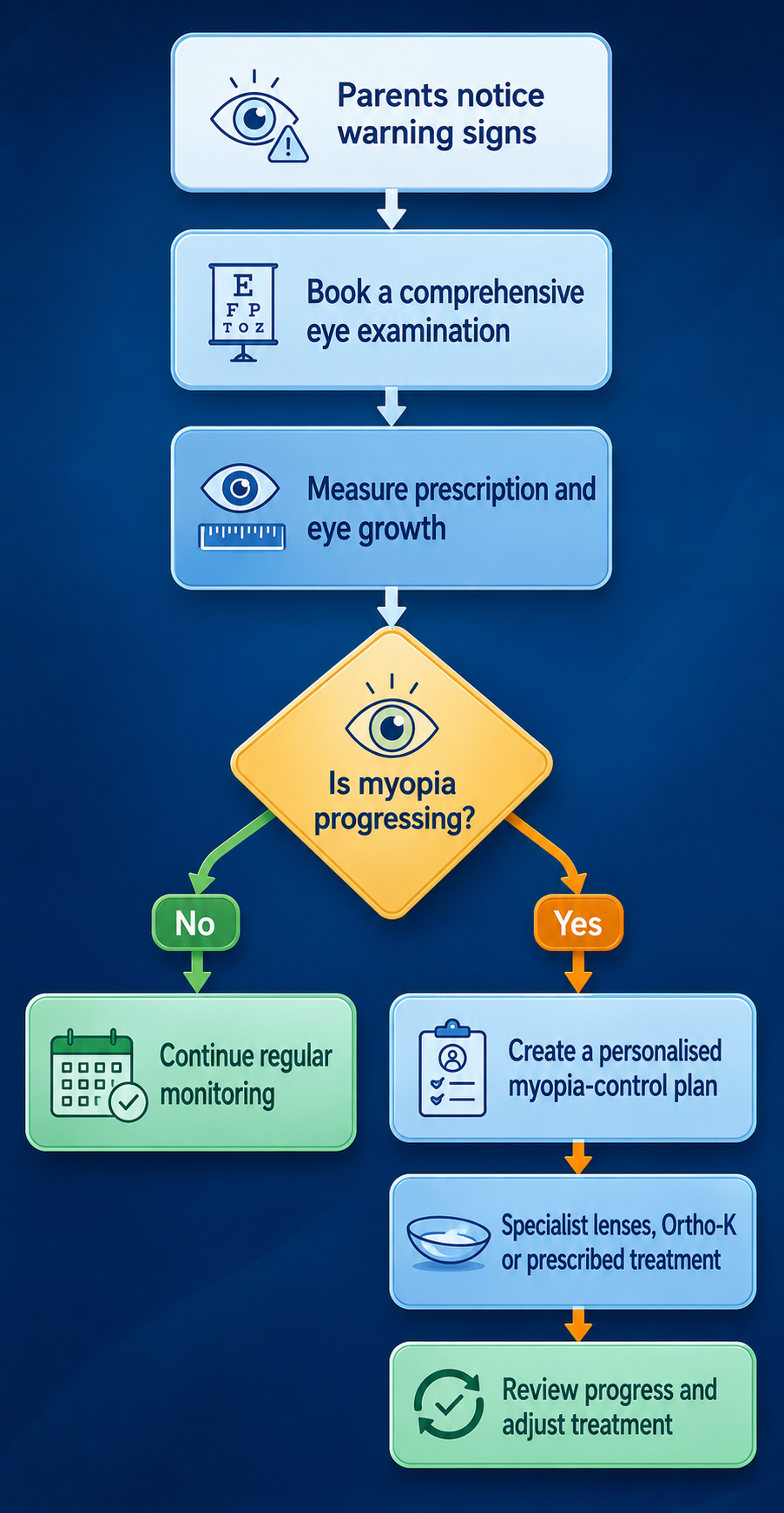
The Childhood Myopia Control Journey
Recognising the signs early allows changes in a child’s vision to be measured, monitored and managed before myopia progresses further.
Notice the Signs
Squinting, sitting near screens or struggling to see the board at school.
Book an Eye Examination
Assess the prescription, eye health and individual risk of progression.
Measure and Monitor
Record prescription changes and measure eye growth where appropriate.
Create a Control Plan
Consider specialist lenses, Ortho-K, prescribed treatment and lifestyle guidance.
Review Progress
Monitor the child regularly and adjust treatment as their eyes grow.
Strategies to Prevent High Myopia in Children
Given the potential long-term consequences of myopia, proactive measures for myopia control in children are crucial. Several strategies have shown promise in slowing the progression of myopia and reducing its impact:
- Orthokeratology (Ortho-K): Ortho-K involves the use of specially designed contact lenses that reshape the cornea while the child sleeps. These lenses are removed in the morning, providing clear vision throughout the day. Ortho-K has been effective in slowing myopia progression.
- Multifocal Contact Lenses: Multifocal contact lenses, which have different prescriptions for distance and near vision, have demonstrated efficacy in myopia control. These lenses can reduce the rate of myopia progression.
- Atropine Eye Drops: Low-dose atropine eye drops have been used to slow myopia progression by relaxing the eye’s focusing mechanism. This treatment is most effective when combined with other strategies.
- Increased Outdoor Time: Encouraging children to spend more time outdoors, particularly in natural sunlight, can help reduce the risk of myopia development and progression.
- Reduced Near Work: Implementing the 20-20-20 rule (taking a 20-second break to look at something 20 feet away every 20 minutes) during close-up activities can reduce eye strain and slow myopia progression.
- Myopia Management Programs: Some eye care professionals offer myopia management programs that combine various strategies to address myopia progression comprehensively.
- Regular Eye Examinations: Annual eye exams are essential for monitoring a child’s myopia progression and adjusting treatment as needed.

Parental Involvement and Education
Parents play a pivotal role in myopia control for children. Here are some key steps parents can take to support their child’s eye health:
- Awareness: Stay informed about the risks and consequences of myopia and discuss them with your child’s eye care provider.
- Outdoor Play: Encourage your child to spend more time outdoors, engage in physical activities, and enjoy natural sunlight.
- Screen Time Management: Set limits on screen time and encourage balanced use of digital devices with breaks for outdoor activities.
- Regular Eye Exams: Schedule annual eye examinations for your child, even if they do not exhibit myopia symptoms.
- Compliance: Ensure your child follows their prescribed myopia control treatment plan, whether it includes ortho-k lenses, atropine eye drops, or other methods.
- Environment: Create a conducive environment for learning and play, including proper lighting and ergonomic workspaces.
A Modern Parent’s Weekly Vision Plan
Preventing high myopia in children is not about banning screens or forcing them outdoors. It is about balance. In today’s world of gaming, tablets, streaming and homework, parents need a realistic framework that supports eye development without isolating children from modern life.
Modern Activities That Support Healthy Vision
Children today engage in very different activities compared to previous generations. Instead of simply telling children to “go outside”, parents can guide them toward visually stimulating, distance-focused hobbies that naturally support eye health.
- Skateboarding & Stunt Scootering – Encourages dynamic distance awareness and rapid focus adjustment.
- Paintballing or Laser Tag – Enhances peripheral vision and depth perception.
- Archery – Promotes controlled distance focus and visual discipline.
- Outdoor Team Sports – Football, rugby and hockey require constant distance tracking.
- Cycling or Mountain Biking – Encourages long-distance visual engagement rather than close-up fixation.
Even modern video gaming can be managed more intelligently. Large screens positioned at an appropriate viewing distance are preferable to prolonged use of handheld devices held close to the face.

Daily Vision Balance Guide for Growing Eyes
Healthy eye development in children is not about removing modern life. It is about balance.
In today’s digital world, children need structured outdoor exposure, managed screen habits
and dynamic visual activities to support long-term eye health.
Outdoor Time
Minimum 90–120 minutes per day
Natural daylight plays a powerful role in regulating eye growth.
Outdoor exposure has been shown to reduce the risk of myopia progression.
This does not need to be structured sport; walking the dog, cycling, park time,
skateboarding or simply playing outside all count.
Screen Time
Structured, Not Unlimited
Encourage breaks every 20 minutes using the 20-20-20 rule.
Gaming sessions should be broken into blocks rather than hours
of continuous close focus. Larger screens positioned further away
are preferable to handheld devices held close to the face.
Screen Time Should Be Structured, Not Unlimited
Screens are part of modern childhood, but long periods of uninterrupted close focus may place additional demands on growing eyes. The aim is not to ban technology, but to create healthier viewing habits.
| Screen Activity | Healthier Approach | Why It Helps |
|---|---|---|
| Homework and Reading | Use a well-lit desk and encourage an upright posture with books and screens kept at a comfortable distance. | Good lighting and positioning help reduce visual strain during necessary periods of close work. |
| Gaming | Break gaming sessions into shorter blocks rather than allowing several hours of continuous close focus. | Regular interruptions encourage the eyes to change focus and prevent extended periods of concentrated near work. |
| Phones and Tablets | Avoid holding handheld devices very close to the face. Increase the text size rather than moving the screen nearer. | Increasing the viewing distance reduces the demand placed on the eye’s close-focusing system. |
| Television and Films | When appropriate, choose a larger screen viewed from further away instead of a small handheld device. | Watching from further away involves less sustained close focus than viewing the same content on a nearby phone. |
| Between Activities | Include outdoor play, sport, walking or another activity that encourages children to look across longer distances. | Time outdoors and regular distance viewing provide an important balance to screen use and other close-up activities. |
| Every 20 Minutes | Follow the 20-20-20 rule: every 20 minutes, look at something approximately 20 feet away for at least 20 seconds. | This gives the focusing system a short break and encourages children to look beyond the screen. |
Active Focus Sports
3–5 sessions per week
Sports that require distance tracking and spatial awareness
help stimulate healthy visual development. Consider football, tennis,
cricket, basketball, skateboarding, stunt scootering, athletics or swimming.
Creative Close Work
Balanced With Light
Homework and reading are important, but ensure proper lighting and posture.
Avoid doing close work in dim environments. A well-lit desk and
upright posture can significantly reduce visual strain.
Signs Your Child’s Vision May Be Changing
Early detection is critical. Parents should look for:
- Sitting very close to screens
- Squinting when looking at distant objects
- Complaints of headaches after school
- Declining interest in outdoor sports
- Frequent prescription changes.
Annual eye examinations are essential, even if your child does not complain of blurred vision. Myopia can progress quietly.
The Long-Term Perspective
High myopia is not simply about needing stronger glasses. Severe progression increases the risk of retinal detachment, glaucoma and macular complications later in life. Managing myopia early is an investment in your child’s future eye health.
At EuroEyes, we combine advanced diagnostics with evidence-based myopia control treatments such as orthokeratology, specialised contact lenses and low-dose atropine therapy. Early intervention can dramatically reduce the lifetime risk of complications.
How To Fix Myopia
EuroEyes is at the forefront of myopia treatment for children, utilising cutting-edge technology to address this growing concern. EuroEyes offers advanced treatment options, including specialised eye drops, customised contact lenses, and innovative ortho-k therapy, which involves wearing corrective lenses overnight to reshape the cornea. These approaches not only help slow the progression of myopia but also protect children’s long-term vision health by reducing the risk of future complications.
The latest technology available at EuroEyes aims to provide tailored treatments for each child, offering a non-invasive, pain-free experience. Early intervention is crucial in managing myopia, and EuroEyes’ pediatric specialists work closely with families to create personalised care plans. This comprehensive approach, combined with state-of-the-art diagnostics and therapies, ensures that children receive the most effective treatment for their vision needs, allowing them to enjoy a better quality of life and healthier vision as they grow.
Prevention is Key
Preventing high myopia in children is essential for safeguarding their eye health and reducing the risk of vision complications in adulthood. While myopia is becoming increasingly prevalent, parents and caregivers can take proactive steps to manage and control its progression. By educating themselves about myopia, adopting myopia control strategies, and working closely with eye care professionals, parents can provide their children with the best opportunities for clear vision and a lifetime of healthy eyes. Together, we can make significant strides in reducing the impact of myopia on future generations.