(White Paper)
Expert Insights from EuroEyes
Welcome to the deeper side of vision correction.
Abstract
For decades, patients with high myopia or thin corneas were told that laser vision correction was not an option. Today, that has changed. Two advanced technologies: SMILE and ICL have expanded what’s possible, offering precise and safe solutions for individuals once deemed unsuitable for LASIK.
This white paper explores these techniques in depth, examining how they work, their clinical success rates, and how EuroEyes uses them to restore visual freedom to patients across the UK and Europe.
Introduction
Laser eye surgery transformed the field of vision correction, but it was never a one-size-fits-all solution. LASIK, the most popular procedure worldwide, remains an excellent option for many but not for everyone.
Patients with high prescriptions, thin corneas, or certain eye shapes may face elevated risks or simply be told they are “not suitable.” For these patients, EuroEyes offers advanced alternatives: SMILE (Small Incision Lenticule Extraction) and ICL (Implantable Collamer Lens) surgery.
Both approaches use next-generation technology to deliver visual outcomes that rival, and in some cases exceed, those achieved by LASIK. This white paper draws on the latest evidence and EuroEyes’ clinical experience to help patients understand their options and make informed choices about their vision.
1. Understanding the Basics
LASIK and Its Limitations
LASIK reshapes the cornea using an excimer laser. While effective, it requires adequate corneal thickness to safely remove tissue without compromising eye strength. Patients with very high myopia or thin corneas may not have enough tissue to reshape safely.
SMILE (Small Incision Lenticule Extraction)
SMILE is a minimally invasive laser procedure that corrects vision through a tiny, keyhole incision rather than a full corneal flap. The laser creates a small lens-shaped disc (lenticule) within the cornea, which is gently removed to reshape the eye.
Because SMILE preserves more corneal integrity, it’s ideal for patients with slightly thinner corneas or mild to moderate myopia who may not qualify for LASIK. It also reduces dry eye symptoms and offers fast recovery.
ICL (Implantable Collamer Lens)
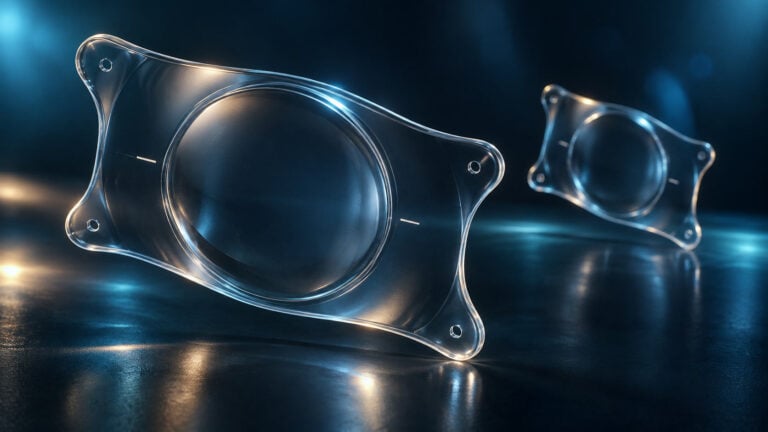
ICL surgery uses a soft, biocompatible lens that is placed behind the iris and in front of the natural lens. It functions much like a contact lens inside the eye; completely invisible and maintenance-free.
ICL is particularly effective for patients with very high myopia (up to -20.00D) or corneas too thin for laser reshaping. It’s reversible, doesn’t alter the corneal structure, and can be removed or replaced in the future if needed.
2. Clinical Outcomes: What the Evidence Shows
Visual Quality
Clinical studies show that over 90% of ICL patients achieve 20/20 vision or better, with excellent long-term stability. SMILE outcomes are similarly impressive for patients with up to -10.00D myopia, matching LASIK’s precision with fewer side effects.
Corneal Health
SMILE maintains the biomechanical strength of the cornea and significantly reduces the risk of post-surgical dryness. ICL leaves the cornea untouched, preserving natural curvature and integrity.
Safety & Reversibility
The latest EVO ICL models include a central port (KS-AquaPORT) that allows natural fluid flow, reducing cataract risk and eliminating the need for pre-surgery iridotomy. Both procedures have very low complication rates when performed in experienced hands.
Longevity
SMILE results are permanent, while ICL can last a lifetime or be exchanged if the prescription changes significantly. Both provide stable, high-definition vision without the regression sometimes seen in older laser techniques.

Illustrative UK trend (2005–2025): decline in glasses/contact lens dependence and rise in SMILE and ICL as primary vision correction choices.
3. Lifestyle Impact: Beyond the Operating Room
For many, living with high myopia means thick glasses, constant lens cleaning, or contact lens discomfort. These visual limitations often affect confidence, sports participation, and even professional opportunities.
After SMILE or ICL surgery, patients often describe the change as life-altering.
Everyday activities: driving, swimming, exercising, or reading a digital screen – feel effortless. The psychological lift of seeing clearly from the moment you wake up cannot be overstated.
Case Study
A 34-year-old interior designer from London had lived with severe myopia since childhood, relying on thick lenses and daily contact wear. Her prescription of -10.00D made her highly dependent on visual aids; glasses for design work, contacts for social life, and prescription sunglasses outdoors. After multiple consultations elsewhere, she was told LASIK was too risky because of her thin corneas.
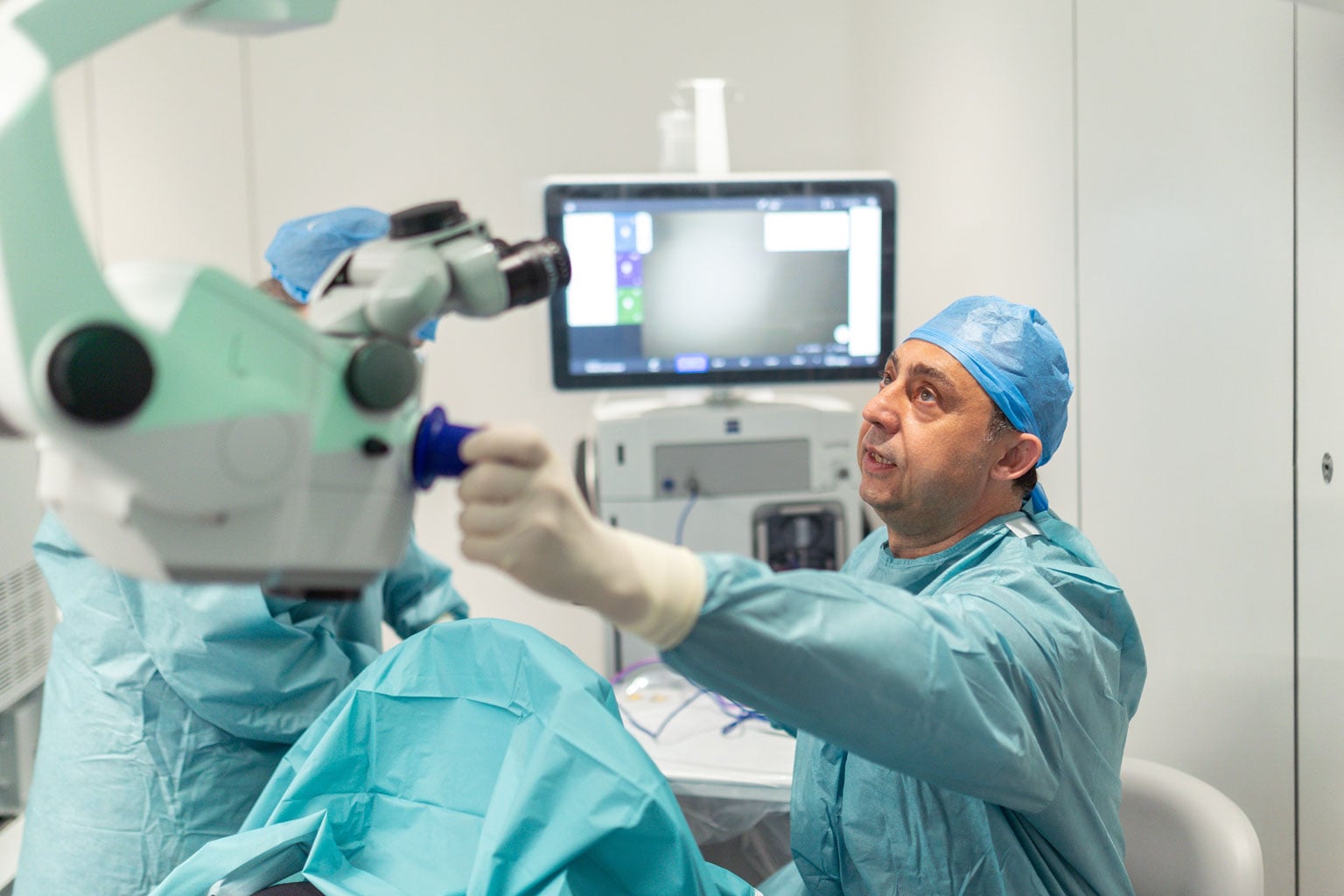
At EuroEyes, advanced diagnostics confirmed her corneas were indeed thinner than average, but her eye health and anterior chamber depth made her an excellent candidate for EVO ICL implantation. The procedure was completed in under 30 minutes per eye with topical anaesthesia and minimal discomfort.
Within 24 hours, she reported crystal-clear 20/15 vision, with none of the dryness, halos, or glare she had previously experienced with contacts. Colours appeared sharper, depth perception improved, and she described “seeing textures and lines I never knew existed.”
Four weeks later, she completed the London Marathon without the inconvenience of lenses or solutions, an experience she called “the most freeing moment of my adult life.” Her vision remains stable one year later, and she continues to recommend ICL to clients and colleagues who spend long hours under studio lighting or digital screens.
4. The Financial Equation: Glasses, Contacts & Surgery
While SMILE and ICL procedures are private treatments, many patients find them cost-effective over time when compared with decades of glasses or contact lenses.
| Expense | Average Cost | 10-Year Estimate | 20-Year Estimate |
|---|---|---|---|
| Glasses (new pair every 2 years) | £300 | £1,500 | £3,000 |
| Contact lenses + solutions | £300–£350/year | £3,000+ | £6,000+ |
| SMILE or ICL (one-time cost) | £2,000–£5,000 | One-time | One-time |
Beyond finances, the benefit of visual freedom: no more lenses, frames, or maintenance; makes the investment worthwhile for many patients seeking long-term clarity and independence.
5. NHS vs Private Options in the UK
The NHS offers corrective surgery only when medically necessary, such as cataract removal. Refractive surgery for high myopia, astigmatism, or thin corneas is not available.
Private providers like EuroEyes bridge this gap, offering world-class technology and diagnostic precision. Patients gain access to advanced options including SMILE, ICL, and custom laser treatments, delivered by surgeons with decades of experience in vision correction.
6. EuroEyes’ Approach to Personalised Vision Correction
EuroEyes believes vision correction should be as individual as a fingerprint. Each patient’s journey begins with an advanced diagnostic assessment that maps every layer of the eye:
- Corneal topography to measure curvature and stability.
- Pachymetry to analyse corneal thickness and safety limits.
- Anterior chamber scans to determine ICL fit and vault.
- Lifestyle consultation to align treatment with personal habits, screen use, and night vision needs.
With access to every major technology: LASIK, LASEK, SMILE and ICL. EuroEyes tailors recommendations without bias, ensuring every patient receives the most appropriate and safest solution.
Treatment Comparison Overview
| Treatment | Suitable For | Technique | Recovery | Glasses After | Typical Cost |
|---|---|---|---|---|---|
| LASIK | Mild–moderate myopia, normal corneas | Corneal flap reshaping | 1–2 days | Rarely | £2,000 per eye |
| SMILE | Mild–moderate myopia, thinner corneas | Small incision lenticule extraction | 1–2 days | Rarely | £2,000 per eye |
| ICL | High myopia, thin/irregular corneas | Collamer lens behind iris | 2–3 days | Never | £3,500 per eye |
The Evolution of Vision Correction
The evolution of vision correction has redefined what’s possible for patients once considered “unsuitable or prescription limited” SMILE and ICL now stand at the forefront of modern refractive surgery: safe, precise and life-enhancing.
At EuroEyes, these procedures are more than alternatives; they represent new freedom for those who believed clear vision was out of reach.
Closing Thoughts from Fadi Kherdaji, MD
“Many of our patients come to us after being told there’s nothing that can be done. With today’s technology, that’s rarely the case. SMILE and ICL allow us to treat high prescriptions and thin corneas with remarkable precision and safety.
At EuroEyes, our mission is to help every patient see the world clearly, using the method that best suits their eyes, lifestyle, and long-term vision goals.”
References
European Society of Cataract & Refractive Surgeons (ESCRS) Clinical Trends / supplement:
https://www.escrs.org/media/dmihn22q/feb24_supplement_refractsurg.pdf ESCRS
STAAR Surgical Company – EVO ICL product page:
https://www.staar.com/products/evo-visian-icl Staar Surgical
(Also, an investor presentation with data: https://s24.q4cdn.com/405935222/files/doc_presentations/2024/06/june-2024_staar_investor-presentation_final.pdf Q4 Capital)
National Institute for Health and Care Excellence (NICE) Guidance – Photorefractive (laser) surgery for correction of refractive errors (IPG164):
https://www.nice.org.uk/guidance/ipg164/resources/photorefractive-laser-surgery-for-the-correction-of-refractive-errors-pdf-305690077 NICE
Frequently Asked Questions About ICL and SMILE
Q: Who is suitable for ICL or SMILE surgery?
A: SMILE is ideal for patients with mild to moderate myopia and healthy corneas, while ICL suits those with high myopia or thin corneas unsuitable for LASIK.
Q: Are the results permanent?
A: SMILE offers a permanent reshaping of the cornea. ICL can remain in place for life or be replaced if prescription changes.
Q: How soon can I return to work?
A: Most SMILE patients return within 1–2 days, and ICL patients typically resume normal activities within 2–3 days.
Q: Is the ICL visible or felt in the eye?
A: No, it’s completely invisible and comfortable. Patients cannot see or feel it after placement.
Q: Can ICL or SMILE cause dry eyes?
A: SMILE significantly reduces dry eye symptoms compared with LASIK. ICL does not affect corneal nerves, so dryness is uncommon.
Q: What makes EuroEyes different?
A: EuroEyes combines advanced ZEISS technology, surgeon-led consultations, and over 30 years of European expertise to deliver exceptional safety and outcomes in every procedure.
Further Reading
ESCRS Clinical Trends Survey 2023
ESCRS Refractive Surgery Supplement 2024
Reinstein DZ et al. “SMILE: Ten Years of Clinical Data.” J Cataract Refract Surg, 2023
EVO ICL Global Outcomes Review (Largest US Single-Centre Study, 2024)
STAAR Surgical – Clinical Papers & Outcomes Library
NICE Guidance: Photorefractive (Laser) Surgery for the Correction of Refractive Errors (IPG164)